

A Kitchen Scale for Half Batches: Adjust the Recipe Before You Start
3 min read
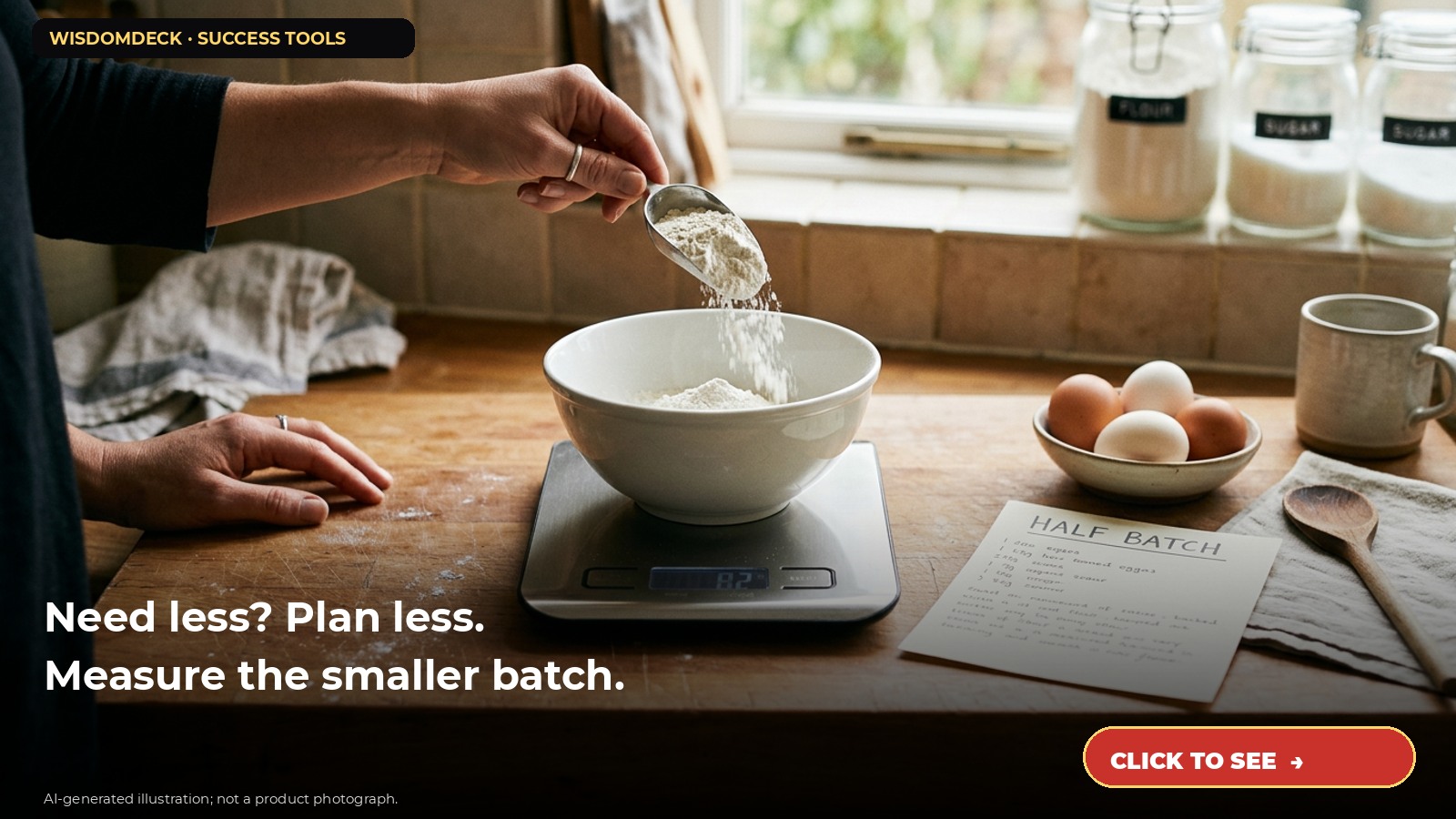
We may earn a commission if you buy through this link.
See Amazon Basics digital kitchen scale on Amazon. Check the current listing before buying; existing supplies may be all you need.
A recipe makes more than your household wants, so you decide to halve it while cooking. The first ingredients are reduced, the next one is not, and halfway through you cannot remember which quantity you used. The trouble is not necessarily arithmetic. It is changing the plan while your hands are busy.
For a recipe that can reasonably be scaled, a kitchen scale and a written conversion sheet can make a smaller batch easier to follow. This is about recipe preparation, not dieting or a promise to reduce grocery spending.
Check whether scaling is appropriate
Some everyday recipes adapt more easily than others. Pan size, equipment, cooking time, temperature, leavening, and food-safety requirements can complicate a simple fraction. Look for the recipe author’s guidance before assuming every instruction should be halved.
Do not improvise preservation or canning formulas, or treat this routine as advice for medical diets or infant feeding. Use authoritative instructions appropriate to those situations. A scale measures an amount; it does not validate a recipe.
Write the new ingredient list first
Keep the original recipe available and make a separate list of the intended quantities. Note the scaling factor at the top. Multiply each ingredient amount consistently, then check the list against the original before opening ingredients.
If the original includes gram weights, use those rather than inventing conversions from cups. Different ingredients do not share a single cups-to-grams conversion. Where a quantity or conversion is unclear, consult the recipe’s source instead of pretending a rough estimate is exact.
Use the scale on a stable surface
Place the scale as its instructions specify, select the intended unit, and check the display before measuring. With a suitable container on the platform, use the tare function according to the manual so the container’s weight is not included.
Keep a visible record of each ingredient as it is added. Marking the list can help distinguish “measured” from “still needed.” Do not rely on remembering whether the flour or sugar has already been adjusted.
Keep weight and volume distinct
Grams describe mass, while milliliters describe volume. A display offering both does not mean every liquid or ingredient can be converted the same way. Use the unit the recipe supports and the scale’s documented limitations.
Very small amounts may be below the useful measuring range of an ordinary kitchen scale. Do not infer precision from the number of digits on its screen. Use an appropriate method recommended by the recipe for small quantities rather than repeatedly chasing a fluctuating reading.
Do not halve the cooking instructions automatically
A smaller batch may need a different pan or a different checking point, but cooking time does not necessarily change in direct proportion. Follow the recipe’s scaling guidance and relevant food-safety instructions. A kitchen scale cannot establish whether food has reached a safe cooking temperature.
Afterward, note the batch size, actual yield, and any changes you would make next time. Label a successful adjusted version clearly so you do not have to repeat the same conversion each session.
Who can skip buying a scale
If the recipe supplies a reliable smaller-batch version, use it. An existing suitable scale is enough. If the ingredients are already pre-portioned or you rarely need adjusted quantities, another tool may not earn its storage space.
Start with one straightforward recipe whose author supports scaling. The objective is a written, consistent plan—not a claim that weighing alone makes every recipe cheaper or better.

Launch list
Be there on day one.
One email when the book opens on Kickstarter. Nothing else. Already reading the book? Your Cheat Sheet is at wisdomdeck.com/free.
Coming soon on 
The book itself — 40 laws in ten parts, 320 pages, each ending with The Work — is funded first on Kickstarter.


