Leftover Containers With a Clear Plan: Label, Store, and Find the Next Meal
2 min read
We may earn a commission if you buy through this link.
See Amazon Basics glass food storage containers on Amazon. Check the current listing before buying; existing supplies may be all you need.
Leftovers are easy to forget when a container has no name, date, or planned use. A small routine can make stored food easier to identify and help the household decide what to eat next. Labels do not make food safe by themselves; use current food-safety guidance for cooling, storage times, temperatures, and reheating.
Choose a suitable container
Use food-contact containers intended for the task and follow the manufacturer’s directions. If using glass, inspect it for chips or cracks and handle it carefully. Check the current instructions for whether the base and lid can go in the freezer, microwave, oven, or dishwasher. A product listing may describe different rules for glass and lids.
Do not move a container from a very hot environment to a cold one unless its directions allow that change. Avoid sealing or heating food in a way the maker prohibits. Let safe handling instructions—not convenience—determine how food is cooled and stored.
Write what it is and when it was stored
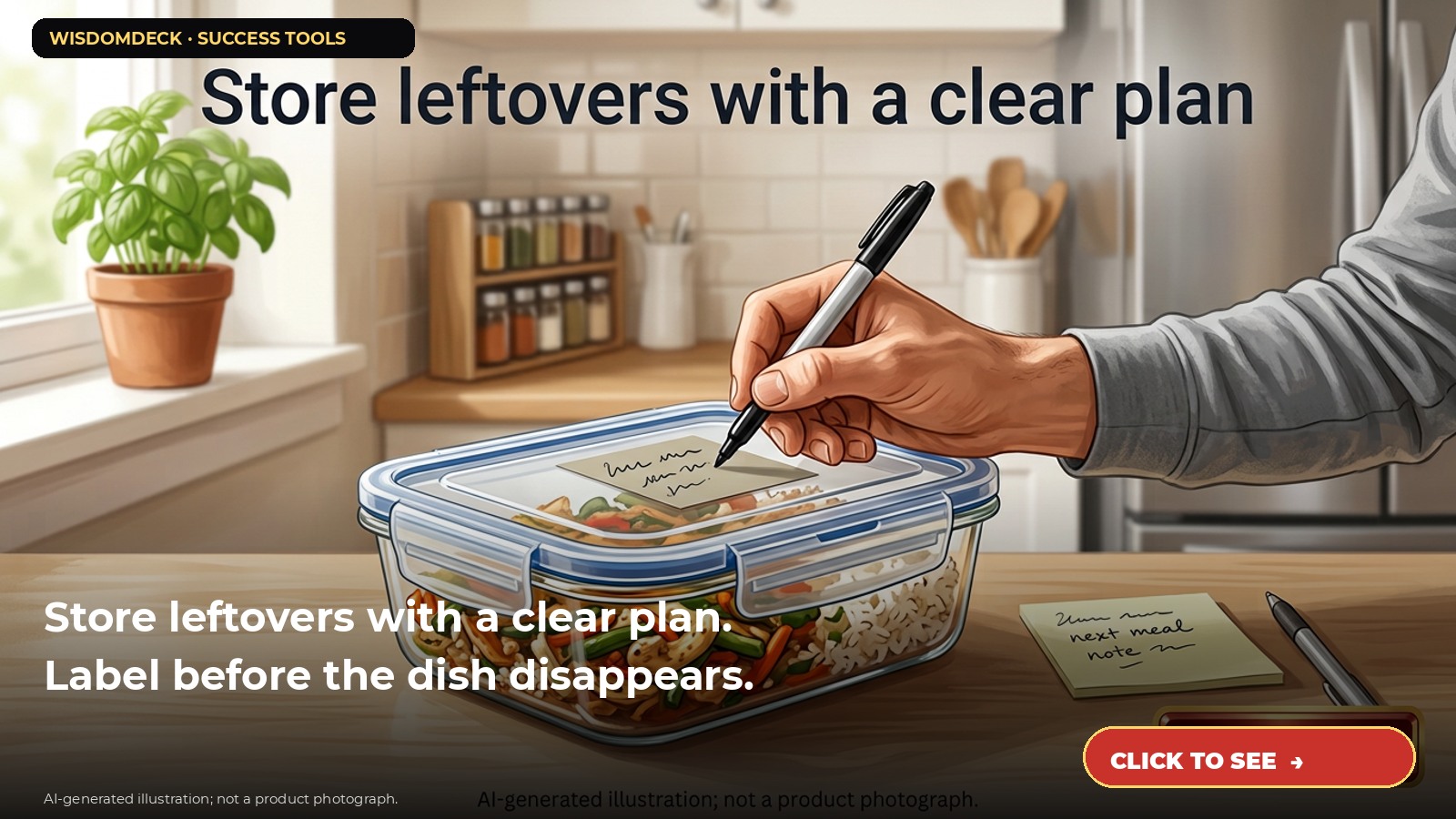
Use a removable label or a note placed with the container to record the contents and the date prepared or stored. Be specific when similar meals are kept: “vegetable soup” is more informative than “soup.” Include an allergen or ingredient note only when accurate and useful for the people who will eat it.
Keep the writing where it can be seen without lifting several containers. Replace an old label completely when reusing a container, and do not write a guessed date for food whose history is uncertain.
Give the container a next step
When putting leftovers away, decide whether they are intended for a meal, ingredient, or other planned use. If they should be used soon according to official food-safety guidance, put a reminder on a meal plan or household list. Do not rely on a vague “eat later” note that nobody reviews.
For example, someone can label a portion of dinner before placing it in the refrigerator and add it to a planned lunch. At the next meal-planning check, the container becomes visible as an option rather than an unmarked surprise.
Keep storage and reheating guidance in view
Follow trusted food-safety recommendations for promptly chilling perishable food, refrigerator temperature, safe storage periods, and reheating. Do not taste food to judge whether it is safe. If its storage history is unknown or you are unsure, use a cautious decision and discard it when guidance recommends doing so.
Keep raw foods separate from ready-to-eat foods and clean surfaces and containers appropriately. Never assume a tight lid alone prevents contamination or makes food safe at room temperature.
Use the set you already have
Count the containers that fit your household’s real portions and shelf space. Skip a new set if suitable containers are already available or if the lids are difficult to match. Check product dimensions and instructions before buying; an assortment is helpful only when its sizes suit your use.
The practical win is a meal you can identify and handle according to reliable food-safety advice—not an unsupported promise about freshness or waste reduction.

Launch list
Be there on day one.
One email when the book opens on Kickstarter. Nothing else. Already reading the book? Your Cheat Sheet is at wisdomdeck.com/free.
Coming soon on 
The book itself — 40 laws in ten parts, 320 pages, each ending with The Work — is funded first on Kickstarter.