

Make It Easy to Begin
2 min read
Think about the habit you keep failing to build. Now think about where, precisely, it fails. Almost never in the middle. Nobody stops running at mile two because running is intolerable; they never put the shoes on. Nobody abandons the page halfway through a paragraph; they never opened the document. The failure point of most habits is the first thirty seconds, the transition from not doing it to doing it, and that is a design problem, not a discipline problem. Make the beginning easy and the habit is mostly built.
The Cost of Beginning
Every action has an activation cost: the effort required to switch from what you are doing to what you intend to do. For established habits the cost is near zero, which is why brushing your teeth requires no willpower. For new ones it is high, because nothing is prepared, decisions must be made, and the current activity has momentum. People try to pay that cost with motivation, which is unreliable. The better approach is to lower the cost until motivation is not required.
Where the Friction Hides
Look closely at what stands between you and the first real action. The gym clothes are in a drawer. The document is buried in a folder. The instrument is in its case in a closet. The app needs a login. None of these is a large obstacle. Each is a few seconds of friction, and a few seconds is precisely enough for the tired mind to choose something else. The habit is not losing to laziness. It is losing to a closed case and a drawer.
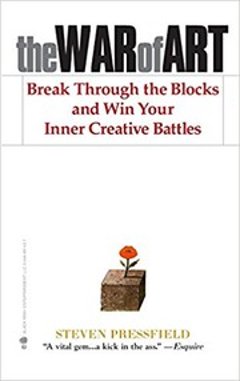 Worth reading on thisThe War of Art by Steven Pressfield — A short, blunt book about the force that stops you starting. Read it in an afternoon; feel it for years.Click hereto see it→
Designing the First Thirty Seconds
Prepare the start the night before
Clothes laid out. Document open on the screen. Instrument on a stand. Book on the pillow. The first action should require nothing but reaching for it.
Define the start as something trivial
The habit is not “run.” It is “put on the shoes and step outside.” The habit is not “write.” It is “type one sentence.” Define the start so small that refusing it would feel absurd.
Attach it to something that already happens
After coffee, the page. After the door closes behind the kids, the shoes. Existing routines are free triggers; borrow them instead of building new ones.
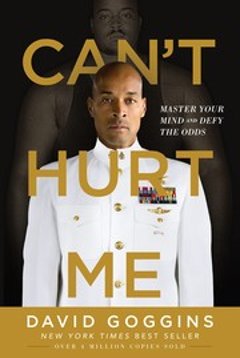 Goes deeperCan’t Hurt Me by David Goggins — Not gentle, and not for everyone. But nobody explains earned confidence more honestly.Click hereto see it→
Remove the competing option
If the phone is the thing you reach for instead, the phone should not be reachable at the moment the habit begins. Design the environment so the habit is the easiest thing in it.
What Happens After the Start
Once begun, the habit carries itself far more often than not. The person who put on the shoes almost always runs. The person who typed one sentence usually types a page. Beginning creates a small commitment, and the mind prefers to honor commitments already in motion. All the willpower you thought the habit required was only ever needed for the first thirty seconds, and you have just engineered those away.
Prepare Tonight
Pick the habit. Find the exact point where it fails. Tonight, remove every second of friction from that point: lay it out, open it, put it where you will trip over it. Tomorrow the beginning will be easy, and easy beginnings are how habits get built by ordinary people on ordinary days.
Two more books, and one tool

Launch list
Be there on day one.
One email when the book opens on Kickstarter. Nothing else. Already reading the book? Your Cheat Sheet is at wisdomdeck.com/free.
Coming soon on 
The book itself — 40 laws in ten parts, 320 pages, each ending with The Work — is funded first on Kickstarter.
