Check the Level Before Mounting a Shelf: Plan the Placement Before You Drill
2 min read
We may earn a commission if you buy through this link.
See Amazon Basics 9-inch magnetic torpedo level on Amazon. Check the current listing before buying; existing supplies may be all you need.
A shelf that is planned carefully is easier to place than one installed in a hurry. A small level can help check a line, but it does not identify safe wall locations, hidden wiring, or suitable anchors. Start with a layout and permission check before making holes.
Decide what the shelf needs to hold
Choose the shelf, its intended contents, and a location that does not block doors, outlets, vents, access panels, or walkways. Check the shelf manufacturer’s instructions and stated load requirements. Do not assume that a level’s magnetic edge or ruler tells you anything about the wall’s strength.
If you rent or share the space, confirm that mounting is allowed. Ask a qualified installer when wall construction, hidden services, or the correct hardware is uncertain. Never drill based only on a guess about what is behind the surface.
Plan the position before using tools
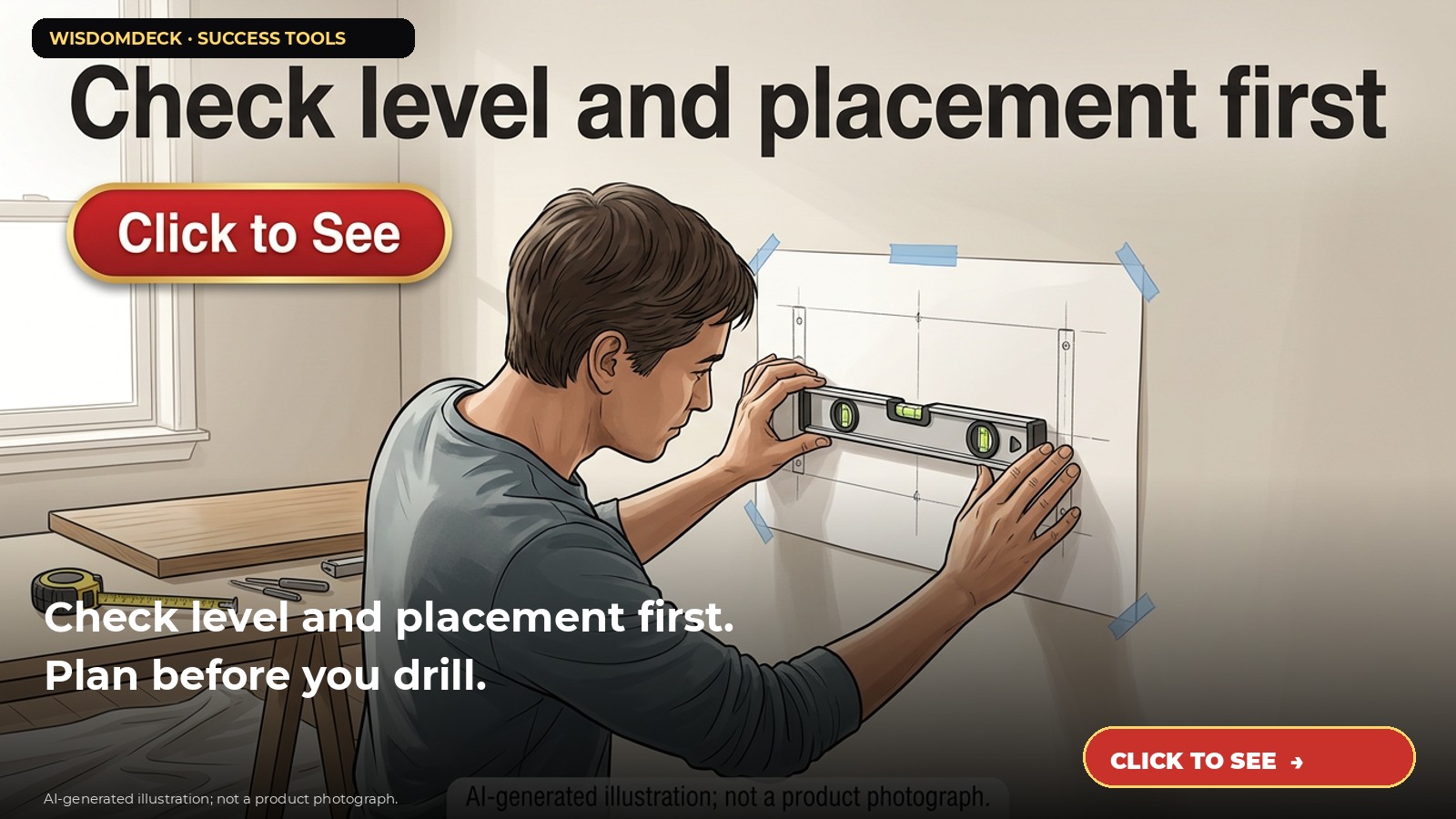
Use a paper template or painter’s tape only if the wall finish permits it. Mark the proposed shelf edges and check clearance with the objects that will sit there. Measure from a stable reference point and consider how the shelf will look alongside nearby furniture.
Place the level on the template or shelf as its directions allow. Read the bubble from the intended viewing angle and keep the tool clean and undamaged. A level helps assess whether a surface is level; it does not guarantee that a bracket or shelf is installed securely.
Verify the mounting plan
Before drilling, confirm the wall material, stud or anchor requirements, and location of utilities using appropriate methods. Use the manufacturer-specified hardware and follow local rules. If you cannot confidently identify a safe, structurally suitable mounting point, stop and hire someone qualified.
For example, a renter can arrange the shelf position on paper, check the desired height with a level, and then ask the property manager about an approved mounting method. That planning step avoids treating a tool as permission to alter a wall.
Keep the area safe
Clear people and pets from the work area. Wear appropriate eye protection when drilling and follow the tool instructions. Secure the ladder or step stool if one is needed, and ask another person to help with a long or heavy shelf. Do not mount heavy items above beds, seating, or high-traffic places unless the installation is designed and verified for that use.
Recheck after installation
Once mounted according to instructions, inspect the shelf and hardware before adding items. Load it gradually within the stated limit and check for movement. If it tilts, loosens, or makes a concerning sound, remove the load and investigate safely.
Check the current listing for the level’s length, vials, and features. A tool can assist with layout; safe installation still depends on the wall, hardware, and correct procedure.

Launch list
Be there on day one.
One email when the book opens on Kickstarter. Nothing else. Already reading the book? Your Cheat Sheet is at wisdomdeck.com/free.
Coming soon on 
The book itself — 40 laws in ten parts, 320 pages, each ending with The Work — is funded first on Kickstarter.