

The Only Competition Is Yesterday
2 min read
Somewhere there is always someone further ahead. Fitter, richer, more skilled, more recognized, younger and already past where you are. If your measure of progress is your position relative to them, you have chosen a game with no finish line and no possibility of winning, because the field is infinite and it keeps refreshing. There is another game available. It has one opponent, the opponent is beatable, and beating them consistently is the entire secret to getting anywhere. The opponent is who you were yesterday.
Why Other People Are the Wrong Benchmark
You do not have their starting point, their circumstances, their resources, or their full story, so the comparison is never fair in either direction. It is also useless as information: knowing that someone else is ahead tells you nothing about what you should do next. Worst of all, it is motivationally poisonous. Being behind is discouraging and being ahead is complacent, and neither state produces good work. The other person’s position is noise. Your own trajectory is the signal.
Why Yesterday Is the Right One
Yesterday’s version of you shares your exact circumstances, minus one day of effort. Beating them is always possible, because the required margin is tiny: one more rep, one more page, one small improvement in how you handled the hard moment. And beating them is always informative, because it tells you precisely whether today’s actions worked. The comparison is fair, actionable, and available every single day. No other benchmark offers all three.
 Worth reading on thisMan’s Search for Meaning by Viktor E. Frankl — Written by a man who lost everything and kept the one thing that mattered. Read it slowly.Click hereto see it→
Playing the Game
Define the margin
What would make today a narrow win over yesterday? Slightly more distance, slightly better focus, one fewer avoidance. Small enough to be certain, real enough to count.
Keep the record
Write down the number, the time, the outcome. Tomorrow’s opponent is today’s entry, and you need to know what you are trying to beat.
Accept the days you lose
Some days yesterday wins. That is one loss in a long season, and the season is what matters. Play again tomorrow.
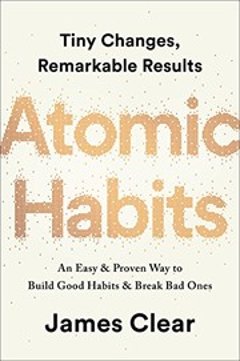 Goes deeperAtomic Habits by James Clear — The clearest manual on making a habit small enough to survive a bad week. Pairs with almost everything on this site.Click hereto see it→
Look back monthly, not daily
Daily improvements are invisible. Monthly ones are unmistakable. Compare this month to last and the compounding becomes something you can see.
What Happens Over a Year
Win a slim majority of the days against yesterday and the arithmetic does the rest. Small daily margins compound into a version of you that last year’s version would not recognize. And somewhere along the way you notice that the people who used to be ahead are no longer the reference point, not because you passed them, but because you stopped looking. You were busy with the only race you could actually run.
Beat Yesterday
Look at what you did yesterday. Do slightly more, or slightly better, today. Write it down. That is the whole competition, and it is the one you were always going to win if you kept showing up.
Two more books, and one tool

Launch list
Be there on day one.
One email when the book opens on Kickstarter. Nothing else. Already reading the book? Your Cheat Sheet is at wisdomdeck.com/free.
Coming soon on 
The book itself — 40 laws in ten parts, 320 pages, each ending with The Work — is funded first on Kickstarter.


