Crucial Conversations by Joseph Grenny, Kerry Patterson and others: What It Teaches, Who It’s For, Who Should Skip It
3 min read
As an Amazon Associate we earn from qualifying purchases. Nobody paid to be on this page — no author, no publisher. This is our plain-language overview of what the book argues, who it suits and who should skip it, so you can decide in two minutes whether it deserves a place on your shelf.
Click hereto see it→Click to see Crucial Conversations
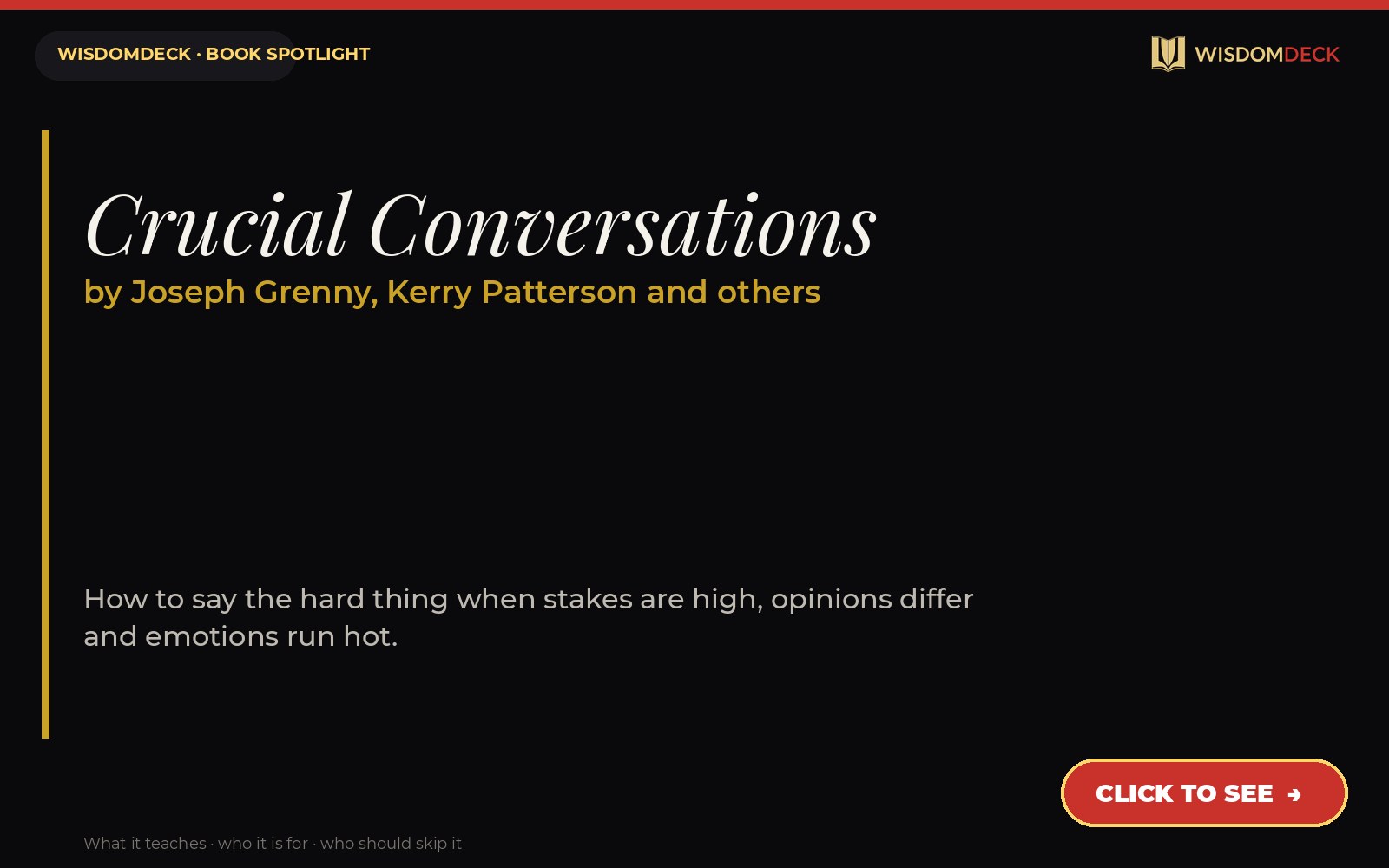
How to say the hard thing when stakes are high, opinions differ and emotions run hot.
What the book argues
The quality of your life and career tracks how you handle crucial conversations. The authors give a method: start with heart, notice when safety is lost, make it safe (mutual purpose, mutual respect), state your path with facts before stories, explore others’ paths, and move to action with clear owners.
Three ideas you can use this week
- When people go to silence or violence, stop debating content and restore safety first.
- Separate facts from the story you tell about the facts; share the facts first.
- End with who does what by when, or the talk changes nothing.
Who it is for
Managers, couples, co-founders and anyone who avoids a conversation that has been overdue for months.
How to turn it into a routine
Before a hard conversation, write the facts, the story you have been telling, and the mutual purpose. Open with the purpose, not the complaint.
Who should skip it
The acronyms pile up (STATE, AMPP, CRIB) and the corporate case studies can feel staged.
Verdict
Formulaic but it works, which is more than most communication books can claim. A reference to revisit before each difficult talk.
Click hereto see it→Click to see Crucial Conversations
If you liked the sound of this
Getting to Yes by Roger Fisher, William Ury and Bruce Patton
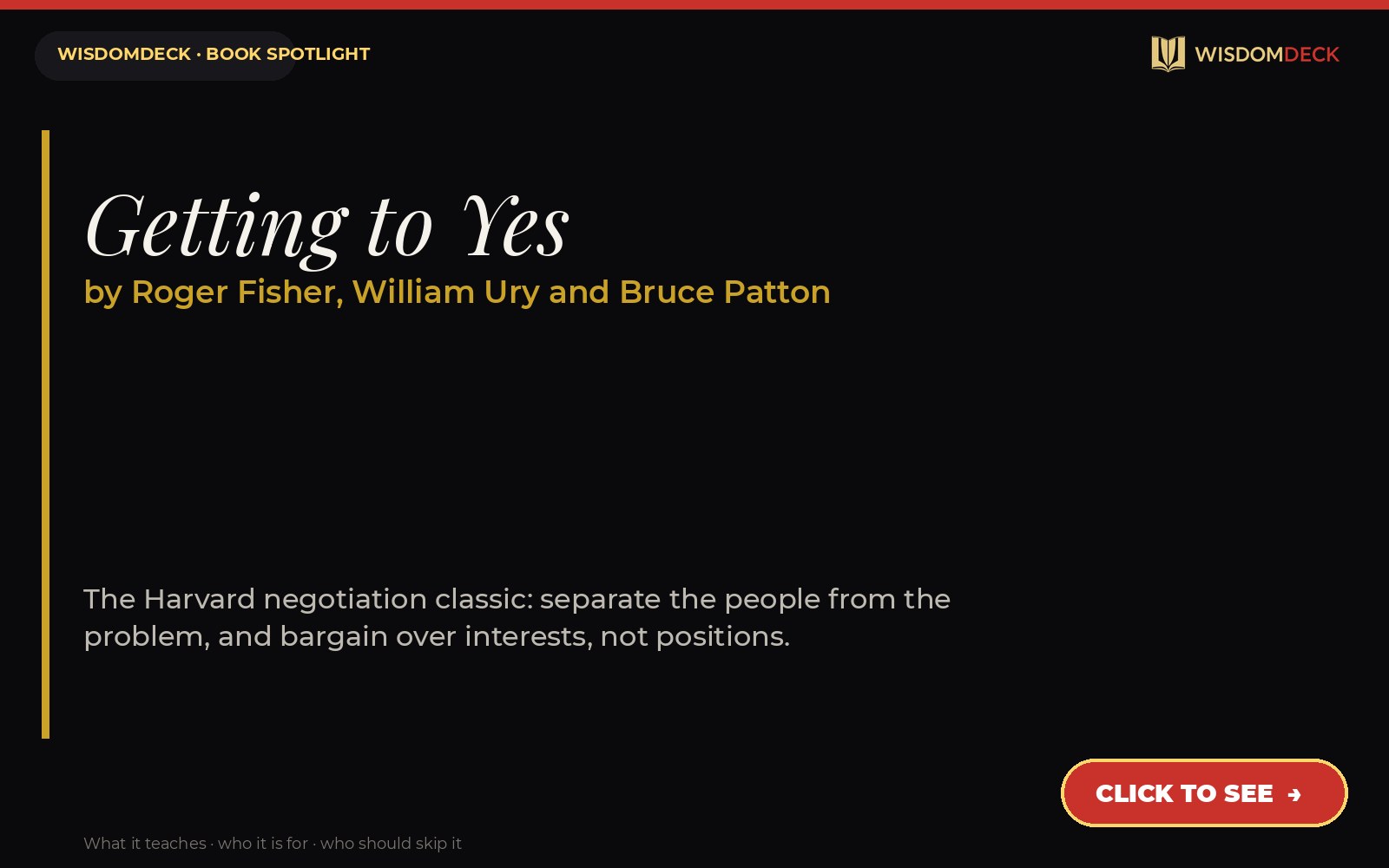
The Harvard negotiation classic: separate the people from the problem, and bargain over interests, not positions.
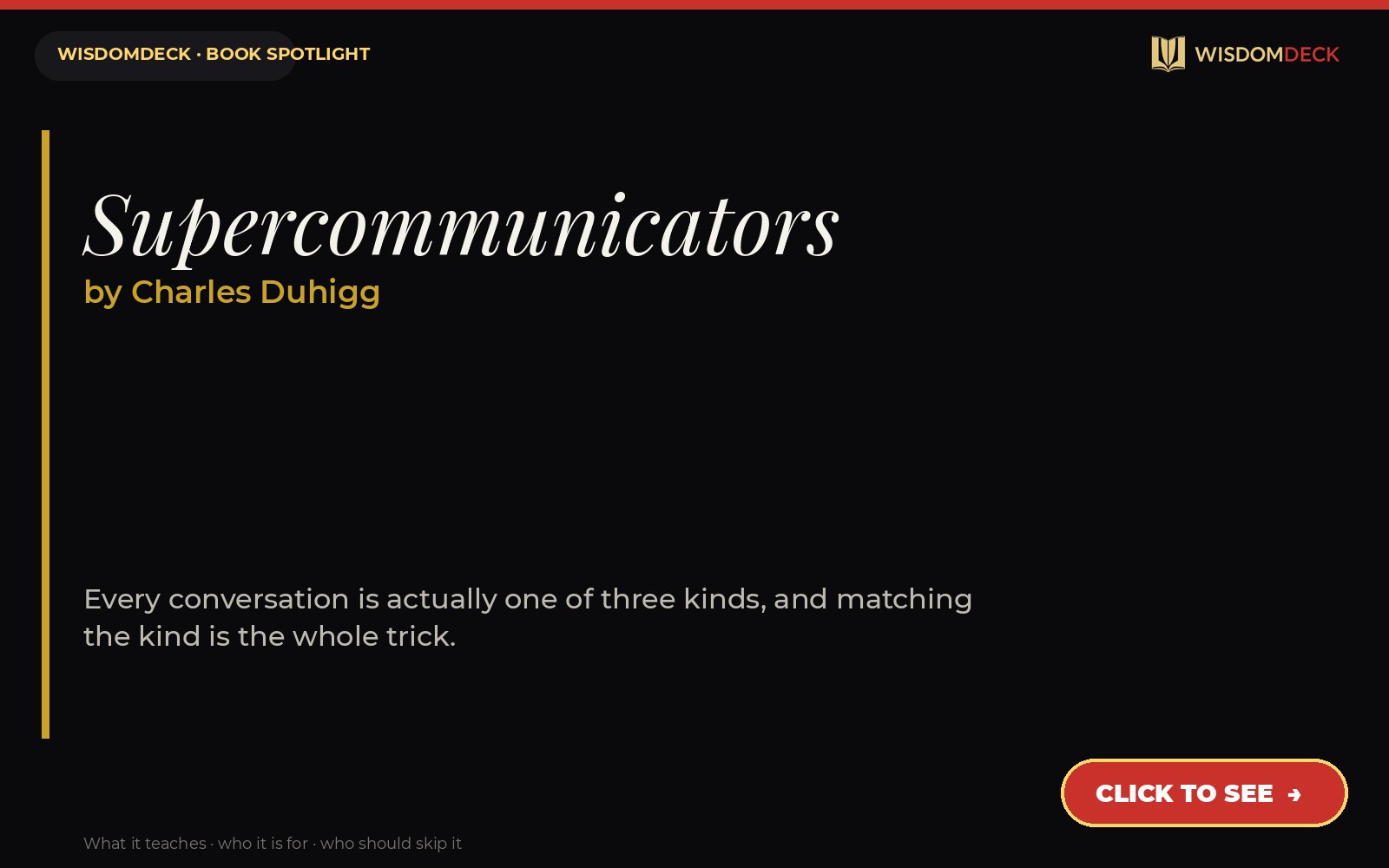
Supercommunicators by Charles Duhigg
Every conversation is actually one of three kinds, and matching the kind is the whole trick.
Tools that put the book to work
Reading is the easy part. Three simple tools that turn the idea into a daily routine:
External Webcam
Eye contact through a lens. Presence on screen is a learnable skill, and it starts with being seen. Read our review.
USB Desk Microphone
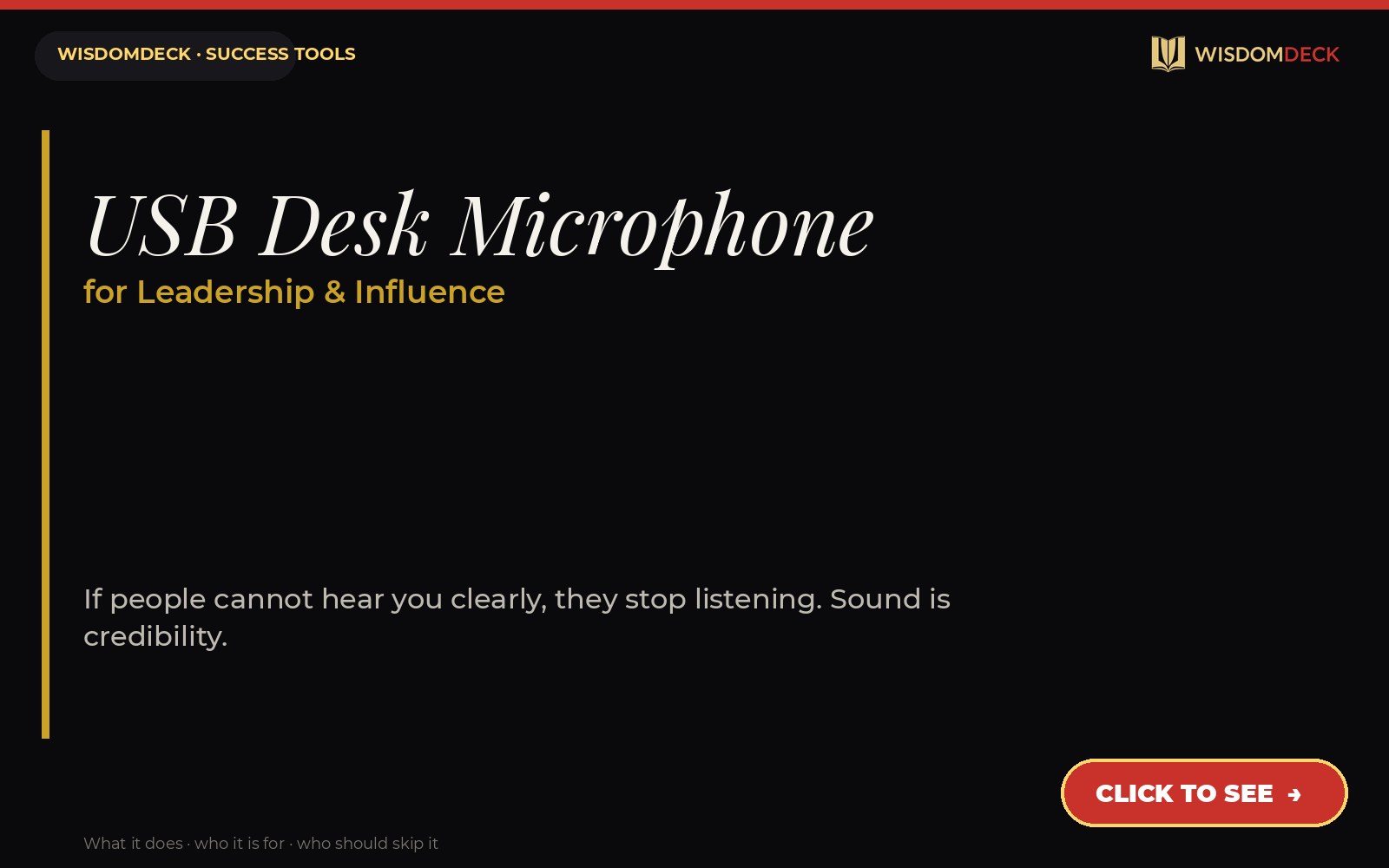
If people cannot hear you clearly, they stop listening. Sound is credibility. Read our review.
Digital Voice Recorder
Hear yourself the way the room hears you. Nothing improves a speaker faster. Read our review.
Links are affiliate links; the price to you is identical. Nothing here is medical, financial or professional advice. Filed under Leadership & Influence.
More picks, with pictures
Three tools and three books that fit the same goal. Each has its own full review here, including who should skip it.
As an Amazon Associate we earn from qualifying purchases. Images are our own review cards, not product photos.


Launch list
Be there on day one.
One email when the book opens on Kickstarter. Nothing else. Already reading the book? Your Cheat Sheet is at wisdomdeck.com/free.
Coming soon on 
The book itself — 40 laws in ten parts, 320 pages, each ending with The Work — is funded first on Kickstarter.