

The Second Mountain by David Brooks: What It Teaches, Who It’s For, Who Should Skip It
3 min read
As an Amazon Associate we earn from qualifying purchases. Nobody paid to be on this page — no author, no publisher. This is our plain-language overview of what the book argues, who it suits and who should skip it, so you can decide in two minutes whether it deserves a place on your shelf.
Click hereto see it→Click to see The Second Mountain
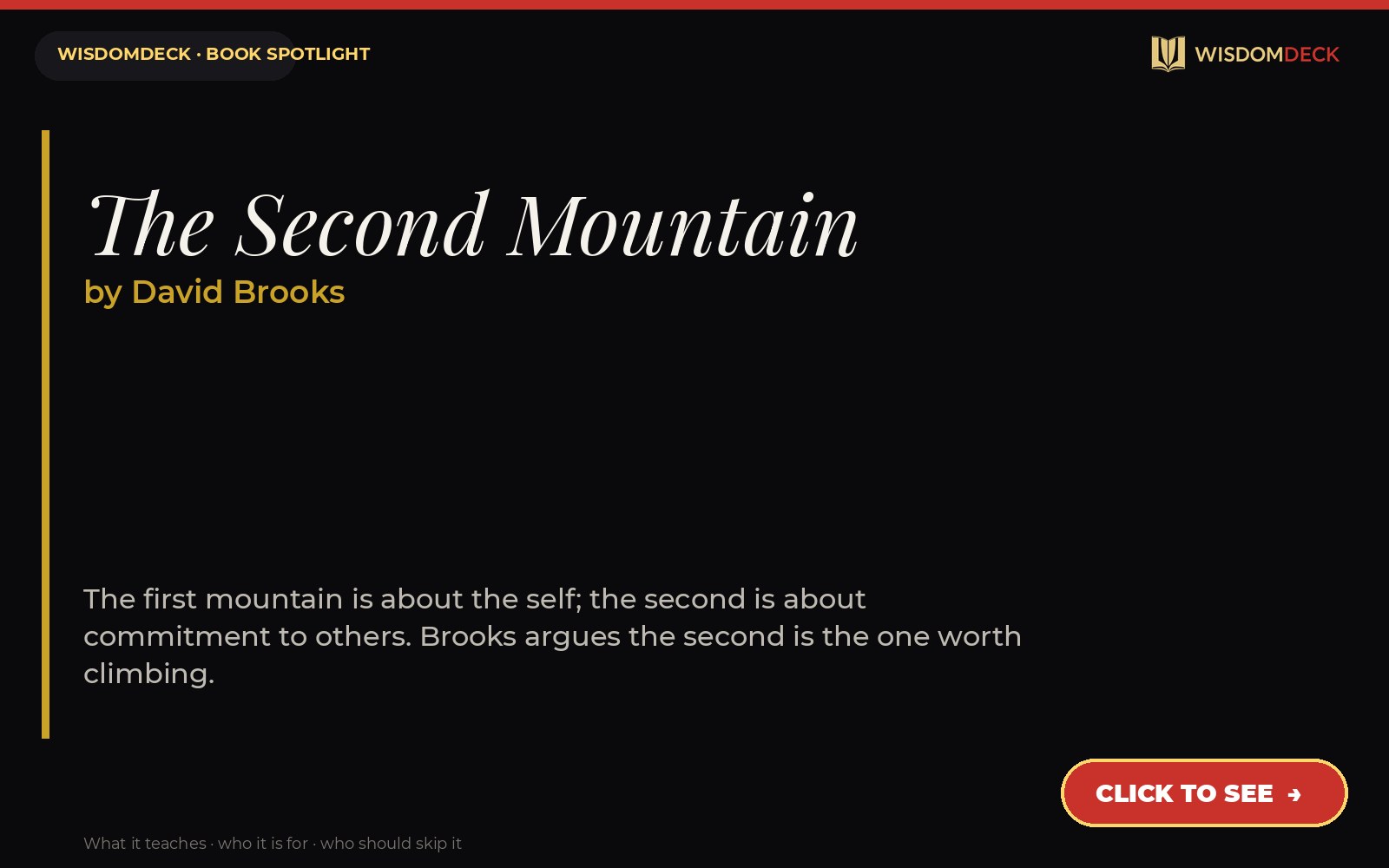
The first mountain is about the self; the second is about commitment to others. Brooks argues the second is the one worth climbing.
What the book argues
Brooks describes a culture of hyper-individualism that leaves people successful and empty. The second mountain is reached through four commitments: a vocation, a spouse and family, a philosophy or faith, and a community. The book mixes memoir, biography and social criticism.
Three ideas you can use this week
- Joy comes from commitments that cost something, not from freedom to keep options open.
- A vocation is found by paying attention to what makes you indignant and what makes you lose track of time.
- Community is built, not found.
Who it is for
Readers at midlife who have achieved what they set out to and feel oddly flat.
How to turn it into a routine
Write which of the four commitments is thinnest in your life and one act toward it this month.
Who should skip it
Long, digressive and more essay than guide. Brooks’s politics and faith journey color it.
Verdict
Thoughtful and often moving. Not a how-to, but a why-to.
Click hereto see it→Click to see The Second Mountain
If you liked the sound of this
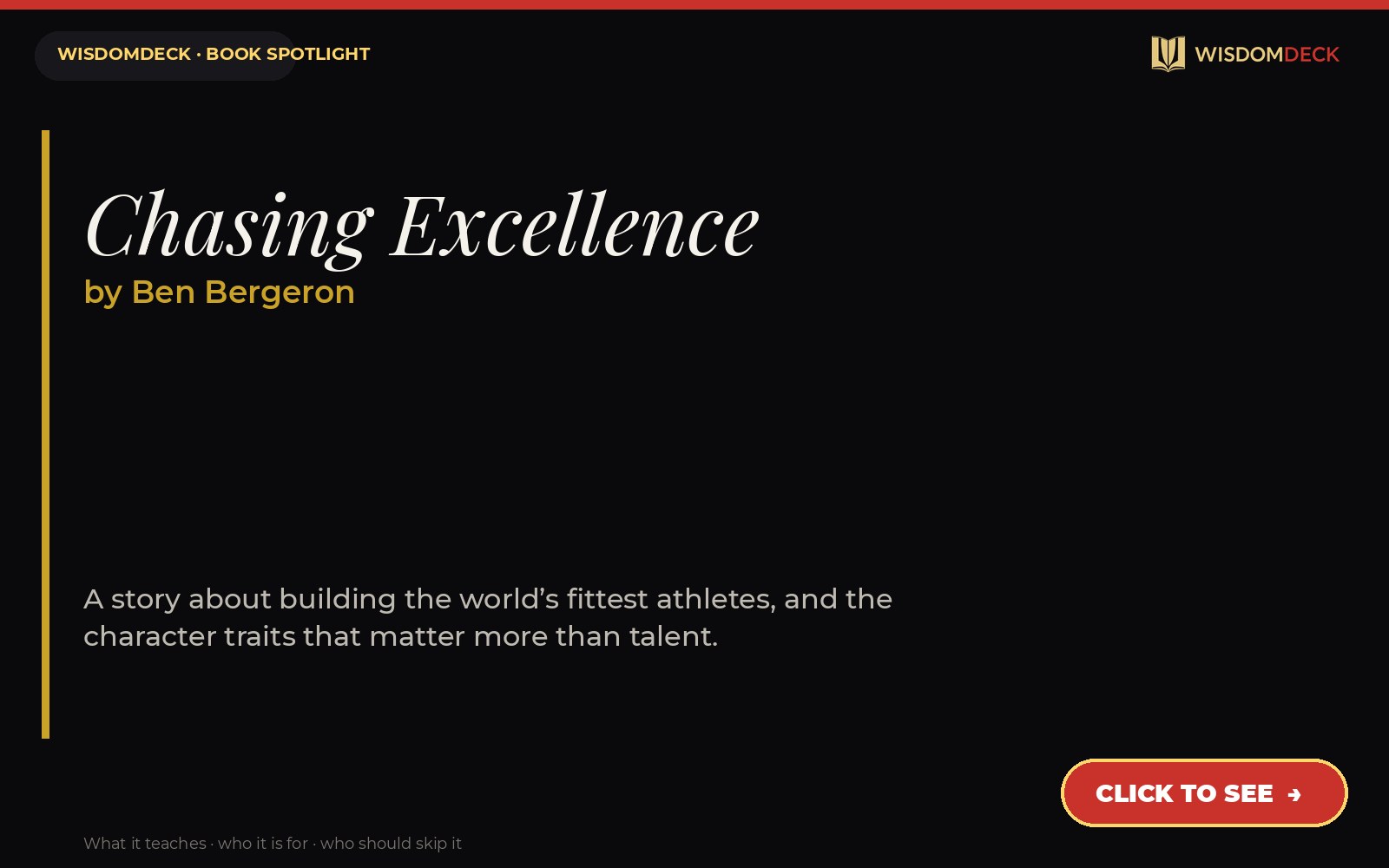
Chasing Excellence by Ben Bergeron
A story about building the world’s fittest athletes, and the character traits that matter more than talent.
Leadership and Self-Deception by The Arbinger Institute
Most interpersonal problems come from one habit: seeing people as objects. This fable shows you doing it.
Tools that put the book to work
Reading is the easy part. Three simple tools that turn the idea into a daily routine:
Leather Journal Notebook
Where you write down who you said you would be, and check.
Desk Nameplate for Your Standards
Your standards in a frame on the desk. Hard to break a rule you can read.
Fountain Pen
A pen you want to pick up makes you write. Writing makes you think.
Links are affiliate links; the price to you is identical. Nothing here is medical, financial or professional advice. Filed under Character & Integrity.
More picks, with pictures
Three tools and three books that fit the same goal. Each has its own full review here, including who should skip it.
As an Amazon Associate we earn from qualifying purchases. Images are our own review cards, not product photos.


Launch list
Be there on day one.
One email when the book opens on Kickstarter. Nothing else. Already reading the book? Your Cheat Sheet is at wisdomdeck.com/free.
Coming soon on 
The book itself — 40 laws in ten parts, 320 pages, each ending with The Work — is funded first on Kickstarter.


