

Bookends for a Small Reference Shelf: Keep Often-Used Books Upright
2 min read
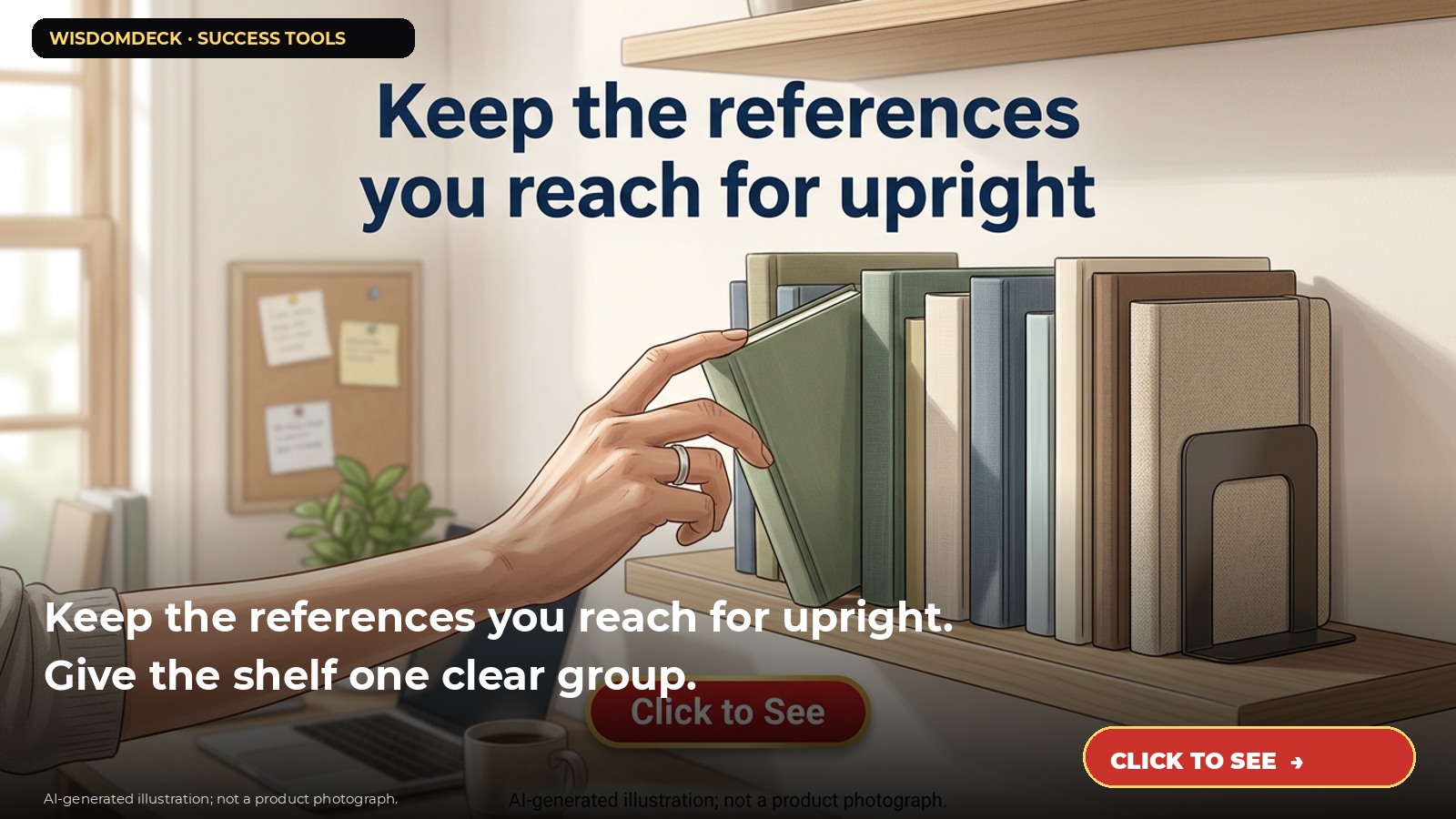
We may earn a commission if you buy through this link.
See Gardesk adjustable metal bookends on Amazon. Check the current listing before buying; existing supplies may be all you need.
Reference books and notebooks can slide into a pile when only a few are stored on a short shelf. A pair of bookends can hold a small group upright, making the titles easier to see and return. The setup still depends on a stable surface and a reasonable load.
Pick the books before choosing the shelf
Gather the books or binders you actually use and sort out those that belong elsewhere. Measure the shelf’s depth and usable width, and consider whether its surface is level. Do not place a heavy group on a weak or unstable shelf because bookends make it look organized.
Keep books within the shelf’s safe capacity and avoid stacking them high enough to fall. Store heavy volumes lower when appropriate, and keep the shelf away from exits or routes where a falling item could cause injury.
Set the bookends around a compact group
Place the supports so they hold the books without bending covers or squeezing pages. Make sure the end plates sit flat and do not overhang the shelf. If a bookend slides, tips, or scratches the furniture, stop and adjust the arrangement or choose another suitable solution.
For example, a small group of reference guides used during a weekly household task can sit together at one end of a stable desk shelf. Put the most frequently consulted title where it can be removed without pulling the others over.
Choose what earns the easy-to-reach spot
Keep only the current, useful references in the active group. Outdated manuals or duplicates may belong in a labeled archive or may no longer need to occupy the desk. Store digital-only materials in the system where you can reliably find them.
Use labels or a short index only if they help other users find the group. Avoid placing private records in an open reference shelf where visitors can read them.
Review stability after rearranging
After adding or removing a book, check that the support remains stable and the shelf has not shifted. Do not use a bookend to brace furniture, hold a door, or support objects outside its intended use. Follow the product’s directions for adjustment and cleaning.
If children or pets can reach the shelf, consider whether the books and metal supports could be pulled down. Secure furniture according to its manufacturer’s instructions and keep heavy objects out of reach where needed.
Skip bookends if the group does not need them
A single book can rest flat or stand against a suitable wall; a crowded shelf may need editing rather than more accessories. Check the bookend dimensions and material before purchase and use existing supports if they work.
The practical benefit is a visible, contained reference group. Bookends do not make an unstable shelf safe or guarantee that books cannot fall.

Launch list
Be there on day one.
One email when the book opens on Kickstarter. Nothing else. Already reading the book? Your Cheat Sheet is at wisdomdeck.com/free.
Coming soon on 
The book itself — 40 laws in ten parts, 320 pages, each ending with The Work — is funded first on Kickstarter.


