Boredom Is Where the Real Work Lives
2 min read
Every worthwhile pursuit has a honeymoon. The new skill, the new routine, the new project: for a few weeks it is fascinating, progress is fast, and every session feels like discovery. Then the honeymoon ends and the pursuit becomes what it actually is, which is repetition. The same drills. The same distance. The same kind of work, day after day, with progress now slow enough to be invisible. This is the point at which most people conclude they have lost interest. They have not lost interest. They have arrived at the real work, and the real work is boring.
The Honeymoon Is Not the Pursuit
Early progress is fast because you are going from nothing to something, and that curve is steep for everyone. It is also misleading, because it teaches you that the pursuit feels like rapid, exciting improvement. It does not. That was the entrance. The pursuit itself is a long plateau with occasional steps, and the steps are earned by staying on the plateau long enough. People who chase the honeymoon feeling from one new thing to the next collect a lot of beginnings and no mastery.
Why Boredom Is the Filter
Almost anyone can do the exciting part. Very few can do the boring part, day after day, without novelty and without applause. That scarcity is precisely why the boring part is where the value is. If the fundamentals were thrilling, everyone would master them and mastery would be worth nothing. The tedium is the moat. On the far side of it are the people who did not leave, and they are not there because they found it interesting. They are there because they stopped requiring it to be.
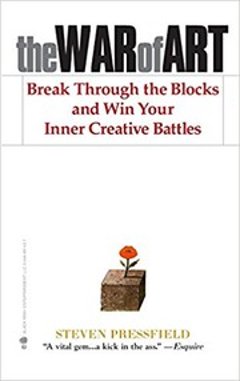 Worth reading on thisThe War of Art by Steven Pressfield — A short, blunt book about the force that stops you starting. Read it in an afternoon; feel it for years.Click hereto see it→
Working Inside the Boredom
Expect it and name it
“This is the boring middle.” Saying so removes the alarm. Boredom is not a signal that something is wrong. It is a signal that you have reached the part that counts.
Find the small variation inside the repetition
Masters are rarely bored, not because the work is novel, but because they attend to details that beginners cannot see. Look closer at the same drill and it becomes a different drill.
Measure something that moves
On the plateau, outcomes stall. Inputs do not. Count sessions, reps, hours. A moving number sustains attention when results will not.
 Goes deeperCan’t Hurt Me by David Goggins — Not gentle, and not for everyone. But nobody explains earned confidence more honestly.Click hereto see it→
Stop asking whether you feel like it
You will not. The boring middle does not produce enthusiasm. It produces results, later, for people who did it without enthusiasm.
What Is on the Other Side
Competence, first, then something better: the ability to do the thing without thinking, which frees the mind for the parts that are genuinely creative. Then, often, the return of interest at a deeper level, because mastery reveals a complexity that the beginner could never see. But that return is a reward for the boredom endured, not a substitute for it. You cannot skip to the interesting part. It is built out of the boring one.
Do the Boring Thing
Today’s session will not be exciting. Do it anyway, with full attention, and count it. The people you admire spent years in exactly this kind of unremarkable repetition. It was never boring because they were doing it wrong. It was boring because that is what the real work is.
Two more books, and one tool

Launch list
Be there on day one.
One email when the book opens on Kickstarter. Nothing else. Already reading the book? Your Cheat Sheet is at wisdomdeck.com/free.
Coming soon on 
The book itself — 40 laws in ten parts, 320 pages, each ending with The Work — is funded first on Kickstarter.