

Entryway Wall Hooks: Give Daily Items a Landing Place After Checking the Wall
2 min read
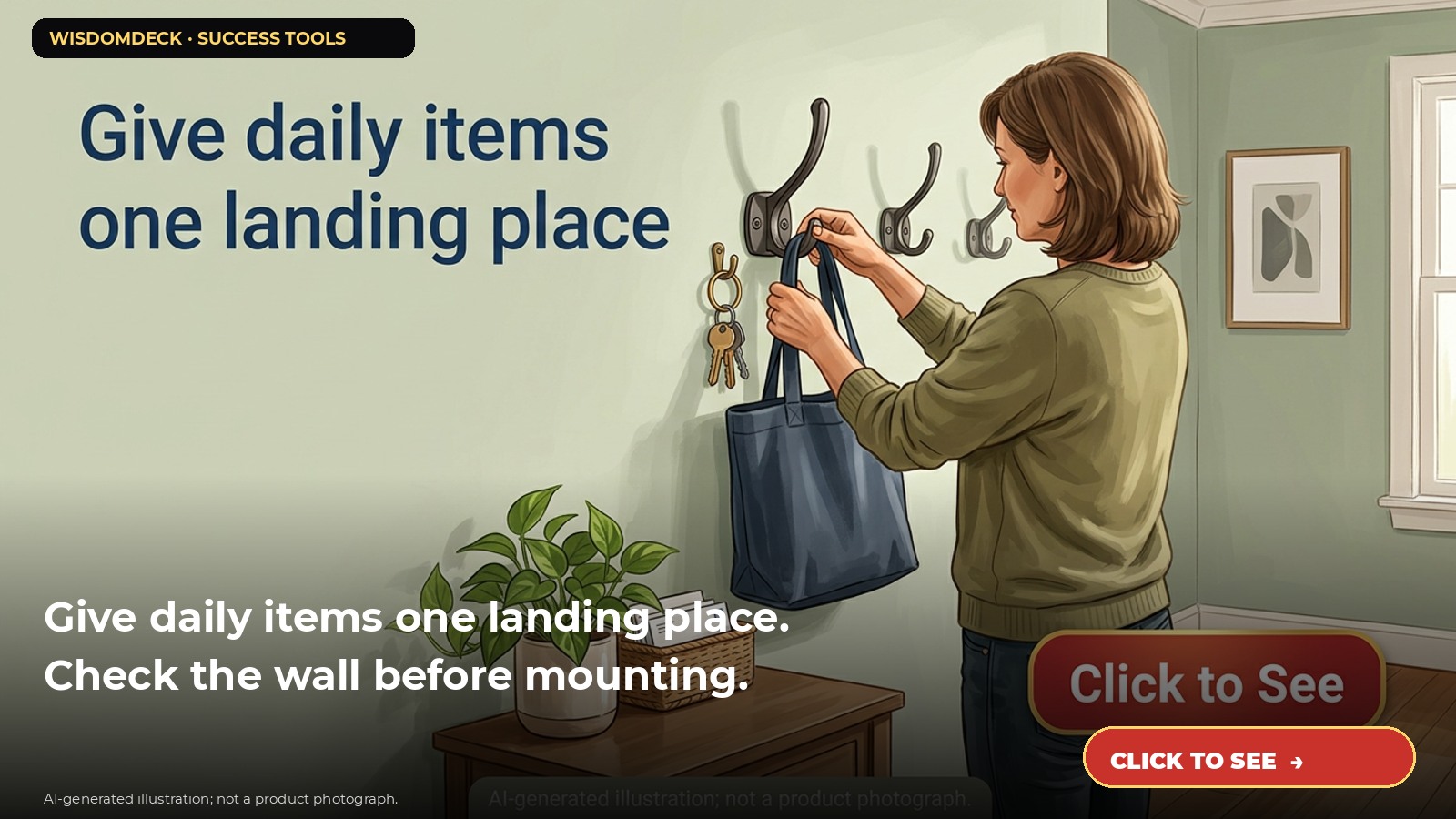
We may earn a commission if you buy through this link.
See Amazon Basics wall-mounted coat hooks on Amazon. Check the current listing before buying; existing supplies may be all you need.
Keys, a light bag, and a jacket can end up on the nearest chair when they have no obvious return spot. A wall hook near the route into the home can make the next step visible. Before installing one, check the wall, the mounting instructions, and whether you have permission to make the change.
Choose the item and location first
Decide what the hook is meant to hold. A light daily item has different requirements from a heavy backpack, wet coat, or equipment. Keep the hook away from door swings, stairways, heaters, electrical controls, and places where a hanging object could block access or become a trip hazard.
Check the product’s instructions and the wall construction. The included hardware and stated load limit may depend on installation into a particular backing, such as a wood stud. Do not apply a published rating to drywall, masonry, or other surfaces unless the maker’s directions say that setup qualifies.
Get permission and install as directed
If you rent, share a home, or live under building rules, confirm whether drilling is allowed before starting. Use the specified fasteners and tools, locate hidden utilities as appropriate, and stop if you cannot identify a safe installation point. For uncertain wall conditions or heavy loads, consult a qualified installer.
Do not substitute a nail, adhesive, or different screw because it seems close enough. Follow the included instructions, keep fingers clear while working, and avoid mounting above a place where a falling object could injure someone or break something.
Make the return action obvious
Place the hook where the item naturally comes off and where it is reachable by everyone who uses it. If the household has different heights or mobility needs, choose a location that works for the people involved. A hook is not useful if returning the item requires moving furniture or reaching uncomfortably.
For example, a hook near the entry might hold a light tote used for errands. Keep keys in a separate consistent place if they would be obscured or unsafe on the same hook.
Check it after use
Hang only the item the installation was intended to support. Look for movement, loose fasteners, wall damage, or a changing load. If the hook shifts, remove the object and investigate rather than tightening blindly or adding more weight.
Keep bags from covering switches, blocking doors, or containing hazardous items within children’s reach. The location should reduce clutter without creating a new access or safety problem.
Try a no-drill routine first
Before purchasing hardware, test a nearby shelf, tray, or existing hook for a week. A dedicated wall hook may be unnecessary if a simple catchall already keeps the same items together.
Check the current listing for dimensions, quantity, hardware, and installation requirements. The outcome to look for is a sensible landing place—not a promise that one hook works on every wall or carries every item.

Launch list
Be there on day one.
One email when the book opens on Kickstarter. Nothing else. Already reading the book? Your Cheat Sheet is at wisdomdeck.com/free.
Coming soon on 
The book itself — 40 laws in ten parts, 320 pages, each ending with The Work — is funded first on Kickstarter.


