

A Food Thermometer Check: Measure the Thickest Part and Follow Safe-Temperature Guidance
2 min read
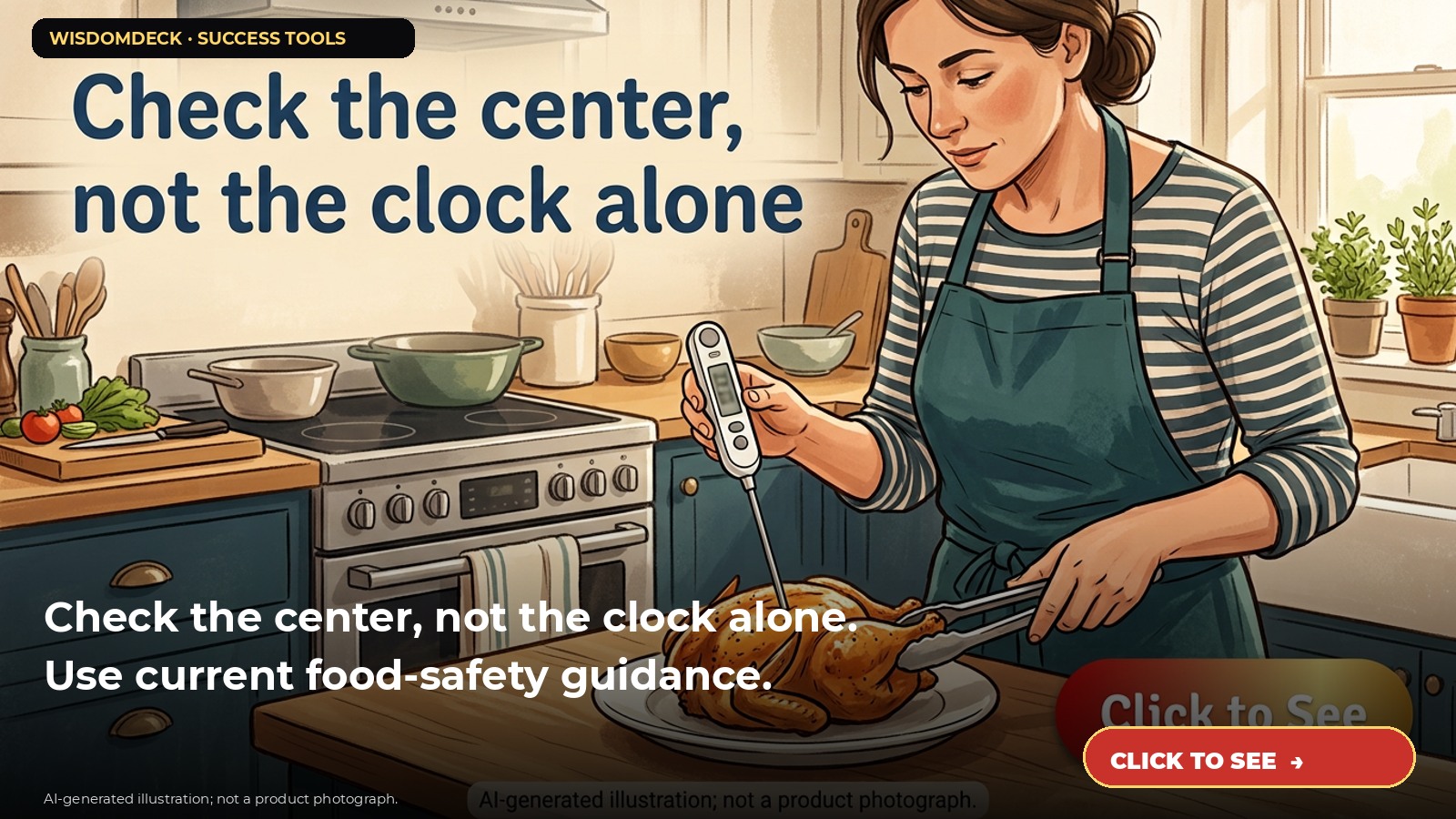
We may earn a commission if you buy through this link.
See TempPro TempSwift instant-read food thermometer on Amazon. Check the current listing before buying; existing supplies may be all you need.
Cooking time alone does not tell you the internal temperature of every piece of food. A food thermometer can help you check a reading, but the result depends on using a clean, suitable instrument correctly and comparing it with current food-safety guidance for the particular food.
Check the thermometer and instructions
Read the thermometer manual for its temperature range, response time, cleaning directions, and placement guidance. Check that the probe is intact and the display works. Do not use a damaged instrument or assume its reading is accurate because the screen turns on.
Use a food thermometer intended for the task. Follow official food-safety recommendations for the food being cooked rather than relying on color, texture, elapsed time, or a generic number remembered from another recipe.
Place the probe carefully
Insert the probe into the thickest part of the food as directed, avoiding bone, fat pockets, the pan, and other surfaces that could distort the reading. For thin foods, follow the thermometer maker’s instructions for positioning. Wait for the display to stabilize according to the manual.
For example, when checking a large piece of food, take a reading in the thickest area and check more than one location if trusted guidance recommends it. Keep hands clear of hot surfaces and use a clean utensil or mitt to steady cookware.
Use the reading to make a safe next decision
Compare the measurement with current government food-safety guidance for the specific food. If it has not reached the recommended temperature, continue cooking and recheck using a clean probe. Do not guess, average an unsafe reading with a higher one, or assume a warm-looking surface means the center is ready.
Prevent cross-contamination between raw and cooked foods. Clean the probe before and after use as its instructions specify, and do not set it down on a surface that touched raw food without cleaning it.
Clean and store it properly
Follow the manufacturer’s directions for cleaning the probe and body. A water-resistant rating does not necessarily mean the entire thermometer can be submerged or placed in a dishwasher. Dry and store it in its case or designated drawer, away from sharp tools and extreme heat.
Check the battery and calibration guidance if readings seem inconsistent. Replace or recalibrate the instrument only as the maker recommends; do not alter it based on a hunch.
Choose a thermometer that fits the routine
Check the current listing for probe length, display, range, water resistance, battery, and care details. The referenced TempPro model is listed as an instant-read thermometer with a probe; verify the selected version before buying.
A thermometer supports a measured check. It does not replace safe handling, accurate placement, or current food-safety advice. Keep the instrument clean between foods.

Launch list
Be there on day one.
One email when the book opens on Kickstarter. Nothing else. Already reading the book? Your Cheat Sheet is at wisdomdeck.com/free.
Coming soon on 
The book itself — 40 laws in ten parts, 320 pages, each ending with The Work — is funded first on Kickstarter.


