

A Kitchen Scale Routine: Tare the Bowl and Record Units for Baking
2 min read
We may earn a commission if you buy through this link.
See OXO Good Grips 5-pound kitchen scale on Amazon. Check the current listing before buying; existing supplies may be all you need.
A kitchen scale can help measure ingredients by weight, but the result depends on the units, capacity, surface, and recipe. Read the scale manual and recipe carefully. A food scale is for cooking tasks; do not use it to make health or medical decisions.
Set up the scale and bowl
Place the scale on a flat, dry counter and check that the display is readable. Confirm the unit setting matches the recipe. Use a clean bowl that fits on the platform without covering controls or making the scale unstable.
Check the scale’s maximum capacity, including the bowl and ingredients. Do not overload it or rest the bowl against a wall. If the display behaves unexpectedly, remove the load and consult the manual rather than pressing random controls.
Tare between ingredients
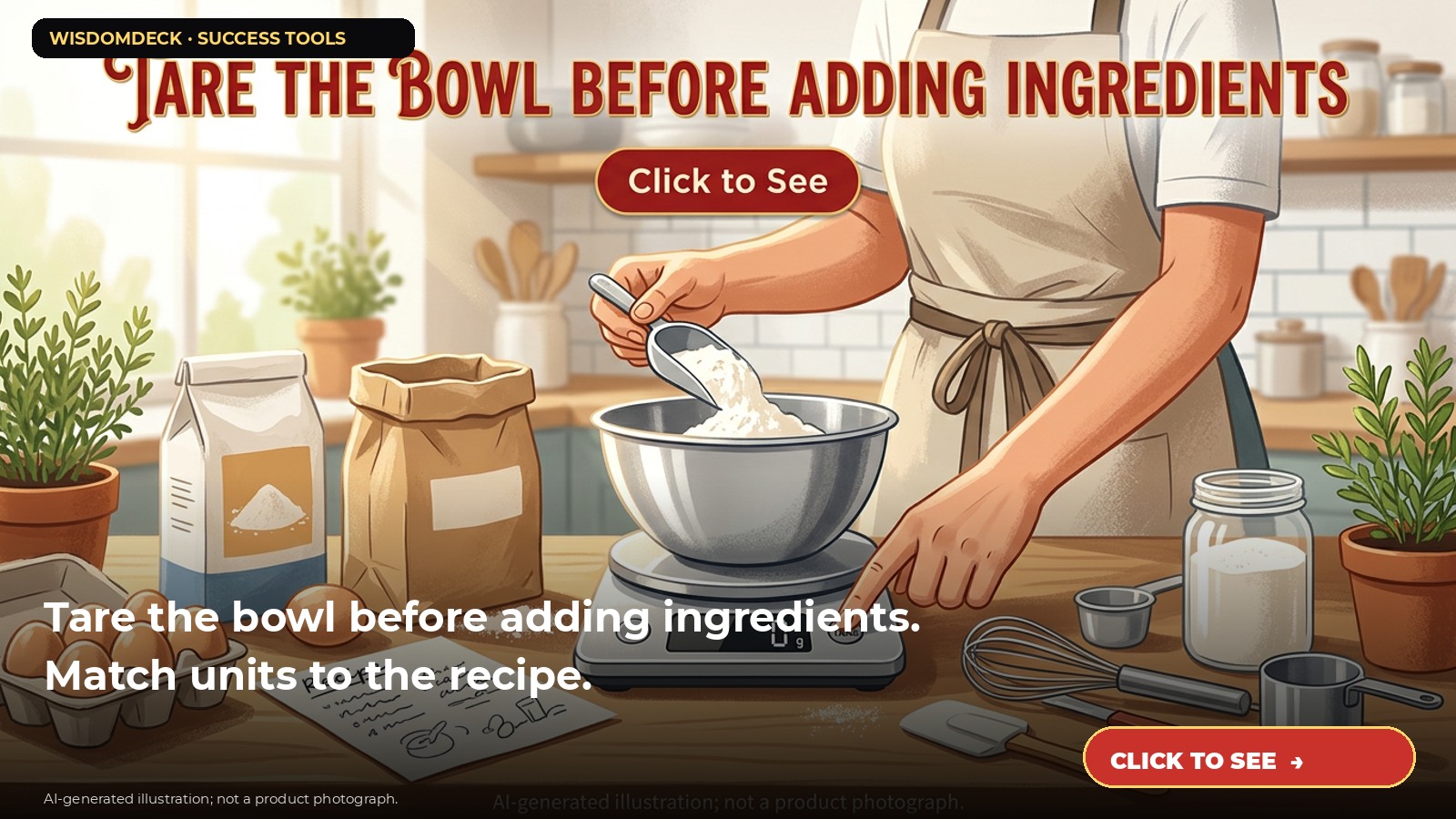
Follow the scale instructions for zeroing or taring the bowl. Add ingredients gradually and pause for the reading to settle. If measuring several items into one bowl, tare between each addition and keep track of which ingredient you are weighing.
For example, set a clean mixing bowl on the platform, zero the display, and add flour until the recipe’s weight is reached. Confirm whether the recipe uses grams or ounces, and avoid converting from cups by guessing.
Check the recipe and result
Read the recipe’s ingredient list and units before beginning. If a weight seems inconsistent, verify the source and the scale setting. A kitchen scale cannot correct an incomplete recipe, an incorrect ingredient, or an unsuitable measuring method.
For food safety, follow recipe and government guidance for cooking temperatures and handling. Weight alone does not show whether a food is fully cooked or safe to eat.
Clean the platform safely
Check whether the scale platform detaches and how it should be washed. Keep liquid away from the display, battery compartment, and controls unless the maker says otherwise. Wipe spills promptly and dry the scale before storing it.
Replace batteries as instructed and do not use the scale if its display or buttons are damaged. Keep it away from heat, steam, and children if small parts present a risk.
Choose a scale for the recipe tasks
Review the current listing for capacity, unit increments, tare function, display, batteries, and cleaning method. The referenced OXO model is listed as a five-pound scale with a pull-out display; confirm the exact features and limits.
Measuring cups may already work for your recipes. A scale is most useful when you have recipes that specify ingredient weights. Keep a small tare note with unfamiliar recipes so you can repeat the sequence without confusing the display or units. If you weigh many ingredients, clear the scale and confirm each reading before mixing them together. Wipe spills promptly.

Launch list
Be there on day one.
One email when the book opens on Kickstarter. Nothing else. Already reading the book? Your Cheat Sheet is at wisdomdeck.com/free.
Coming soon on 
The book itself — 40 laws in ten parts, 320 pages, each ending with The Work — is funded first on Kickstarter.


