A Dish Rack Check: Measure the Counter and Plan for Airflow
2 min read
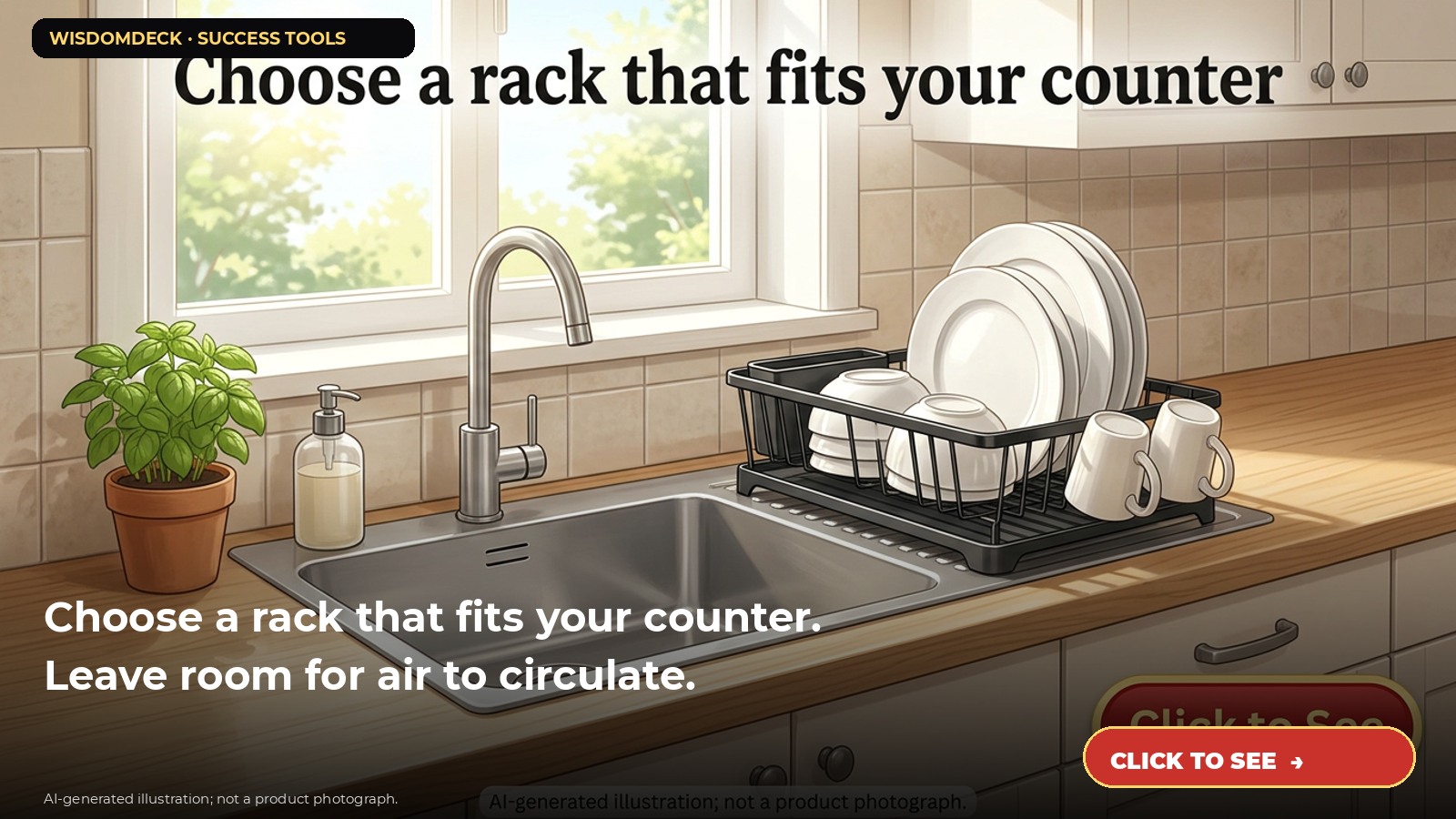
We may earn a commission if you buy through this link.
See MECHEER over-the-sink roll-up dish drying rack on Amazon. Check the current listing before buying; existing supplies may be all you need.
A dish rack is useful when it gives washed items a stable place to drain without taking over the counter. Before buying one, measure the space and consider where the water will go. A rack that fits the sink but blocks a faucet, cutting area, or walkway may make daily kitchen work less convenient.
Measure the real working space
Measure the sink opening, countertop depth, and the clear area where you intend to set the rack. Check the rack’s current dimensions and any stated load or surface requirements. If it rests over a sink, confirm its span and support points match your sink; do not balance it on an edge that can shift.
Think about the items you usually air-dry. A few plates, mugs, or utensils need different spacing from a pot or baking sheet. Do not assume every rack supports heavy cookware simply because it looks sturdy.
Plan drainage and airflow
Follow the product instructions for orientation and use. Keep dishes separated enough for air to move around them. Position the rack so runoff drains where intended and does not collect on a wood counter, floor, or electrical appliance.
For example, wash a small batch, place plates in the designated slots, and spread cups so their openings can drain. Put sharp knives in a safe location rather than loose among dishes, and keep the sink area clear enough to use the faucet without bumping the rack.
Load it in a stable order
Set the rack on a level, appropriate surface. Place heavier items where the maker’s design supports them and avoid leaning tall objects where they could topple. Do not stack more than the rack can safely hold. If the unit rocks, bends, or slides, unload it and correct the setup.
Keep the counter and floor dry. If a child or pet can reach the rack, consider whether the handles, cutlery, or dishes could be pulled down. Put fragile items somewhere secure.
Clean and dry the rack
Food residue and standing water can build up on a rack. Empty the area regularly, wash the rack according to its care directions, and allow it to dry. Check seams, feet, and any coating for wear or rust. Replace or stop using a damaged rack if it cannot be cleaned or remains unstable.
If the rack rolls up or folds, store it only when clean and dry, and follow the maker’s guidance. Do not use it as a cutting board or heat-resistant trivet unless its instructions specifically allow that use.
Compare with a towel or existing rack
A clean dish towel or current rack may already suit your household. Check the listing for dimensions, materials, care, and compatibility with your sink. The referenced MECHEER item is listed as a roll-up stainless-steel over-sink rack; verify the exact size and supported use before purchase.
The useful choice is the one that fits your sink and routine—not necessarily the largest rack or one with the most accessories.

Launch list
Be there on day one.
One email when the book opens on Kickstarter. Nothing else. Already reading the book? Your Cheat Sheet is at wisdomdeck.com/free.
Coming soon on 
The book itself — 40 laws in ten parts, 320 pages, each ending with The Work — is funded first on Kickstarter.