

A Lint Roller Before You Leave: Check the Care Label and the Surface
2 min read
We may earn a commission if you buy through this link.
See Trazon lint rollers and refills on Amazon. Check the current listing before buying; existing supplies may be all you need.
You notice fuzz or loose lint on a jacket just before heading out. A lint roller can be a convenient finishing tool, but the right first move depends on the garment. Delicate, textured, loosely woven, or specialty fabrics may need a different approach than a sturdy everyday coat.
Read the care information first
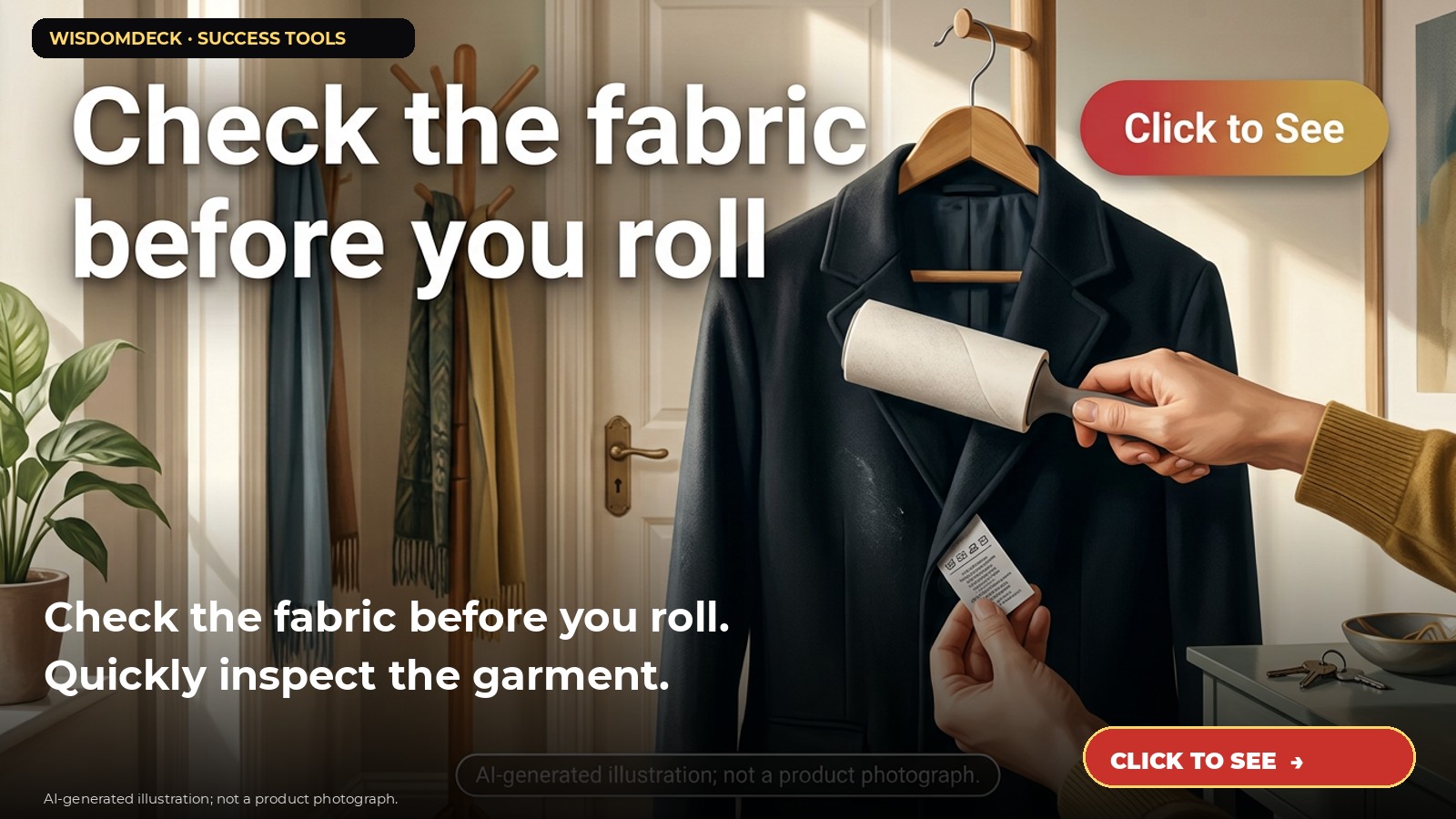
Check the garment label and any manufacturer care instructions. Do not assume a sticky sheet is suitable for every fiber, finish, embellishment, or surface. If the garment is valuable or the care directions are unclear, ask a qualified cleaner or the maker rather than experimenting.
Inspect the area in good light. Remove loose objects from pockets, check for buttons or decorations that could catch, and look for a stain or damaged seam. A roller is for surface lint and loose fibers; it is not a stain treatment, repair method, or substitute for proper cleaning.
Test a small, inconspicuous area
Use the roller exactly as its instructions direct and test gently on a hidden area. Do not press hard or repeatedly roll over the same spot. Stop if the fabric pulls, pills, changes texture, or leaves fibers on the adhesive in a way that suggests damage.
For garments where the care directions advise against adhesive tools, choose a suitable brush or another approved method. There is no universal lint-removal method for every textile.
Work in a deliberate direction
If the test is acceptable, use light passes over a small area and inspect the result between passes. Keep the adhesive away from skin, hair, delicate trim, and items that should not be touched by sticky material. Replace a sheet when it no longer picks up loose debris rather than dragging a used surface across the garment.
For example, a sturdy coat with surface lint may tolerate a brief pass after a successful test. A loosely knitted scarf or garment with delicate ornamentation may not. The care label and the fabric’s response matter more than a generic routine.
Keep a compact reset spot
Store the roller near the place where you get dressed, but keep it away from heat, moisture, and small children. Put a small waste container nearby if that makes used sheets easier to discard. Follow local disposal guidance and the product instructions; do not flush adhesive sheets.
Keep extra refills only if the tool is useful in your actual routine. Check that replacement parts fit the handle and compare current package details before ordering, since product assortments can change.
When not to buy one
If you have a suitable clothes brush or rarely encounter lint, use what you own. Skip an adhesive roller when a manufacturer warns against it, when a garment needs professional care, or when the issue is pilling or damage rather than loose surface material.
The goal is a small, appropriate finishing step. No roller guarantees a perfect finish or makes an unsuitable fabric safe to treat.

Launch list
Be there on day one.
One email when the book opens on Kickstarter. Nothing else. Already reading the book? Your Cheat Sheet is at wisdomdeck.com/free.
Coming soon on 
The book itself — 40 laws in ten parts, 320 pages, each ending with The Work — is funded first on Kickstarter.


