A Pastry Brush Routine: Keep Ingredients Separate and Clean the Bristles
2 min read
We may earn a commission if you buy through this link.
See OXO Good Grips silicone basting and pastry brush on Amazon. Check the current listing before buying; existing supplies may be all you need.
A pastry brush can spread a thin layer of an ingredient over dough or a pan, but keeping it clean and using it appropriately are important. Follow recipe, food-safety, utensil, and cookware instructions. Do not assume all brushes suit every temperature or ingredient.
Prepare the brush and workspace
Inspect the brush head and handle for cracks, loose parts, or residue. Wash it before first use and between tasks as required. Place ingredients in separate clean bowls and keep the brush from touching surfaces that may be contaminated.
Check the brush’s temperature rating and whether it is meant for hot pans, pastries, or another use. Keep it away from open flames and heating elements. Use an oven mitt when working near hot cookware.
Apply ingredients with control
Dip only the bristles into the ingredient and let excess drip back into the bowl. Brush gently over the intended area, keeping the brush clear of the counter. Use a separate clean utensil if an ingredient has touched raw food and another surface is ready to eat.
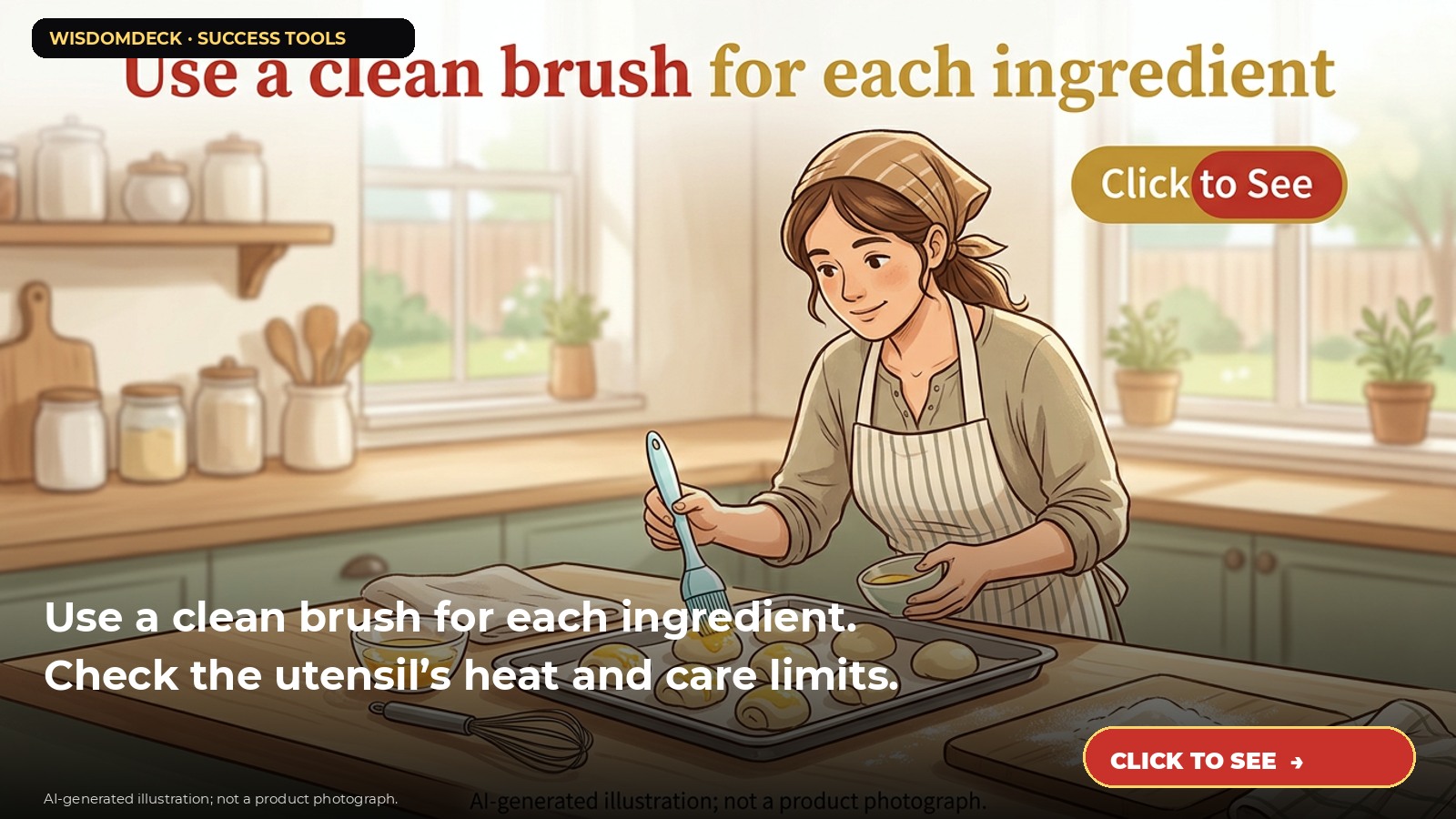
For example, use a clean brush to apply an egg wash to pastry, then set it on a clean rest. Do not return the used brush to a shared ingredient bowl if it has touched raw dough or another food surface. Follow food-safety advice for handling eggs and other perishable ingredients.
Keep heat and cross-contact in mind
A product description may say a brush is heat resistant, but check its exact limit and instructions. Avoid leaving it in a hot pan or pot. The handle may not tolerate the same temperature as the head.
Do not use a pastry brush for cleaning chemicals, paint, or household tasks and then return it to food preparation. Labeling a dedicated brush can help a shared kitchen keep uses separate.
Wash, inspect, and dry it
Follow the maker’s washing instructions, including whether the brush is dishwasher safe. Check around the bristles and handle for trapped food. Let it dry fully before storing it in a clean utensil holder or drawer.
Replace a brush that sheds, cracks, retains residue, or cannot be cleaned effectively. Keep it away from knives and other tools that could damage the bristles.
Choose a size that suits the task
Check the current listing for brush size, material, temperature limits, and cleaning directions. The referenced OXO model is a large silicone basting and pastry brush; verify the selected version and instructions.
A small dedicated brush or existing clean utensil may be enough. Use the brush only for a suitable food task and clean it between uses. Keep the brush in a marked food-tool drawer, away from household cleaners and workshop supplies. Replace it when wear makes cleaning unreliable.

Launch list
Be there on day one.
One email when the book opens on Kickstarter. Nothing else. Already reading the book? Your Cheat Sheet is at wisdomdeck.com/free.
Coming soon on 
The book itself — 40 laws in ten parts, 320 pages, each ending with The Work — is funded first on Kickstarter.