

The Habit You Keep on Bad Days Is Your Real Habit
2 min read
On a good day, the habit is easy. You slept, the schedule held, nothing went wrong, and the workout or the page or the practice happened without much thought. Those days do not tell you anything about your habit. The information arrives on the other kind of day: the one with the sick child, the missed flight, the bad news, the argument, the exhaustion. What happens to the habit then is the habit. Everything else was favorable conditions.
Two Habits, One Name
Most people have a good-day habit and a bad-day habit and call them the same thing. The good-day habit is an hour of focused training. The bad-day habit is nothing, with a promise to make it up. Over a year, bad days are perhaps a third of all days, so the real habit is a blend: an hour two-thirds of the time and zero the rest, with each zero making the next return a little harder. The person believes they train an hour a day. They do not. They train when things are going well, and things do not always go well.
Why Bad Days Decide Everything
Because the bad day is where the identity is tested. A habit that only survives good conditions is teaching you, quietly, that the habit is conditional, that you are someone who does this when it is convenient. A habit that survives bad conditions, even in miniature, teaches the opposite: this is who I am regardless. The second lesson is what makes habits permanent. It is only available on bad days, and it is only learned if you show up for them.
 Worth reading on thisThe War of Art by Steven Pressfield — A short, blunt book about the force that stops you starting. Read it in an afternoon; feel it for years.Click hereto see it→
Building the Bad-Day Version
Design it in advance
Decide now what the habit looks like when everything goes wrong. Five minutes of movement. One paragraph. Three minutes of practice. Do not improvise this on the bad day; the bad day will improvise zero.
Make it small enough to be impossible to refuse
The bad-day version is not about progress. It is about continuity. It should be so small that not doing it would feel more effortful than doing it.
Count it as a full day kept
The five minutes on the terrible day is worth more than the hour on the easy day, because it proves something the hour could not. Score it accordingly.
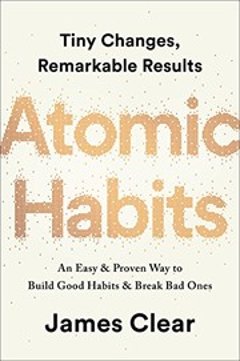 Goes deeperAtomic Habits by James Clear — The clearest manual on making a habit small enough to survive a bad week. Pairs with almost everything on this site.Click hereto see it→
Expect the bad days and stop being surprised
They are a scheduled feature of every year. A plan that does not account for them is not a plan.
What This Produces
A habit with no gaps, which is a different thing entirely from a habit with impressive peaks. No gaps means the identity never gets a chance to weaken. The return after a bad day is not a return at all, because you never left. And the good days, when they come, are built on an unbroken foundation instead of on the rubble of the last collapse.
Plan the Bad Day
Take your most important habit and write down its bad-day version right now, before you need it. Then, on the next terrible day, do that version and nothing more. That is the habit you actually have. Make sure it is one you want.
Two more books, and one tool

Launch list
Be there on day one.
One email when the book opens on Kickstarter. Nothing else. Already reading the book? Your Cheat Sheet is at wisdomdeck.com/free.
Coming soon on 
The book itself — 40 laws in ten parts, 320 pages, each ending with The Work — is funded first on Kickstarter.


