


The Work Does Not Care How You Feel About It
2 min read
The report does not know you are tired. The barbell does not know you had a bad night. The blank page does not know that you are not feeling creative today, and the phone does not know that you are dreading the call. The work is completely indifferent to your internal weather. This sounds harsh and it is actually the most liberating fact in the whole business of getting things done, because it means the question of how you feel and the question of whether the work happens were never connected. You connected them, and you can uncouple them.
The Feeling-First Trap
Most people run a silent policy: I will do the work when I feel like doing the work. Since the work is usually the hard, uncertain, unglamorous kind, the feeling arrives rarely, and the policy guarantees that the work happens rarely too. Then a second layer forms: guilt about the work not happening, which makes the feeling arrive even less. People in this loop are not lazy. They have simply given a veto to a part of themselves that was never qualified to hold it.
What Professionals Know
Ask anyone who produces reliably, in any field, whether they felt like it today. The answer is usually no, and the work got done anyway, because somewhere along the way they stopped consulting the feeling. Not suppressing it; acknowledging it and proceeding. The surgeon operates on days she does not feel sharp. The plumber shows up on days he would rather not. Reliability is not the presence of good feelings. It is the irrelevance of bad ones to the question of whether you begin.
 Worth reading on thisThe War of Art by Steven Pressfield — A short, blunt book about the force that stops you starting. Read it in an afternoon; feel it for years.Click hereto see it→
Uncoupling Them
Let the feeling be true
“I don’t want to do this.” Fine. Accurate. Noted. Now it has been heard and can stop shouting. Fighting the feeling costs more than the work does.
Ask only one question
Not “do I feel like it” but “is it time.” If it is time, begin. The feeling can come along or stay behind; the work does not require its attendance.
Start mechanically
Open the file. Pick up the weight. Dial. The first action is physical, not emotional, and physical actions do not need a mood.
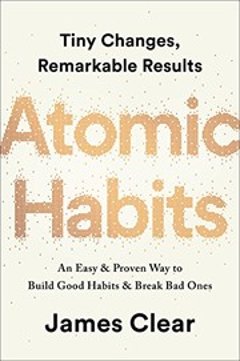 Goes deeperAtomic Habits by James Clear — The clearest manual on making a habit small enough to survive a bad week. Pairs with almost everything on this site.Click hereto see it→
Notice the feeling change after you start
It almost always does, about ten minutes in. Motivation is far more often the result of working than the cause of it. You have had the sequence backward.
What Becomes Possible
Once your output no longer depends on your mood, you become capable of long projects, because long projects span hundreds of moods and most of them are unhelpful. You can be trusted with things. You can trust yourself with things. And you discover that the days you did the work without feeling like it produce the same results as the inspired days, which quietly dissolves the idea that inspiration was ever the point.
It Is Time
Whatever you do not feel like doing today: let the feeling be true, ask whether it is time, and start mechanically. The work does not care how you feel about it. Ten minutes in, you may find that you do not either.
Two more books, and one tool

Launch list
Be there on day one.
One email when the book opens on Kickstarter. Nothing else. Already reading the book? Your Cheat Sheet is at wisdomdeck.com/free.
Coming soon on 
The book itself — 40 laws in ten parts, 320 pages, each ending with The Work — is funded first on Kickstarter.


