Confidence Is a Byproduct of Kept Appointments, Not a Prerequisite for Them
2 min read
Ask someone why they have not started and the honest answer is often “I do not feel confident enough yet.” They are waiting for a feeling to arrive so they can act. The feeling does not arrive, because confidence is not an input. It is an output, produced by one specific process: saying you will do a thing, and then doing it, repeatedly, where it counts.
Where self-doubt actually comes from
Not from your abilities. From your record. If you have told yourself “Monday” a hundred times and meant it twelve, your brain has correctly learned that your word to yourself is unreliable. That learned unreliability shows up as doubt. The fix is not reassurance. It is a new record.
 Worth reading on thisMan’s Search for Meaning by Viktor E. Frankl — Written by a man who lost everything and kept the one thing that mattered. Read it slowly.Click hereto see it→
The record is built in small units someone else sees
Each kept appointment is a data point. The data point is stronger when someone else saw it. This is why people feel more confident after a month of training with a partner than after a month of training alone, even at the same volume: the kept appointments were observed, so they count more.
You do not need big wins. You need a run of small, kept, visible commitments. Twelve weeks of “I said Thursday, and I did it Thursday” changes how you talk to yourself more than any amount of positive self-talk ever has.
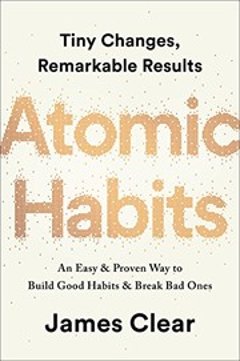 Goes deeperAtomic Habits by James Clear — The clearest manual on making a habit small enough to survive a bad week. Pairs with almost everything on this site.Click hereto see it→
Why this matters for the goals that need nerve
Public speaking, asking for the raise, cold outreach, the difficult conversation. People wait for confidence before these. Instead, schedule the small preparatory actions, keep them in front of a partner, and let confidence accumulate from the record. By the time the nerve-wracking event arrives, you are someone who has kept eleven straight commitments related to it. That person is calmer.
The structure
WisdomDeck’s Reality Check Accountability service is a confidence engine by accident of design: a real human on the WisdomDeck team, a weekly phone call, a written plan, and a question you have to answer out loud. Every “yes” is a kept appointment someone saw. The partner offers no pep talks, because the record does the talking. Not therapy, not coaching. Brief first, price by email, nothing charged until you say yes. See confidence and speaking for how people use it before a big moment.
Two more books, and one tool

Launch list
Be there on day one.
One email when the book opens on Kickstarter. Nothing else. Already reading the book? Your Cheat Sheet is at wisdomdeck.com/free.
Coming soon on 
The book itself — 40 laws in ten parts, 320 pages, each ending with The Work — is funded first on Kickstarter.