Felt Pads Under Furniture: Clean, Match, and Recheck Before Sliding
2 min read
We may earn a commission if you buy through this link.
See Amazon Basics felt furniture pads on Amazon. Check the current listing before buying; existing supplies may be all you need.
A chair that scrapes across a hard floor can be annoying, and an old pad that has slipped away may leave a furniture leg unprotected. Felt pads can provide a contact layer under suitable furniture, but they need the right size, a clean attachment surface, and occasional inspection.
Check the furniture and floor first
Look at the shape and size of each leg and identify the floor material. Confirm that the pad material and adhesive are suitable for both. The same pad may not work equally well on every floor, finish, or furniture foot. When instructions are unclear, check with the flooring or furniture maker before attaching anything.
Do not place a pad over a damaged or dirty surface and expect it to hold. Avoid using felt pads on furniture that must remain stationary for safety or stability, or where a pad could make an item slide unexpectedly.
Prepare one leg at a time
Move the furniture only as needed and use help for heavy items. Do not strain your back or lift a piece in a way that could tip it. If the furniture is unstable or awkward to raise, use a safer method or ask another person for assistance.
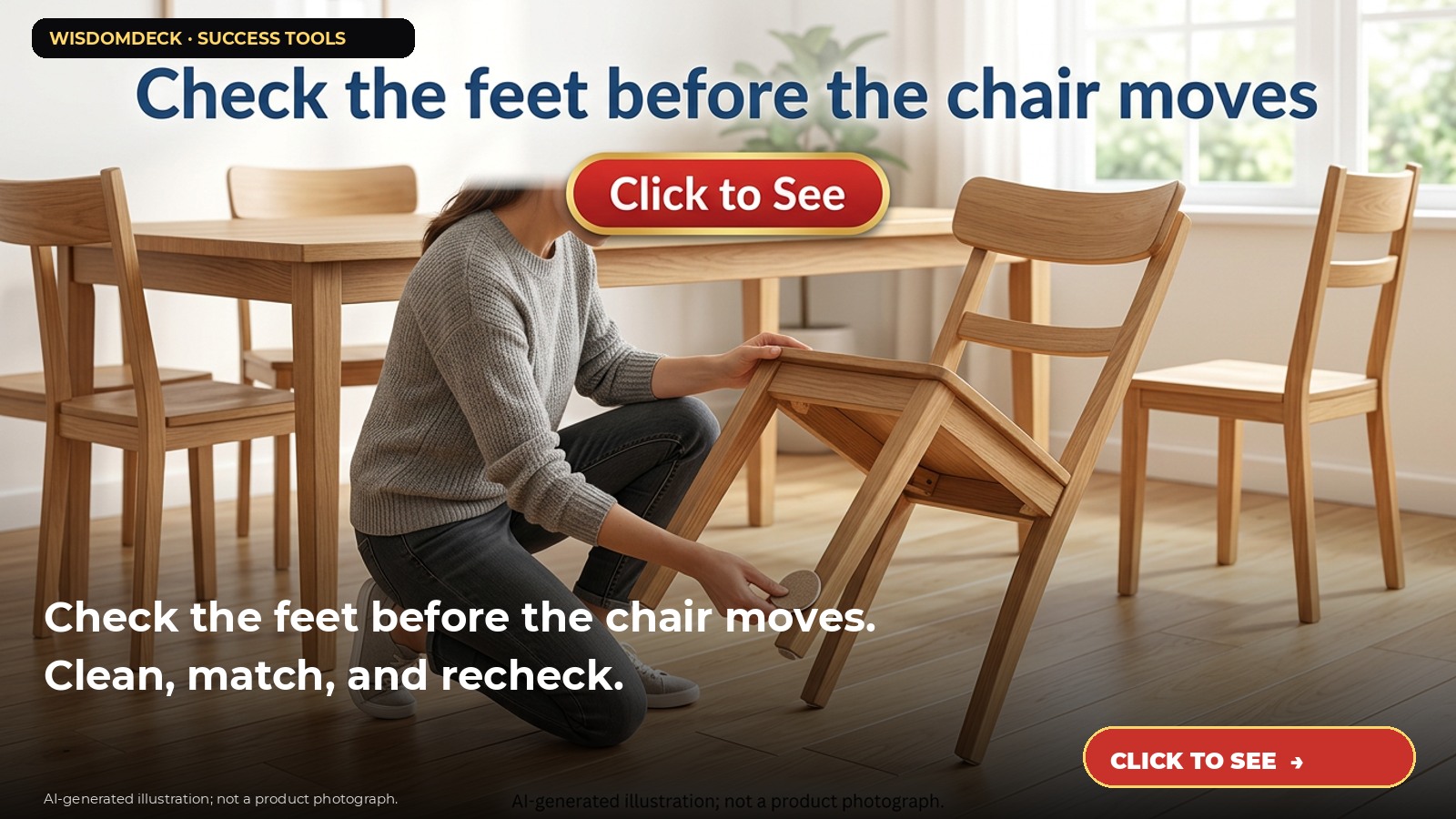
Clean and dry the contact area according to the pad instructions. Choose a size that covers the intended contact point without curling around edges or sticking out where it can catch. Press the pad as directed and allow any recommended set time before moving the furniture.
Test the movement carefully
After attaching pads, return the furniture gently and check that it sits level. Move it a short distance while watching the pads and floor. If a leg rocks, a pad shifts, or the furniture slides too freely, stop and reassess rather than adding more layers blindly.
For example, a light dining chair may need a different pad shape from a broad cabinet foot. Match each pad to the actual surface instead of applying one size everywhere.
Inspect and replace when needed
Check pads periodically for wear, grit, moisture, or adhesive failure. A trapped particle can scratch a floor even when the furniture has a pad. Clean the pad or replace it when it is loose, compressed, dirty, or damaged, following the product directions.
Do not drag furniture across the room to test whether pads work. Lift or move it using an appropriate method, and protect the floor during rearranging. Keep small pads away from young children and pets.
Buy only the sizes you need
Measure the furniture feet before choosing a multipack. A large assortment may include shapes that do not match your items. The referenced Amazon Basics product is described as a 24-pack of 3-by-4-inch brown felt pads; verify the current dimensions and pack contents before purchase.
If the furniture already has intact glides or the floor requires a different protection system, skip adhesive felt. Pads are a maintenance aid, not a guarantee against every scratch or a substitute for checking furniture stability.

Launch list
Be there on day one.
One email when the book opens on Kickstarter. Nothing else. Already reading the book? Your Cheat Sheet is at wisdomdeck.com/free.
Coming soon on 
The book itself — 40 laws in ten parts, 320 pages, each ending with The Work — is funded first on Kickstarter.