

A Door-Pocket Organizer That Gives Small Items a Return Address
3 min read
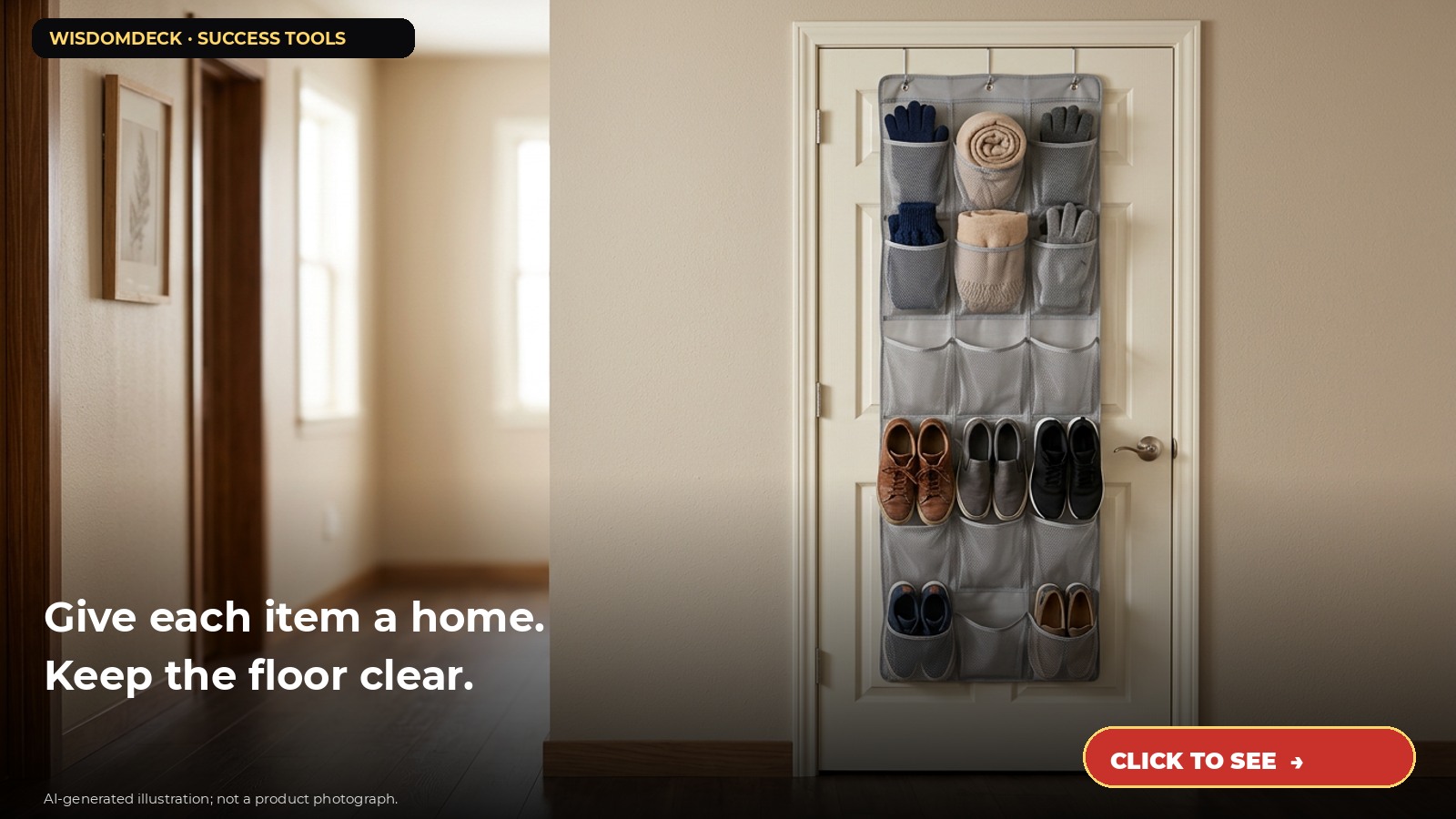
We may earn a commission if you buy through this link.
See Amazon Basics over-the-door shoe organizer on Amazon. Check the current listing before buying; existing supplies may be all you need.
Small household items can occupy a surprising amount of attention when they have no agreed place to go. Gloves land on a chair, spare laces disappear into a drawer, and the floor becomes temporary storage. A door-pocket organizer can make a few of those destinations visible.
The useful idea is a return address for an item, not filling every pocket. Before buying an organizer, check whether a simpler existing drawer or basket would solve the same problem with less effort.
Check the door before planning the pockets
Measure the available space and compare it with the actual product dimensions and mounting requirements. Check door thickness, the space above it, its swing, and access to the handle. Do not force a door closed over hardware that does not fit.
Keep exits and required access clear. Do not install an organizer on a door where it conflicts with safety requirements, building rules, or the door maker’s instructions. Follow the organizer’s mounting and load guidance instead of inferring a safe load from how many pockets it has.
Choose one useful category first
Start with lightweight items that belong near that door and suit the product’s intended use. For a closet door, this might mean appropriate shoes and a few small accessories. Do not use a shoe organizer as an improvised holder for hazardous substances, sharp tools, hot devices, or heavy objects.
Think about who will use it. A destination that a person cannot comfortably reach or see will not make putting things away easier. Store children’s items only where access is appropriate and the installation is secure.
Assign pockets by retrieval
Arrange the items according to how you look for them. A pair belongs together when the pocket accommodates it comfortably. Items that are used on the same trip might sit near each other without being crammed into one opening.
Leave some space unassigned. Empty capacity allows an item to be removed and returned without moving several others. If pockets sag or contents protrude, reduce the load rather than treating the organizer as extra shelving.
Make returning easier than dropping
Choose pocket locations that are accessible on the normal route through the room. If you must move a chair or open an awkward door just to put away gloves, the system may lose to the nearest flat surface.
For example, a closet-door organizer near stored outerwear may be a useful place for dry gloves. One on a rarely used door across the house probably adds a step to the same routine. The best location is a practical decision, not a styling rule.
Review what the pockets reveal
After using the arrangement, look for items that repeatedly miss their assigned pockets. The category may be unclear, the location inconvenient, or the item unnecessary. Adjust one of those conditions before buying another organizer.
Clean and inspect the product according to its instructions. Do not enclose wet or dirty items in a way that conflicts with their care needs. Periodically check mounting points and remove anything that has become unsuitable for the intended load.
Who should skip it
Skip a door organizer when the door fit is wrong, access is obstructed, or the real problem is keeping too much. An existing open bin may be sufficient. Visible storage can also feel visually busy, so it is not automatically the right answer for every room.
Start with a handful of items and assess whether they are easier to find and return. The organizer earns its place only if the daily routine becomes clearer.

Launch list
Be there on day one.
One email when the book opens on Kickstarter. Nothing else. Already reading the book? Your Cheat Sheet is at wisdomdeck.com/free.
Coming soon on 
The book itself — 40 laws in ten parts, 320 pages, each ending with The Work — is funded first on Kickstarter.


