

Measuring Spoons at the Spice Shelf: Measure, Return, and Keep the Recipe Moving
2 min read
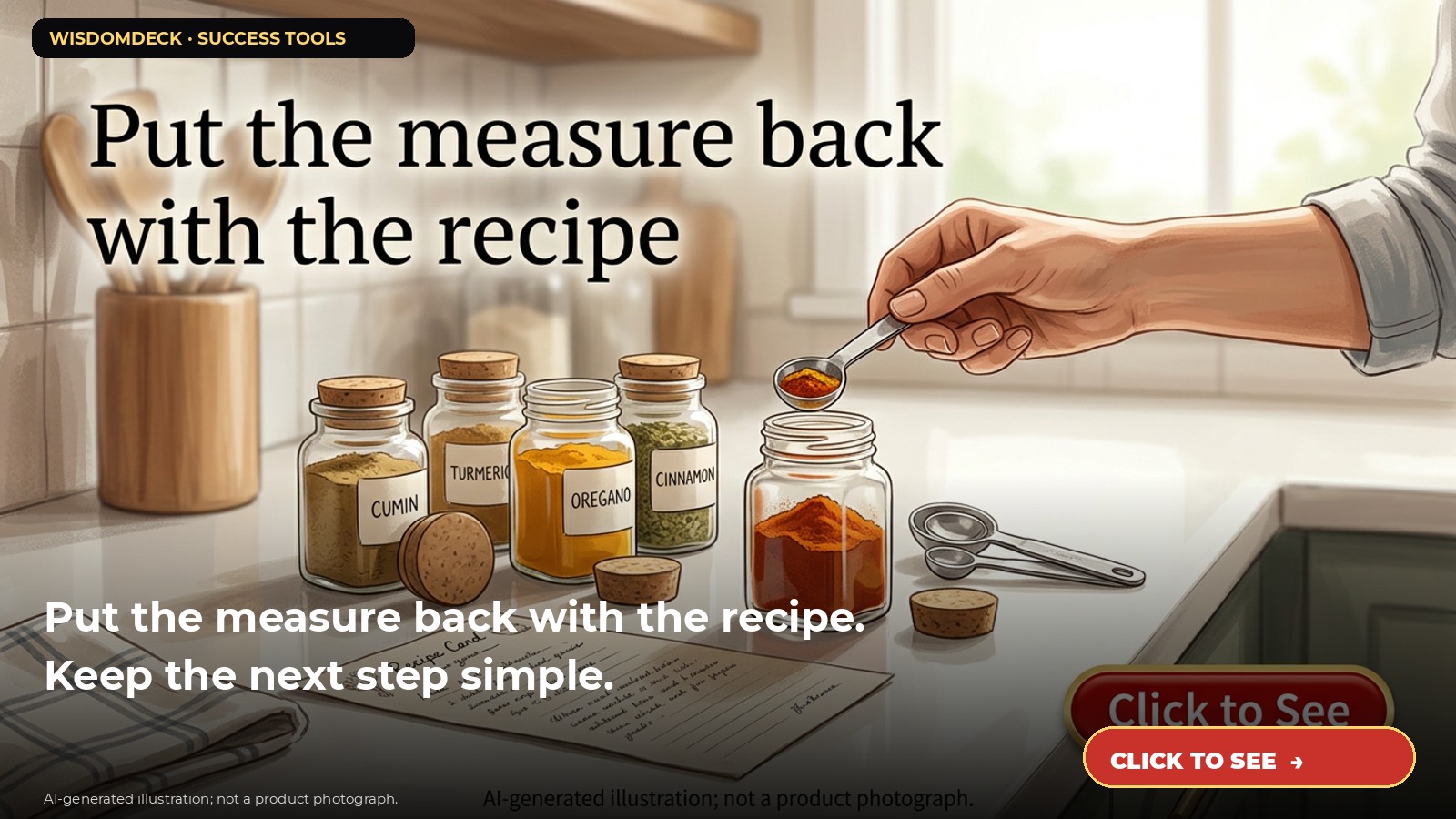
We may earn a commission if you buy through this link.
See Rena Chris stainless steel measuring spoons on Amazon. Check the current listing before buying; existing supplies may be all you need.
When a recipe calls for a small amount, searching through a drawer with messy hands can interrupt the cooking flow. Keeping a measuring set near the preparation area can make the step easier to follow, as long as the spoons stay clean and the measurements remain readable.
Check the recipe and the spoon marking
Read the amount and unit before scooping. A teaspoon and a tablespoon are not interchangeable, and recipes may use volume or weight in different ways. Do not estimate a measurement when precision matters to the recipe; use the unit the recipe specifies and a suitable tool.
Inspect the stamped or engraved mark before using a spoon, especially if several sizes look similar. Return the set to its ring or designated storage spot so pieces do not become separated or mistaken for another size.
Use clean, dry tools where appropriate
Start with clean spoons and dry hands when measuring dry ingredients. Avoid dipping a utensil that has touched raw food back into a container of ingredients. For wet ingredients or allergen-sensitive preparation, follow food-safety and cross-contact practices appropriate to the situation.
Do not use a measuring spoon as a serving utensil or leave it sitting in a food container unless the food and handling method make that appropriate. Wash and dry the tools according to the manufacturer’s care instructions.
Make the sequence easy to follow
Gather the ingredients and set the clean tools near the recipe before beginning. Measure one ingredient at a time and return each ingredient container to its storage place. If a recipe uses several small additions, a short checklist can help you keep track without relying on memory.
For example, set out the listed spices first, check each name against the recipe, and measure in order. Put each jar away after use so an open container is not forgotten near heat or moisture. This organization supports the recipe; it does not guarantee a particular taste or outcome.
Store and clean the set deliberately
Follow the product’s care directions for washing, drying, and storage. Check that markings remain legible and that pieces are not bent or damaged. If the manufacturer permits dishwasher cleaning, use the specified method; do not infer care instructions from material alone.
Keep spoons away from hot burners and sharp edges. A ring may keep pieces together, but do not place it where it can contact food or interfere with cleaning. Store the set where the people who cook can reach it safely.
Who can skip another set
If you already own a complete, readable set, use it. If your recipes rely on weight measurements, a suitable kitchen scale may be the more relevant tool; do not purchase spoons to solve a different measurement need. Check the current listing for included sizes and markings because product variations can change.
The useful outcome is a clear measuring step and an easy return location. A utensil cannot replace reading the recipe or following safe food-handling practices.

Launch list
Be there on day one.
One email when the book opens on Kickstarter. Nothing else. Already reading the book? Your Cheat Sheet is at wisdomdeck.com/free.
Coming soon on 
The book itself — 40 laws in ten parts, 320 pages, each ending with The Work — is funded first on Kickstarter.


