A Fridge Grocery Pad: Capture Running-Low Items While You Notice Them
2 min read
We may earn a commission if you buy through this link.
See Two Tumbleweeds magnetic grocery list pad on Amazon. Check the current listing before buying; existing supplies may be all you need.
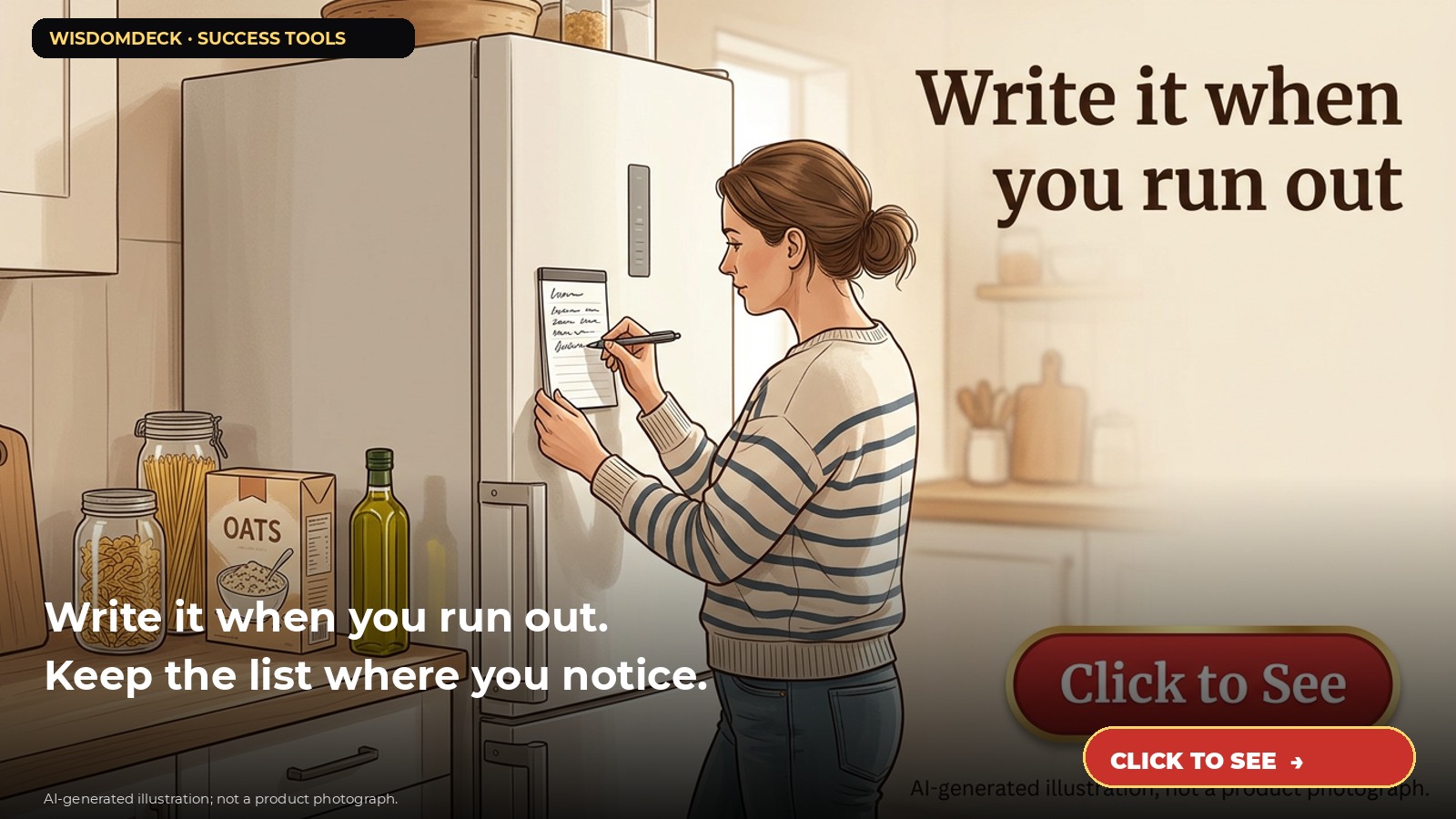
A grocery list written from memory at the door misses the item you noticed was nearly gone yesterday. A pad in a consistent place lets someone add that item at the moment they discover it. The value comes from maintaining one shared list, not from buying a particular format.
Put the list on a surface people actually see
Choose a safe, accessible place near the routine where household supplies are checked. If using a magnetic pad, confirm that the appliance surface is compatible with its magnet and that the pad will not interfere with vents, controls, or opening doors. Keep paper and writing tools away from heat and moisture.
If the kitchen is shared, tell everyone what counts as “add to the list.” A short note such as “last one opened” or “nearly out” can make the need clearer than a vague product name. Do not list an item simply because a package is open if there is plenty left.
Make the note specific enough to shop
Write the item and a useful size or variety when it matters. “Oats” may be enough for one household; “plain rolled oats” can prevent confusion where several kinds are used. Include a quantity only when you know it is needed and storage space allows it.
Keep the list focused on restocking. Meal plans, coupons, errands, and long-term household projects may belong somewhere else. Combining too many kinds of reminders can make the shopping list difficult to scan.
Check the list before leaving
Before a shopping trip, scan what is written and compare it with the pantry or household’s actual needs. Cross off items already purchased or no longer needed. If more than one person shops, agree on who updates the list so two people do not buy the same thing unintentionally.
For example, if the last box of a frequently used pantry staple is opened, add it while putting it away. At the next planned shop, confirm the amount and preferred version before buying. A written cue helps memory but does not decide how much the household should consume.
Keep personal data off the pad
A visible kitchen note can be seen by visitors or anyone with access to the room. Use it for ordinary shopping items, not account details, medical information, private schedules, or door codes. If the household needs a private list, choose a secure digital or paper location.
Magnetic pads can fall or slide on some surfaces. Keep them away from young children if the paper or magnet presents a hazard, and follow product instructions for placement.
Keep the system lightweight
Review whether the pad is actually used after a week or two. If people add items consistently and the list is easy to find, keep the routine. If not, move the existing list to the place where grocery decisions already happen or use a shared digital note.
Check current product dimensions, sheet count, and listing details before purchase. The best grocery list is the one the household remembers to update—not the one with the most printed categories.

Launch list
Be there on day one.
One email when the book opens on Kickstarter. Nothing else. Already reading the book? Your Cheat Sheet is at wisdomdeck.com/free.
Coming soon on 
The book itself — 40 laws in ten parts, 320 pages, each ending with The Work — is funded first on Kickstarter.