Nobody Regrets the Workout, the Page, or the Call
2 min read
Run a quick audit. Every workout you almost skipped and did anyway. Every page you wrote when you did not feel like writing. Every difficult call you made with your stomach tight. Now find the regret. You will not. Nobody, lying in bed at night, has ever thought: I wish I had not trained today. I wish I had not written that paragraph. I wish I had not made that call. The regret column for hard things done is empty, every time, for everyone. The regret column for hard things skipped is where most of a life’s disappointment lives.
The Asymmetry
This is one of the most useful patterns available and one of the least used. Before the hard thing, the mind presents a fair fight: do it or skip it, both reasonable. After the hard thing, there is no fight at all. Doing it produced satisfaction or at worst neutrality; skipping it produced a small, specific regret that lingered. The outcomes are wildly lopsided, but you only see that from the far side. From the near side, the skip always looks like a legitimate option.
Why We Forget It
Because the mind is bad at using the past to predict feelings. In the moment before the workout, you consult how you feel now, which is tired, rather than how you felt after the last hundred workouts, which was better. The record is right there and the mind ignores it in favor of the current mood. This is not stupidity. It is how attention works: the present is loud and the record is quiet. The fix is to make the record louder.
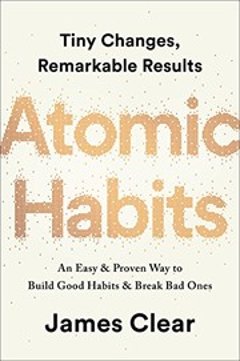 Worth reading on thisAtomic Habits by James Clear — The clearest manual on making a habit small enough to survive a bad week. Pairs with almost everything on this site.Click hereto see it→
Using the Record
Ask the after question
Not “do I want to do this” but “how will I feel at 9 p.m. if I did, and if I didn’t?” You know both answers. You have collected them hundreds of times.
Keep an actual list
A note on your phone: hard things done, and how you felt after. It will be a long list of “glad” with no exceptions, and reading it takes ten seconds when the next decision arrives.
Remember the skip is not free
Skipping feels like it costs nothing. It costs the small regret, and the small regrets accumulate into the large one about how you spent your years.
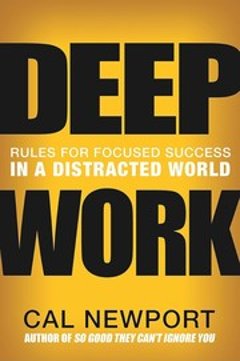 Goes deeperDeep Work by Cal Newport — Why uninterrupted blocks are worth more than busy days, and how to defend them.Click hereto see it→
Decide based on the far side
Imagine yourself two hours later, in both versions. Choose the version you would rather be. It is the same choice every time.
What This Does to Decisions
Once the asymmetry is visible, the pre-task debate mostly dissolves. You already know the outcome of doing versus skipping; you have run the experiment more times than any scientist runs anything. The workout, the page, and the call all end the same way: glad you did. Trusting that record is not optimism. It is the most evidence-based decision you will make all day.
Consult the Record
The next time you are on the near side of a hard thing, do not consult your mood. Consult the list. It has never once recorded a regret for doing it. Add another line to it tonight.
Two more books, and one tool

Launch list
Be there on day one.
One email when the book opens on Kickstarter. Nothing else. Already reading the book? Your Cheat Sheet is at wisdomdeck.com/free.
Coming soon on 
The book itself — 40 laws in ten parts, 320 pages, each ending with The Work — is funded first on Kickstarter.