

A Plant Moisture Meter Check: Sample Soil and Confirm the Plant’s Care Needs
2 min read
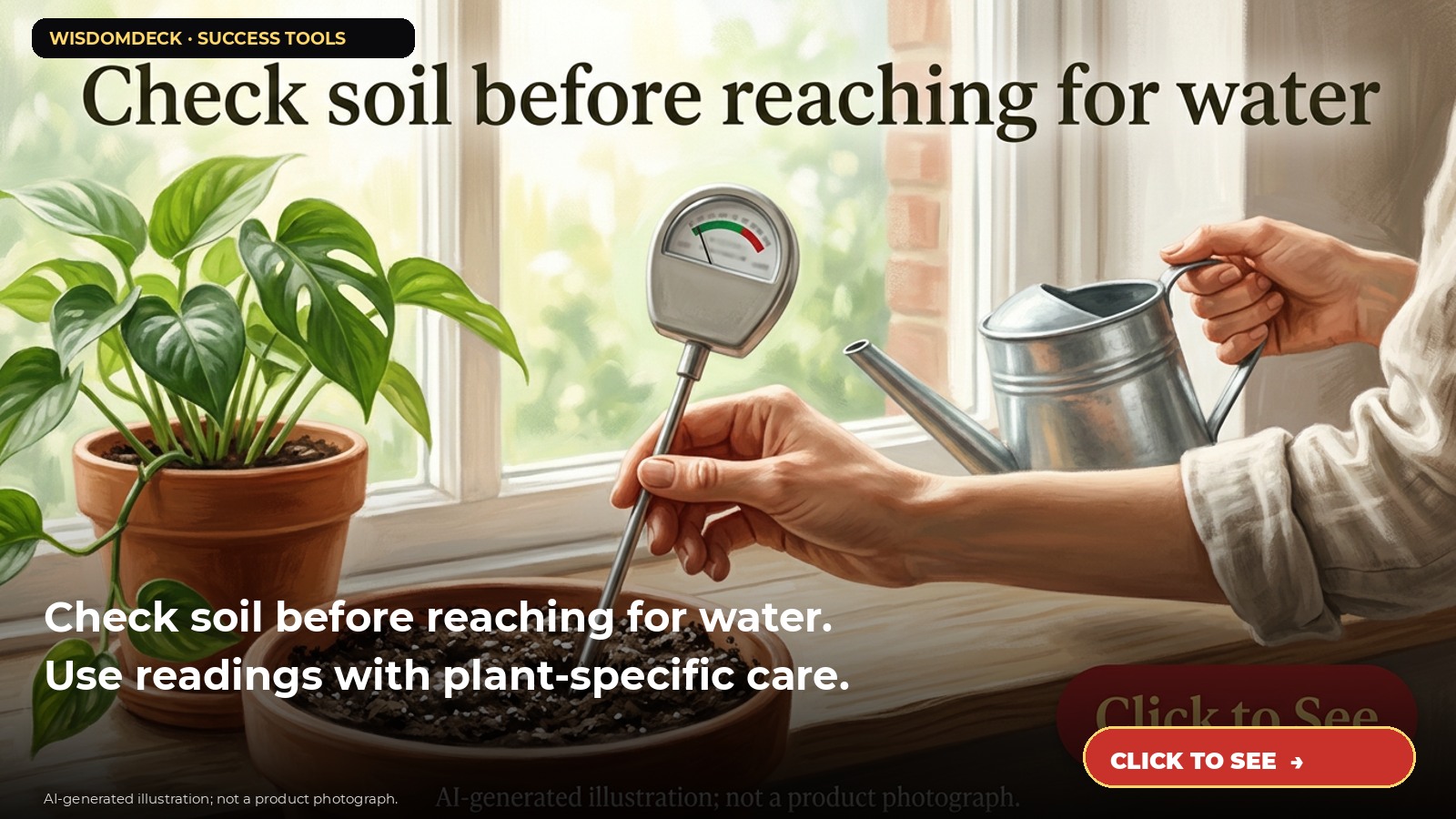
We may earn a commission if you buy through this link.
See Dr.meter soil moisture meter on Amazon. Check the current listing before buying; existing supplies may be all you need.
A soil moisture meter can give a reading from a point in the pot, but one reading does not describe every part of the root zone or every plant’s needs. Use it as one clue alongside the plant’s care instructions, soil, pot drainage, and your own observations.
Learn the tool before inserting it
Read the meter instructions for how deep to insert the probe, how long to wait, and which soil types are suitable. Confirm whether the model measures moisture only or includes additional functions. Do not treat a pH or light scale as a complete diagnosis of plant health.
Inspect the probe for dirt or damage. Avoid forcing it through roots, stones, or a dense root ball. If the soil is compacted or the probe resists, remove it gently and choose another location rather than pushing harder.
Sample more than one spot
Check the soil in a few appropriate locations and depths, following the plant and meter guidance. A dry surface can coexist with moist soil below, and a single location near a drainage hole may not represent the whole pot. Compare readings with the plant’s documented moisture preference.
For example, if a houseplant’s care guide calls for the upper soil to dry between waterings, check the relevant soil layer rather than watering solely because the surface looks pale. If readings disagree, inspect the soil and pot before deciding what to do.
Make a measured watering decision
Consider pot drainage, season, light, temperature, and plant type. Water according to reliable plant-specific instructions, using a method that avoids waterlogging and protects the surface beneath the pot. Do not allow a meter reading to override signs of root problems, pests, or disease.
Remove the probe carefully after each use. Wipe and store it according to the manual, keeping it dry if required. Clean soil from the probe between pots so you do not transfer residue or pests.
Keep a simple plant record
For plants that are easy to forget, write the date, recent conditions, and observations in a small care log. Record what you saw rather than inventing a universal moisture threshold. Over time, the notes can help you understand how a specific pot dries in your home, but still check the plant itself.
Do not leave a meter in soil unless its instructions explicitly allow continuous use. An analog meter may not need batteries, but it still requires proper handling and care.
Check product details and existing alternatives
Check the current listing for probe length, measurement functions, operating instructions, and suitable soil. The referenced Dr.meter model is listed as a battery-free moisture/light/pH tester; verify the exact version and its manual before relying on any feature.
A finger check, care log, or advice from a local extension service may already help. The meter is a prompt to observe carefully, not an automatic instruction to water.

Launch list
Be there on day one.
One email when the book opens on Kickstarter. Nothing else. Already reading the book? Your Cheat Sheet is at wisdomdeck.com/free.
Coming soon on 
The book itself — 40 laws in ten parts, 320 pages, each ending with The Work — is funded first on Kickstarter.


