Drawer Organizer Boxes: Measure One Drawer and Sort by How You Reach
2 min read
We may earn a commission if you buy through this link.
See Amazon Basics collapsible drawer organizer boxes on Amazon. Check the current listing before buying; existing supplies may be all you need.
A drawer can look crowded even when it contains useful things. Small items slide together, and opening it becomes a search rather than a quick grab. Organizer boxes can create boundaries, but only if the drawer, objects, and everyday routine fit them.
Choose one drawer, not the whole house
Pick the drawer that causes a repeated annoyance. Empty it onto a clear surface and sort items into keep here, belongs elsewhere, and decide later. Avoid turning a ten-minute reset into a full-home purge. Items that belong elsewhere should be returned rather than placed in a new temporary pile.
Before choosing compartments, measure the drawer’s interior width, depth, and usable height. Account for rails, handles, sloping sides, and anything that limits the opening. Compare those measurements with the dimensions of each organizer piece, not just the outer package.
Arrange around use, not symmetry
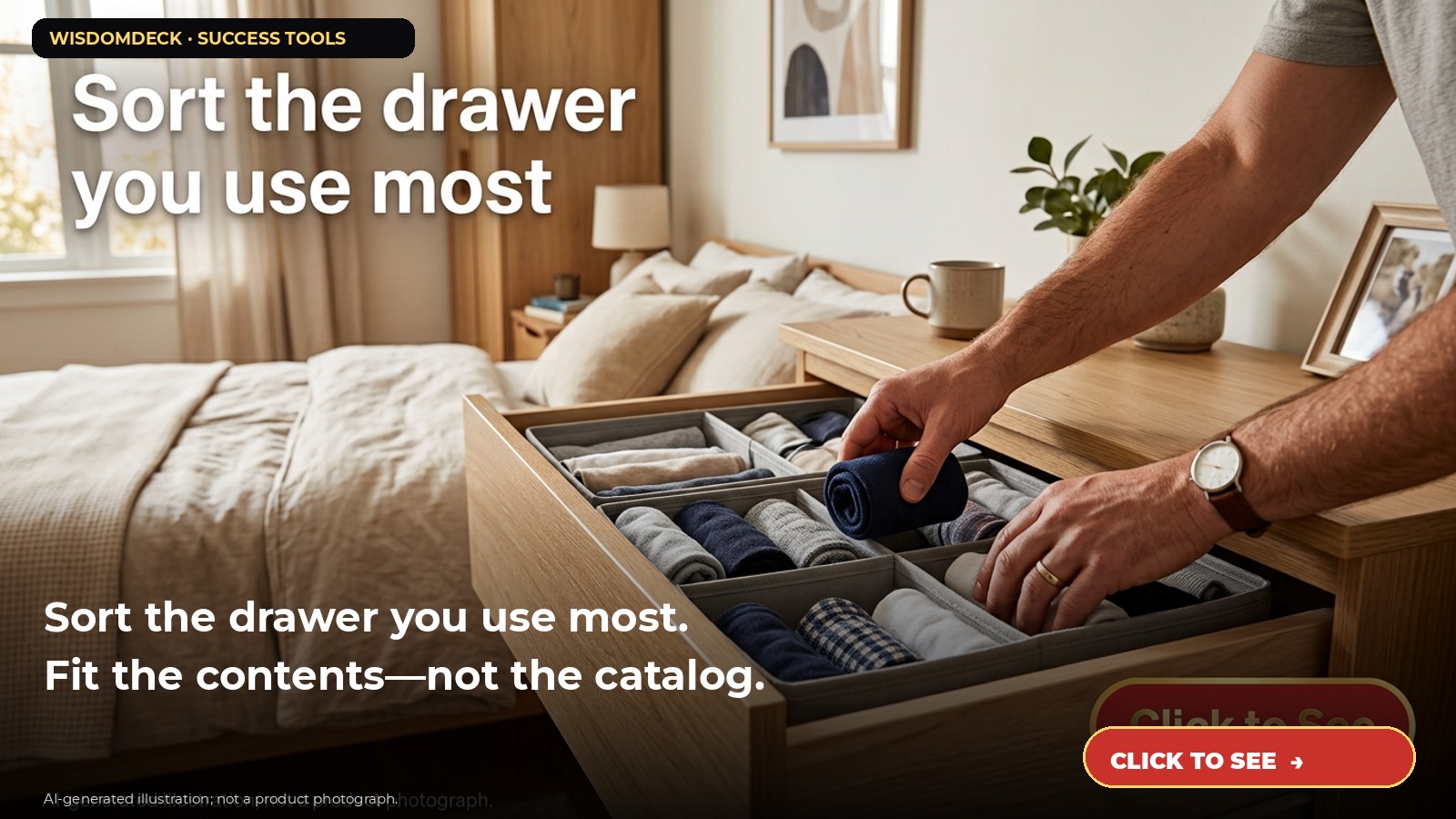
Group items by the action you use them for and how often you reach for them. Everyday socks may deserve an easy-to-reach section; seasonal or rarely used items may belong elsewhere. A visually balanced grid is less important than being able to retrieve and return the contents without moving everything.
Lay out the groups before putting boxes in the drawer. Keep frequently used items accessible and avoid stacking them so high that the drawer catches. If a container makes the item harder to reach, it is the wrong container for that spot.
Leave a little room to change
Do not assume every compartment must be filled. An empty space can accommodate an item that genuinely belongs there or make it easier to lift a soft garment out. Overfilling can turn the organizer into another layer to rummage through.
For example, a small group of socks can occupy one compartment, while a second holds only related items. If the drawer’s actual contents need fewer sections than a multi-piece set provides, store the extras rather than inventing categories just to use them.
Check material and cleaning directions
Use organizers for their intended contents and follow the care instructions. Keep wet items, food, chemicals, or sharp objects out unless the product is specifically suitable for them. A fabric-style organizer is not automatically washable, waterproof, or appropriate for every room.
If you share the drawer, ask the other users what arrangement they can maintain. A system that makes sense only to one person often deteriorates as soon as the drawer is shared again.
Test before buying a set
Use a small box you already own to test the proposed compartments for a few days. Check whether the groupings remain useful and whether the drawer opens freely. This trial can show whether you need a product at all and which sizes would fit.
Skip organizer boxes when the real issue is too many items, a broken drawer, or contents that belong in another location. One measured drawer and a few practical categories are a better starting point than buying a full set on speculation.

Launch list
Be there on day one.
One email when the book opens on Kickstarter. Nothing else. Already reading the book? Your Cheat Sheet is at wisdomdeck.com/free.
Coming soon on 
The book itself — 40 laws in ten parts, 320 pages, each ending with The Work — is funded first on Kickstarter.