

Show Me Your Calendar and I’ll Show You Your Priorities
2 min read
Ask anyone what matters most to them and you will hear a familiar list: family, health, meaningful work, growth, a few close friends. Now look at how they spent the last seven days, hour by hour. The two lists rarely match, and where they conflict, the calendar is telling the truth. Priorities are not what you value in the abstract. They are what you give time to when time is scarce, and time is always scarce. The calendar is the only honest record of what you actually put first.
The Two Lists
The stated list is aspirational and sincere. You genuinely do care about those things. But caring is not a resource; time is, and time gets allocated by a different process, one driven by urgency, habit, and whoever asks loudest. So the week fills with the reactive and the convenient, and the things on the stated list get whatever is left, which is usually nothing. Nobody decided that scrolling mattered more than their health. The calendar just quietly filled in that way, and the calendar is what happened.
Why This Is Good News
Because calendars can be edited and values cannot. If the problem were that you did not care enough, there would be no fix. But the problem is allocation, and allocation is a mechanical decision made in advance. Put the priority on the calendar first, as a fixed appointment, and it gets the time. Leave it to whatever is left over and it gets nothing. The gap between your stated and actual priorities is not a character flaw. It is a scheduling error, and scheduling errors are correctable this afternoon.
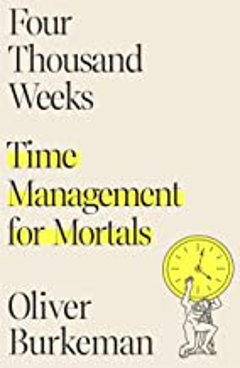 Worth reading on thisFour Thousand Weeks by Oliver Burkeman — A time-management book that starts by admitting you will never get it all done, and is better for it.Click hereto see it→
Closing the Gap
Audit last week honestly
Write down, roughly, where the hours went. Not where you wish they went. Where they went. This is uncomfortable and it is the only starting point that works.
Schedule the stated priorities first
Before the week fills, block the workout, the family dinner, the deep work, the call to the friend. Fixed, named, immovable. Everything else fits around them, not the reverse.
Treat those blocks like external commitments
You keep appointments with other people because breaking them has a cost. Give your own priorities the same status, or they will keep losing to things that have it.
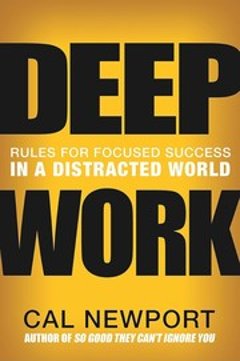 Goes deeperDeep Work by Cal Newport — Why uninterrupted blocks are worth more than busy days, and how to defend them.Click hereto see it→
Review every Sunday
Ten minutes. Did the calendar match the list? Where did it slip, and what is going on the calendar first next week? Small weekly corrections keep the two lists converging.
What Alignment Feels Like
When the calendar and the stated list finally match, a specific kind of peace arrives. Not because life got easier, but because you are no longer living a low-grade contradiction, saying one thing and doing another, week after week. You look at how you spent your time and recognize yourself in it. That recognition is what people mean when they say they want their life to feel like their own.
Open the Calendar
Today, look at next week. Find your real priorities on it. If they are not there, put them there first, before anything else claims the space. Your calendar is telling everyone what you value. Make sure it is telling the truth.
Two more books, and one tool

Launch list
Be there on day one.
One email when the book opens on Kickstarter. Nothing else. Already reading the book? Your Cheat Sheet is at wisdomdeck.com/free.
Coming soon on 
The book itself — 40 laws in ten parts, 320 pages, each ending with The Work — is funded first on Kickstarter.


