

A Sink Caddy Routine: Let Cleaning Tools Drain and Dry Between Uses
2 min read
We may earn a commission if you buy through this link.
See OXO Good Grips stainless steel sink organizer caddy on Amazon. Check the current listing before buying; existing supplies may be all you need.
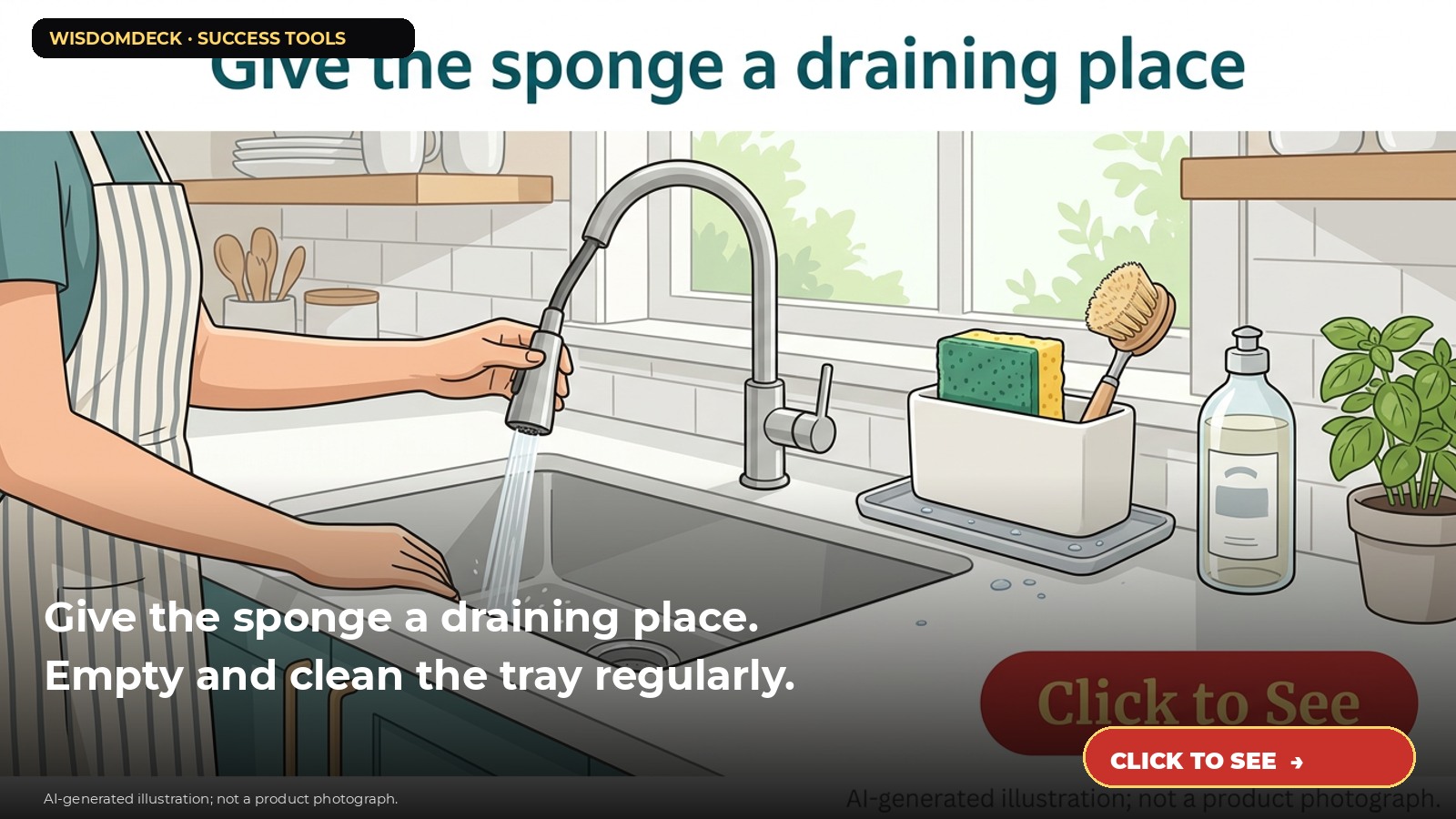
A sink caddy can give a sponge and dish brush a defined place instead of leaving them loose on the counter. It is a storage aid, not a sanitizer. Cleaning tools still need regular washing, replacement when worn, and a chance to dry according to their own care instructions.
Choose a spot that does not block work
Measure the sink ledge or counter and compare it with the caddy dimensions. Place it where it will not obstruct the faucet, drain, food preparation area, or a frequently used handle. Keep it stable and away from an edge where it could fall into the sink.
Store only the tools that belong there. Keep dish brushes and sponges separate from items used for raw meat cleanup if that helps your household avoid cross-contamination. Follow trusted food-safety advice for sanitizing and replacing kitchen cleaning tools.
Let water drain, then empty the tray
Assemble the holder and drip tray as directed. Put a rinsed sponge or brush where water can drain without pooling on the counter. Check the tray often and empty standing water; trapped moisture and residue can make a caddy unpleasant and harder to keep clean.
For example, after washing dishes, rinse the brush, shake off excess water, and return it to its designated spot. Wipe the counter under the holder when needed. Do not assume a perforated base or stainless finish eliminates the need for cleaning.
Clean the holder as part of the routine
Follow the caddy maker’s instructions for removing the tray, washing parts, and drying them. Check corners, seams, and drainage openings for soap film or debris. Use only compatible cleaners and avoid abrasive methods that could damage a finish. Dry the unit before putting it back in place if the instructions call for it.
Inspect the caddy periodically for rust, sharp edges, loose pieces, or damage. Stop using it if it becomes unstable or cannot be cleaned properly. Do not put it in a dishwasher unless the manufacturer explicitly allows that.
Keep the sink area safe and orderly
Store detergent and cleaning products according to their labels and away from children and pets. Do not transfer chemicals into unmarked containers. A caddy should not block access to the sink or become a place to store sharp knives.
Maintain a separate place for a bottle brush or other long-handled tool if the caddy supports it. Do not cram items tightly together; easy removal and cleaning matter more than filling every compartment.
Check the material and mounting style
Compare countertop, suction, and other styles against your sink finish and available space. Check the active listing for dimensions, compartments, material, and care. The referenced OXO model is described as a stainless-steel sink organizer; verify its configuration before ordering.
A clean existing holder or a small washable tray may already work. Choose a new caddy only if it improves drainage and organization in your actual sink area.

Launch list
Be there on day one.
One email when the book opens on Kickstarter. Nothing else. Already reading the book? Your Cheat Sheet is at wisdomdeck.com/free.
Coming soon on 
The book itself — 40 laws in ten parts, 320 pages, each ending with The Work — is funded first on Kickstarter.


