

A Sink Strainer Check: Empty Food Debris Before the Next Dishwashing Round
2 min read
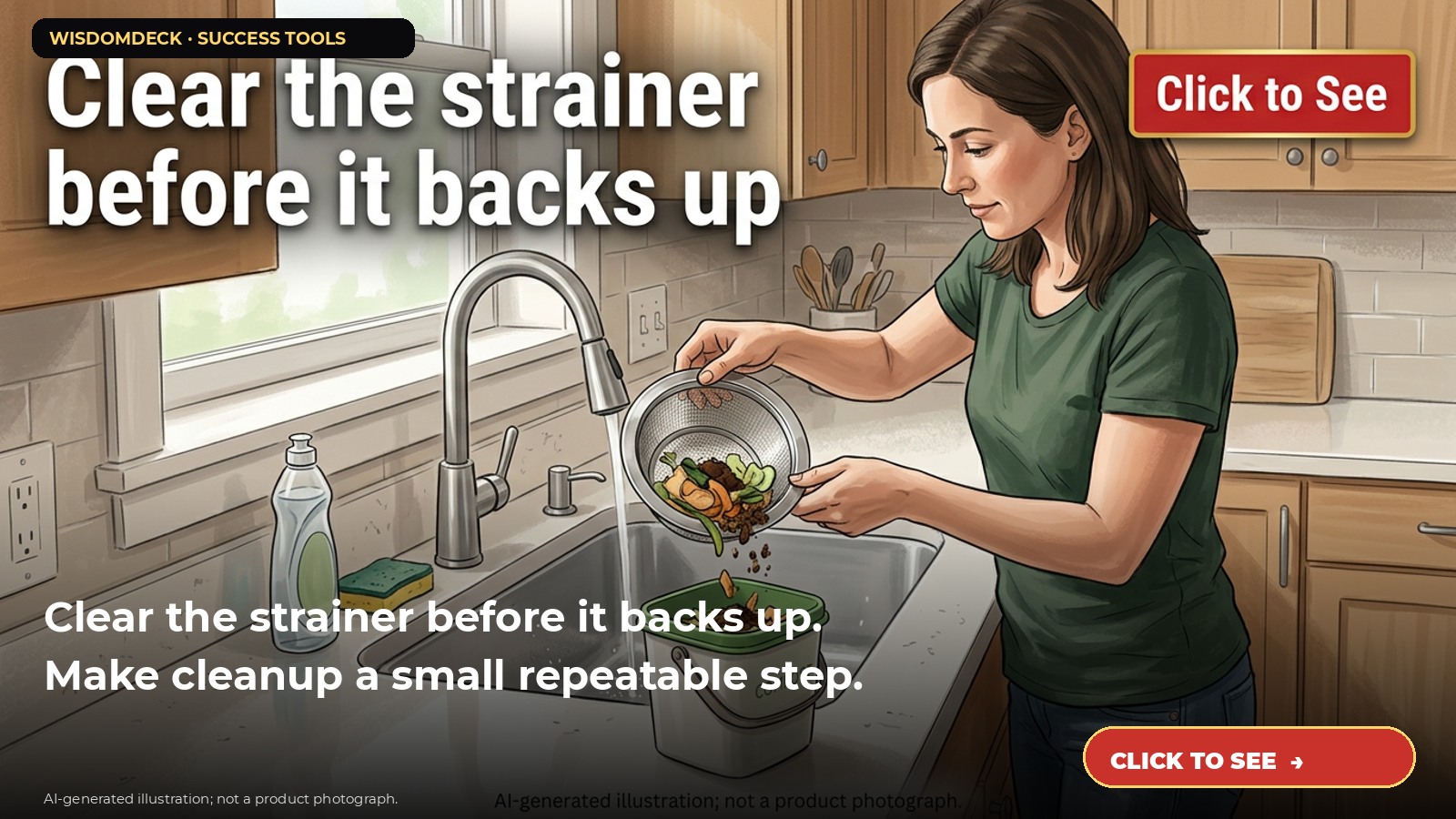
We may earn a commission if you buy through this link.
See Brite Concepts stainless steel sink strainer on Amazon. Check the current listing before buying; existing supplies may be all you need.
Food scraps left in a sink strainer can become an unpleasant cleanup later. A brief check during dishwashing gives those scraps a clear destination and keeps the sink area easier to reset. A strainer is a simple catch point, not a guarantee against plumbing problems.
Confirm the strainer fits the sink
Before buying, compare the product’s dimensions and shape with the drain opening. “Fits most” does not mean fits every sink. If the basket rocks, blocks the drain, or interferes with a disposal or stopper, do not force it into place.
Follow the sink and strainer instructions, and make sure everyone in the household understands whether the drain is meant to be open or stopped during use. Do not modify plumbing or remove components based on a guess.
Empty scraps at a convenient checkpoint
Choose a point that already exists in the kitchen routine, such as clearing plates before washing dishes. Lift the strainer carefully, tip scraps into the appropriate waste or compost container, and return it to the drain. Use a tool or gloves if the contents are unpleasant or sharp; do not reach blindly into the basket.
For example, a person can clear the strainer after rinsing prep dishes and before starting the next load. If the sink drains slowly or water backs up, treat that as a separate issue rather than assuming the basket is the cause.
Clean it according to the product directions
Follow the maker’s cleaning directions, including suitable cleaners and water temperature. The referenced product listing describes cleaning with warm, soapy water; check the current instructions for the exact item. Dry or return the basket as directed and inspect for sharp edges, corrosion, or damage.
Keep cleaning chemicals away from food, dishes, and children. Never mix household cleaning products. If a drain concern persists, consult a qualified plumber or the property manager rather than pouring an unapproved chemical into the plumbing.
Respect the sink and disposal rules
Follow the disposal manufacturer’s directions about what may go into it. A strainer can collect scraps, but it does not make every food waste suitable for a garbage disposal. Dispose of oils, fats, and other prohibited items according to local guidance.
Keep the sink clear enough for handwashing and food preparation, and clean it using methods appropriate to the material. A small strainer routine should not create a new hygiene or access problem.
Use the basket you already own
If a suitable strainer came with the sink, keep it clean and use that. Skip an additional basket if it does not fit or makes the drain harder to use. Check dimensions and material details before ordering.
The practical result is a visible cleanup cue. It is not a promise to prevent clogs or a substitute for proper plumbing maintenance.

Launch list
Be there on day one.
One email when the book opens on Kickstarter. Nothing else. Already reading the book? Your Cheat Sheet is at wisdomdeck.com/free.
Coming soon on 
The book itself — 40 laws in ten parts, 320 pages, each ending with The Work — is funded first on Kickstarter.


