Binder Clips for Ready-to-Send Paperwork: Separate Finished Documents From Loose Ends
3 min read
We may earn a commission if you buy through this link.
See Amazon Basics medium binder clips on Amazon. Check the current listing before buying; existing supplies may be all you need.
A tidy pile can create the impression that paperwork is finished. The pages are aligned, the clip is attached, and the envelope is waiting. Then you discover a missing signature, an outdated form, or a document that was supposed to be copied first.
A binder clip holds paper together. It cannot verify the contents. The useful routine is a small completion check before you mark a bundle ready, followed by one clear place for items that still need work.
Define ready for this particular task
Read the recipient’s current instructions. Different submissions may require different forms, signatures, copies, delivery methods, or dates. Do not rely on a checklist from a previous application without comparing it with what is required now.
Write the requirements on a scrap sheet. For a simple appointment packet, the list might include the requested form, a supporting document, a question you want to ask, and the appointment details. This is an organizational example, not legal, medical, or financial advice about what a particular institution requires.
Use a complete, signed, ready check
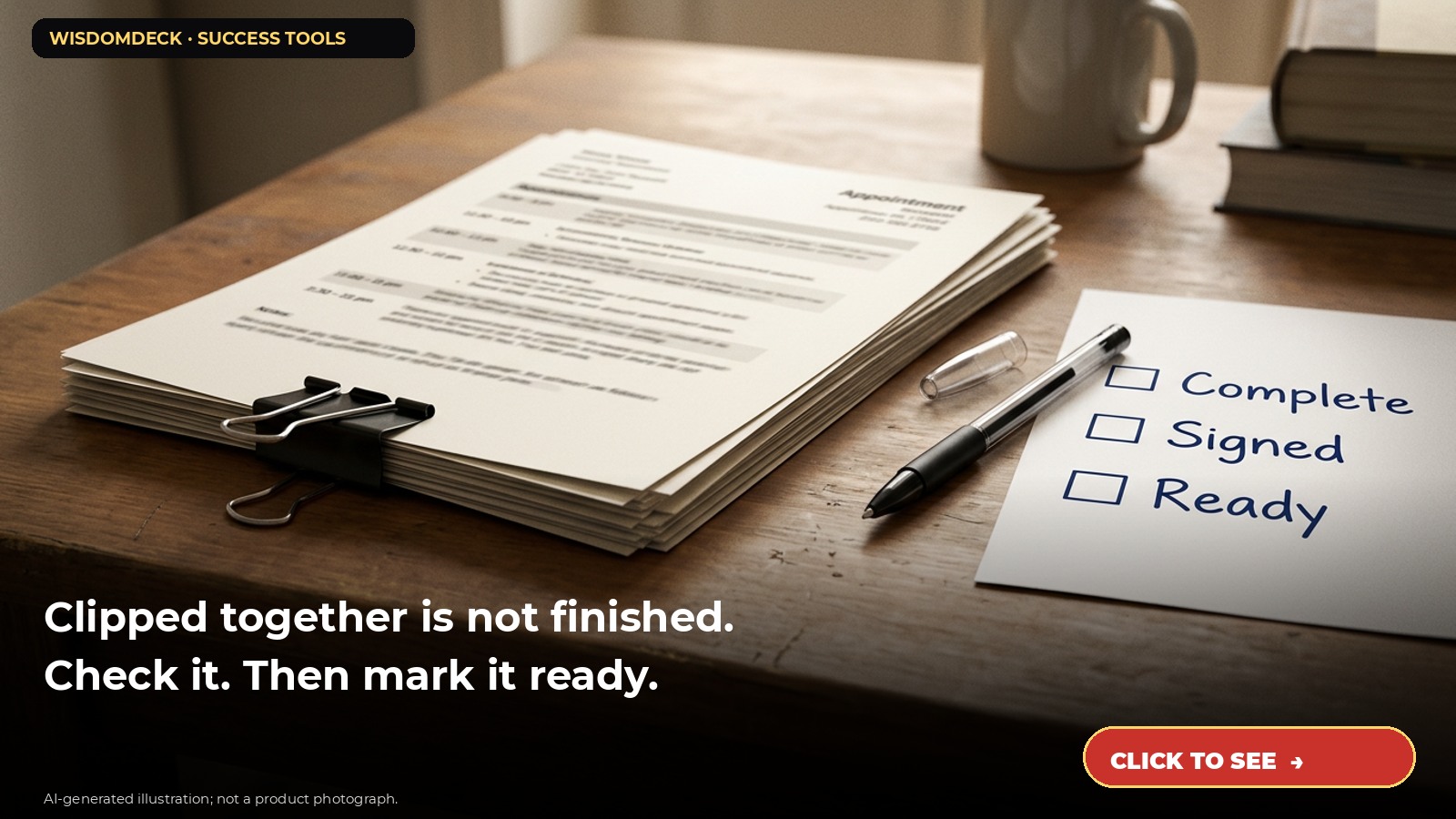
- Complete: Are the requested pages present and in the required order?
- Signed: Are the necessary fields, dates, and signatures actually finished?
- Ready: Is the recipient, delivery method, deadline, and next action clear?
Adapt these labels when signatures are irrelevant. The point is to check the real conditions of completion, not to force every task through the same three words.
Clip only after the check
Place the completed checklist on top and attach the clip if the recipient permits one. Mark the intended next action: bring it to the appointment, place it in outgoing mail, or scan and submit it. Put the bundle in one designated outgoing location.
If a document is missing, keep the packet in an Action or Waiting location instead. Add a note naming the missing piece and who will supply it. An unfinished bundle should not look identical to a finished one.
Keep a record when the packet leaves
Once the papers are delivered, remove the item from your outgoing list. Retain an appropriate receipt or confirmation when one exists. Follow the relevant retention rules for originals and copies; do not assume a photograph or scan replaces an original document.
For time-sensitive material, use a delivery method appropriate to the recipient’s instructions. The clip is not evidence that anything was sent or received. Only the actual submission and confirmation establish that part of the process.
When a clip is the wrong tool
Do not use a binder clip when it would damage delicate material, exceed its comfortable grip, hide important text, or violate submission instructions. A folder may be better for transporting a packet. A secure digital workflow may be better when the institution accepts electronic documents.
Keep clips away from small children and avoid pinching fingers. Use approved storage for sensitive records rather than leaving a finished bundle visible on a shared desk.
Start with one packet
Use supplies you already own. Choose one small paperwork task, write the completion conditions, and inspect the pages before grouping them. The benefit comes from making “ready” mean something specific—not from buying a more impressive stationery collection.

Launch list
Be there on day one.
One email when the book opens on Kickstarter. Nothing else. Already reading the book? Your Cheat Sheet is at wisdomdeck.com/free.
Coming soon on 
The book itself — 40 laws in ten parts, 320 pages, each ending with The Work — is funded first on Kickstarter.