

Stop Asking If You Are Good Enough
3 min read
The question arrives before the pitch, before the first chapter, before applying, before speaking up. Am I good enough? It feels like a reasonable thing to check. It is not. It is a question with no criteria, no judge, and no finish line, which means it can never be answered and therefore never stops being asked. People spend decades circling it, waiting for a verdict that no one is authorized to deliver, while the work they could have done sits untouched. The question is not humility. It is a very effective way of never finding out.
Why It Cannot Be Answered
Good enough for what, judged by whom, compared to which standard? The question never specifies, and because it never specifies, any evidence can be dismissed. Success is luck. Praise is politeness. Competence in one area does not count for another. The question is built so that no answer satisfies it, and that is because its real function was never to assess anything. Its function is to delay, and it delays perfectly, because you cannot proceed until it is answered and it cannot be answered.
What the People You Admire Did
They did not resolve the question. They stopped asking it. Talk honestly with anyone who has done significant work and you will find the doubt is still there, unchanged, decades in. What changed is that it lost its veto. They learned to feel unqualified and submit the work anyway, to feel like a fraud and take the meeting anyway, to be certain they were not ready and begin anyway. Readiness was never established. It was simply no longer required.
 Worth reading on thisMan’s Search for Meaning by Viktor E. Frankl — Written by a man who lost everything and kept the one thing that mattered. Read it slowly.Click hereto see it→
Better Questions
“What is the next concrete step?”
This one has an answer, and the answer is an action. Send the email. Write the page. Book the call. Actions do not require you to be good enough. They require you to do them.
“What would I do if I assumed I was?”
Not as an affirmation; as an experiment. Behave for one day as though the question were settled in your favor and see what gets done. Usually quite a lot.
“Is this good enough to ship?”
Notice the shift from you to the work. The work can be evaluated, improved, sent. You are not the thing being judged. The draft is, and drafts can be fixed.
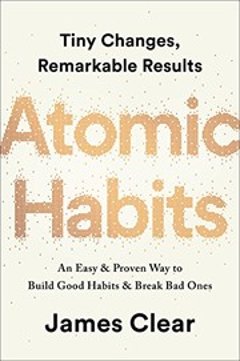 Goes deeperAtomic Habits by James Clear — The clearest manual on making a habit small enough to survive a bad week. Pairs with almost everything on this site.Click hereto see it→
“Who decides?”
If the answer is nobody in particular, the question is a phantom. If the answer is a specific person, submit the work and let them decide. Either way, the deciding is not your job.
What Happens When You Stop
The doubt does not go away. It becomes background noise instead of a gate. You do the work, some of it succeeds, some of it does not, and you learn from both, which is the only process by which anyone has ever become good at anything. Good enough was never a status you reach before starting. It is a description other people give you afterward, and only if you started.
Ask the Other Question
The next time it arrives, do not answer it. Replace it: what is the next concrete step? Then take the step, doubt and all. You will not find out whether you were good enough by asking. You will find out by doing, and even then, by the time the answer comes, you will have stopped needing it.
Two more books, and one tool

Launch list
Be there on day one.
One email when the book opens on Kickstarter. Nothing else. Already reading the book? Your Cheat Sheet is at wisdomdeck.com/free.
Coming soon on 
The book itself — 40 laws in ten parts, 320 pages, each ending with The Work — is funded first on Kickstarter.
