


Why Twelve Weeks Is the Right Length for Almost Any Goal
2 min read
Annual goals fail for a structural reason: January and November are not connected in your mind. A deadline eleven months away has no pull on a Tuesday in March. Weekly goals have the opposite problem: you can keep them perfectly and still, after a year, have built nothing, because no single week ever required anything large.
Twelve weeks sits between those failures. It is short enough that the end is always visible, and long enough to produce something that did not exist before: a draft, a certification, a funded emergency account, a body that trains, a business with its first customers.
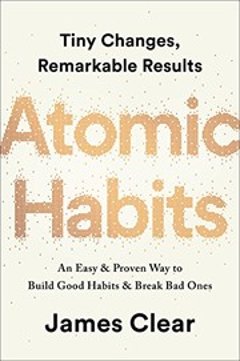 Worth reading on thisAtomic Habits by James Clear — The clearest manual on making a habit small enough to survive a bad week. Pairs with almost everything on this site.Click hereto see it→
What twelve weeks does to a plan
It forces honesty about size. A goal that does not fit in twelve weeks is either too large (break it) or not actually a goal (it is a direction). Either way you learn something immediately, before you have spent a year on it.
It gives you twelve checkpoints. Miss one, you have eleven to recover. Miss three in a row, and the pattern is obvious early enough to repair. In an annual plan, three missed months is a quarter, and nobody notices until the holidays.
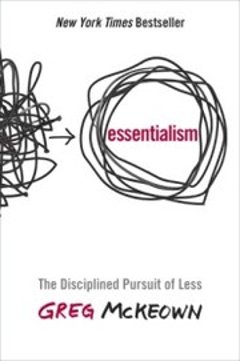 Goes deeperEssentialism by Greg McKeown — Doing fewer things, on purpose. The best argument for a shorter list you will read.Click hereto see it→
Why the weeks need a person
A twelve-week plan on paper is still just paper. The checkpoints only check anything if someone opens them. You, alone, will open them enthusiastically for weeks one and two, skip week four, and quietly stop looking by week six. That is not a prediction about you specifically. It is what unsupervised plans do.
The program shape
WisdomDeck’s twelve-week Reality Check Accountability program is built on this unit: one goal, a dated plan written on the first call, and twelve weekly phone calls with a real human on the WisdomDeck team who opens each one with the question. Short check-ins between calls if you want them. One pause allowed, because life does not run in neat quarters. Not coaching, not therapy; a structure with a person in it. A four-week sprint exists for smaller pieces, and many people run a sprint first to see whether the format suits them. Brief first, price by email, nothing charged until you say yes. Plans are compared on the pricing page.
Two more books, and one tool

Launch list
Be there on day one.
One email when the book opens on Kickstarter. Nothing else. Already reading the book? Your Cheat Sheet is at wisdomdeck.com/free.
Coming soon on 
The book itself — 40 laws in ten parts, 320 pages, each ending with The Work — is funded first on Kickstarter.

