Follow Up After a Professional Conversation With a Clear, Low-Pressure Note
2 min read
AI transparency: This article was created with AI assistance. It is general organizational information, not a personal product review or professional advice.
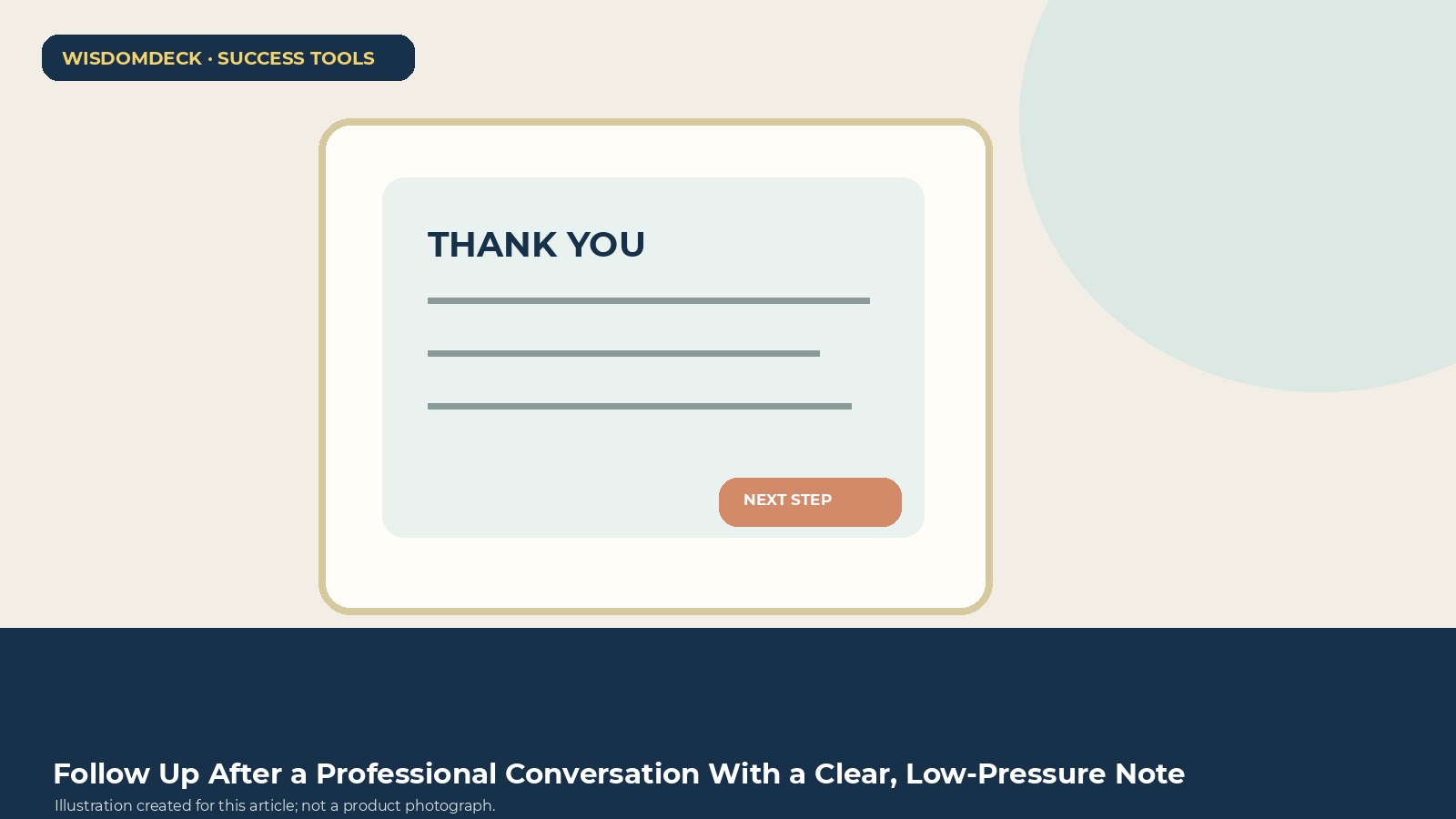
After a networking conversation, informational interview, or professional introduction, a short follow-up can help you remember what was discussed and leave the next step clear. It should be sincere and specific, not a disguised demand for a job, referral, or immediate response.
Send a note while the details are fresh
Use the communication channel that fits the context and the other person’s preferences. A brief message within a reasonable time is usually easier than waiting until you have forgotten the conversation. If they asked you to send a document or link, make that the main purpose of the note.
 Worth reading on thisEssentialism by Greg McKeown — Doing fewer things, on purpose. The best argument for a shorter list you will read.Click hereto see it→
Include one specific point
Thank the person and mention a concrete idea, resource, or perspective you found useful. This shows you paid attention without writing a long recap. Do not repeat private details or forward information they shared in confidence.
For example: “Thank you for explaining how your team approaches customer research. Your suggestion to compare interview notes before selecting themes gave me a useful next step.” Adapt the wording to what was actually said; do not invent praise or familiarity.
Make your next step explicit
If you promised to take an action, say what it is and when you expect to complete it. If you are sharing a resource, include the link and a sentence on why it may be relevant. If no follow-up was agreed, it is fine to close with appreciation and leave the door open without asking for another meeting.
Avoid attaching a résumé or requesting an introduction unless the conversation made that appropriate. A person’s willingness to talk does not mean they agreed to sponsor, refer, or hire you.
 Goes deeperAtomic Habits by James Clear — The clearest manual on making a habit small enough to survive a bad week. Pairs with almost everything on this site.Click hereto see it→
Keep expectations realistic
People may be busy, and a reply is not guaranteed. If a response is important, wait an appropriate interval and send one polite follow-up at most, unless the person invited a different cadence. Then continue your search or project through other channels rather than repeatedly messaging them.
Record the useful details privately
After sending the note, save a short reminder of the date, topic, and any action you promised. Keep personal information in a secure place and follow workplace or professional rules. Do not treat a private conversation as permission to publish quotes or use someone’s name in a portfolio.
Keep the message brief, accurate, and easy to receive. A thoughtful follow-up supports a professional relationship; it does not guarantee an outcome, and it does not need to ask for one.
Use a simple personal reminder
If you hope to reconnect later, set a reminder based on a real reason: a promised update, an event you discussed, or a time when you will have something relevant to share. Do not create a schedule of repeated check-ins just to keep your name visible. Genuine, occasional contact is more respectful than messages sent on autopilot.
Two more books, and one tool

Launch list
Be there on day one.
One email when the book opens on Kickstarter. Nothing else. Already reading the book? Your Cheat Sheet is at wisdomdeck.com/free.
Coming soon on 
The book itself — 40 laws in ten parts, 320 pages, each ending with The Work — is funded first on Kickstarter.