


Writing a Book With a Weekly Check-In: How Finished Manuscripts Actually Happen
2 min read
Every unfinished book has the same shape. A strong opening written in a burst. A chapter plan. A folder of notes. And then a long flat period where the file is opened, scrolled, and closed, for months, sometimes years. The writer still calls it “my book.” It is not a book. It is three chapters.
Finished books are produced by people who wrote on days they did not feel like writing. That is the entire secret, and everyone knows it, and almost nobody can do it alone.
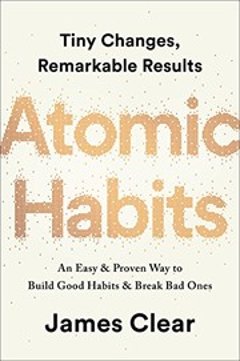 Worth reading on thisAtomic Habits by James Clear — The clearest manual on making a habit small enough to survive a bad week. Pairs with almost everything on this site.Click hereto see it→
Word counts are a start, not a system
Setting a daily word count is good advice that fails for the usual reason: you are the only one who knows when you miss it. Miss Monday, promise yourself Tuesday, miss Tuesday, decide the week is a write-off. A word count becomes a system only when it is reported to someone on a fixed day.
The weekly unit
Weeks are the right unit for a book. Days are too small (life happens) and months are too large (you can lose one without noticing). A weekly target, a weekly delivery, a weekly question: did the pages get written? Over twelve weeks, a modest weekly number becomes a draft.
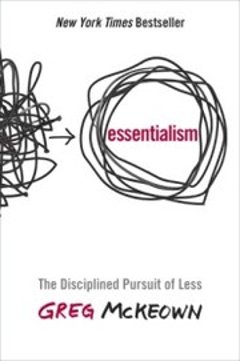 Goes deeperEssentialism by Greg McKeown — Doing fewer things, on purpose. The best argument for a shorter list you will read.Click hereto see it→
The question also forces a decision that writers avoid: what exactly is this week’s deliverable? “Work on chapter five” is not a deliverable. “Chapter five, first draft, 2,500 words, by Thursday” is.
Nobody needs to read it
This is important. An accountability partner for a book is not an editor, a critic or a writing coach. They do not need to see the pages. They need to know whether the pages exist. Separating “did you write” from “is it good” is a relief most writers have never experienced. Quality is a later problem. Existence is this week’s problem.
Borrowing the question
WisdomDeck’s Reality Check Accountability service gives you a real human on the WisdomDeck team who calls weekly by phone, agrees the next week’s pages and date, and asks whether they got written. Twelve-week programs line up neatly with a first draft; four-week sprints suit a stuck section or a proposal. The partner is not an editor and offers no opinion on the writing. Send a brief, get a price by email, pay nothing until you say yes. More on the writing a book page.
Two more books, and one tool

Launch list
Be there on day one.
One email when the book opens on Kickstarter. Nothing else. Already reading the book? Your Cheat Sheet is at wisdomdeck.com/free.
Coming soon on 
The book itself — 40 laws in ten parts, 320 pages, each ending with The Work — is funded first on Kickstarter.

