

A Tape Measure Before Checkout: Check the Space, Not Just the Product
3 min read
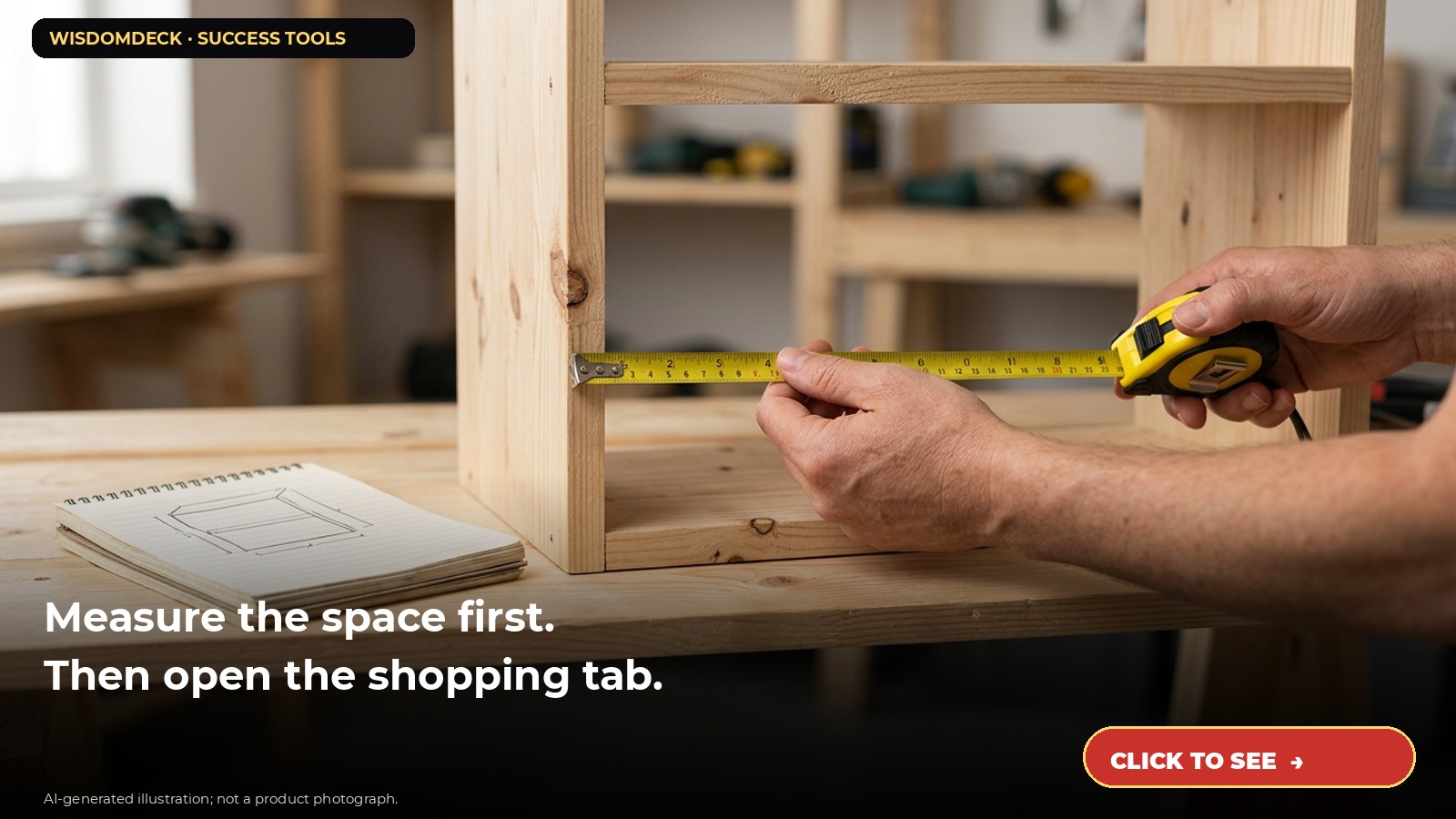
We may earn a commission if you buy through this link.
See Amazon Basics self-locking tape measure on Amazon. Check the current listing before buying; existing supplies may be all you need.
A storage bin can be the right width for a shelf and still fail to fit through the opening. A desk can fit against the wall but leave no room to pull out its chair. Product dimensions are only half of a fit decision. The other half is the space where you will actually use the item.
Before browsing alternatives, measure the constraints. A basic tape measure and a scrap of paper are enough for many small household purchases. This is a buying-preparation routine, not a claim that one measuring tool has been tested against another.
Start with the tightest opening
For a shelf or cupboard, measure the clear opening rather than the outside of the furniture. Check for hinges, trim, lips, and other obstructions. Measure width, height, and depth, and write the unit beside every number. Mixing inches and centimeters can turn a careful note into an expensive mistake.
Repeat important measurements. If the opening is uneven, record the smallest usable dimension. Avoid standing on unstable furniture or stretching beyond a comfortable reach; get appropriate help for awkward spaces.
Separate fit from usable fit
A box that occupies the entire opening may be difficult to remove. A drawer needs room to slide. A chair needs space for the person using it. Note the clearance required for normal operation, following the product’s instructions where provided.
Draw a simple rectangle for the space and mark the obstructions. Then list your limits as maximum outside dimensions. Keep a separate note for the usable capacity you want. A container’s internal dimensions and external dimensions answer different questions.
Check the route into the room
For larger items, consider doors, turns, stairs, and assembly requirements before ordering. Do not assume a packaged item and an assembled item have the same dimensions. When the route is complicated, ask the seller or delivery provider what information they need rather than treating a single doorway measurement as proof of access.
For small storage purchases, the equivalent check may be simpler: can the bin be lifted out without removing everything in front of it? A fit that creates extra handling every day may not solve the original problem.
Compare listings against one sheet
Write down the candidate’s outside dimensions beside your limits. Look for handles, lids, wheels, and other parts that may extend beyond the main body. If a listing does not explain what its measurements include, ask before buying or choose a clearer listing.
For example, suppose your shelf opening is 14 inches wide. A bin advertised as 14 inches wide should not automatically count as a match: measurement uncertainty, a handle, or the need to grasp the sides may matter. Avoid inventing a universal clearance allowance; the required space depends on the object and how it works.
Who can skip a new tape measure
Use a suitable measure you already own. For a small straight opening, a sufficiently long ruler may work. Skip a purchase when measurements cannot resolve the real uncertainty, such as comfort, material quality, or whether you need more storage at all.
Keep fingers clear of a retracting blade and guide it back according to the manufacturer’s instructions. The objective is a clearer buying decision, not a promise that every return can be prevented.

Launch list
Be there on day one.
One email when the book opens on Kickstarter. Nothing else. Already reading the book? Your Cheat Sheet is at wisdomdeck.com/free.
Coming soon on 
The book itself — 40 laws in ten parts, 320 pages, each ending with The Work — is funded first on Kickstarter.


