Leaders Eat Last by Simon Sinek: What It Teaches, Who It’s For, Who Should Skip It
3 min read
As an Amazon Associate we earn from qualifying purchases. Nobody paid to be on this page — no author, no publisher. This is our plain-language overview of what the book argues, who it suits and who should skip it, so you can decide in two minutes whether it deserves a place on your shelf.
Click hereto see it→Click to see Leaders Eat Last
Why some teams pull together and others fall apart: safety, trust and leaders who put their people first.
What the book argues
Humans perform best in a circle of safety where leaders protect their people from external threats rather than becoming the threat. Sinek blends biology (the chemicals of cooperation) with military and corporate examples to argue that trust is built when leaders sacrifice for the team.
Three ideas you can use this week
- Leadership is a responsibility for the people, not a rank over them.
- Short-term, numbers-first management destroys the trust that produces long-term results.
- Build a circle of safety: people who feel protected spend energy on the work, not on politics.
Who it is for
Managers inheriting a fearful team, and leaders who sense their culture runs on anxiety.
How to turn it into a routine
This week, publicly take responsibility for one team failure and privately credit one team member for a win.
Who should skip it
The neuroscience is simplified and the book is long; readers wanting mechanics should look to Radical Candor or The Advantage.
Verdict
Warm, persuasive and a little loose. Good for motivation; pair with something practical.
Click hereto see it→Click to see Leaders Eat Last
If you liked the sound of this
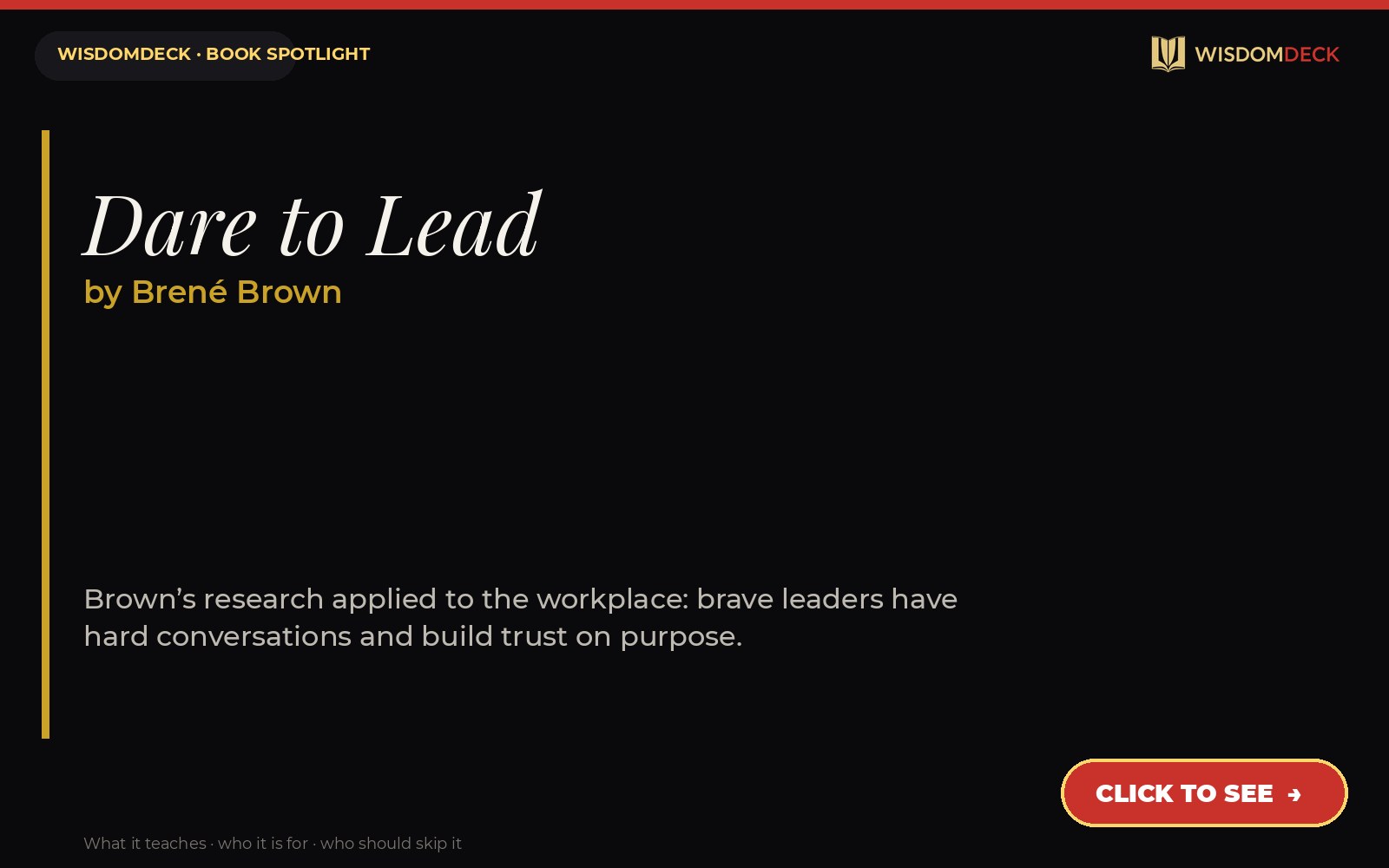
Dare to Lead by Brené Brown
Brown’s research applied to the workplace: brave leaders have hard conversations and build trust on purpose.
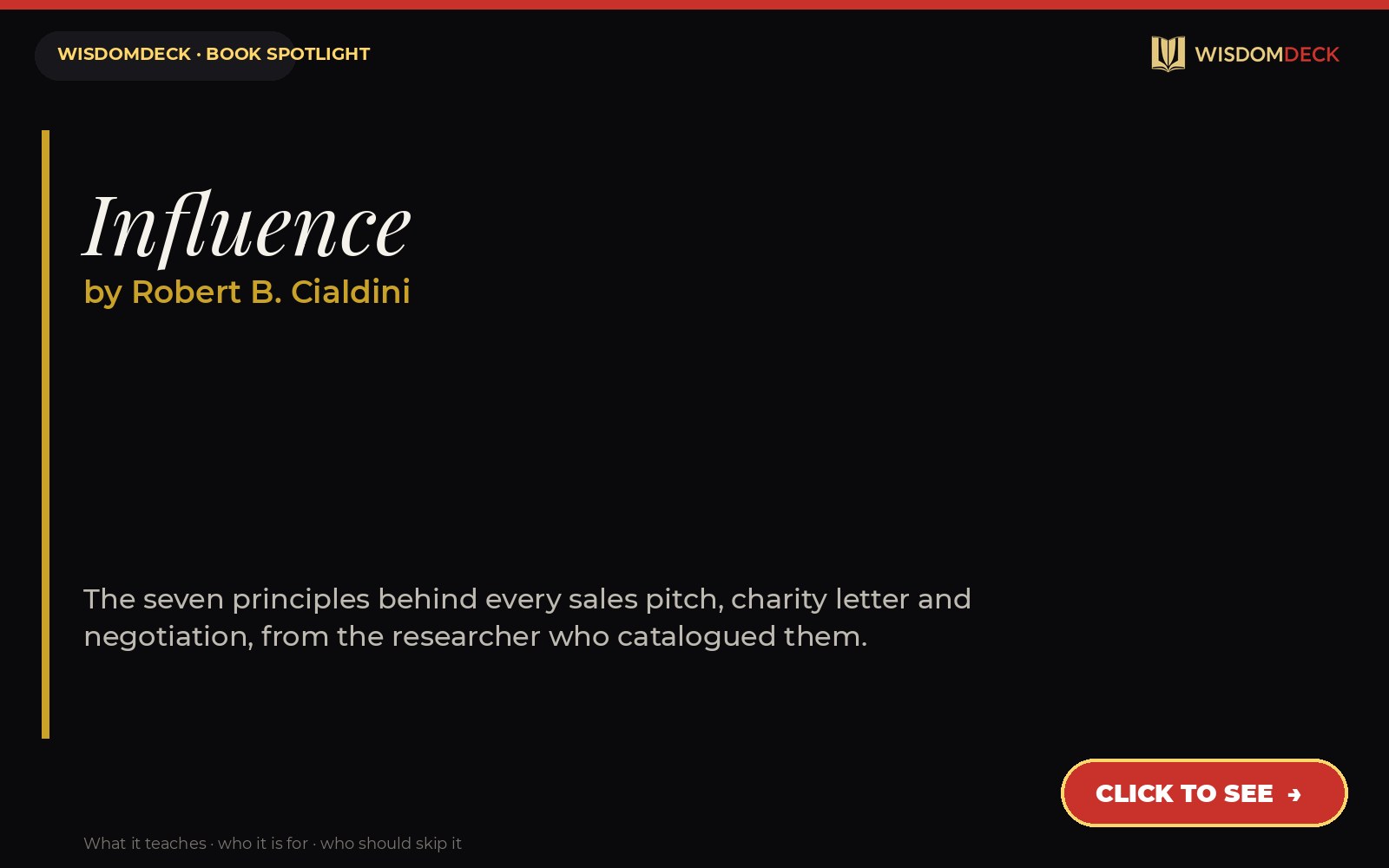
Influence by Robert B. Cialdini
The seven principles behind every sales pitch, charity letter and negotiation, from the researcher who catalogued them.
Tools that put the book to work
Reading is the easy part. Three simple tools that turn the idea into a daily routine:
Digital Voice Recorder
Hear yourself the way the room hears you. Nothing improves a speaker faster. Read our review.
USB Desk Microphone
If people cannot hear you clearly, they stop listening. Sound is credibility. Read our review.
Desktop Whiteboard Planner
Keep the week in front of you, not in your inbox. Read our review.
Links are affiliate links; the price to you is identical. Nothing here is medical, financial or professional advice. Filed under Leadership & Influence.
More picks, with pictures
Three tools and three books that fit the same goal. Each has its own full review here, including who should skip it.
As an Amazon Associate we earn from qualifying purchases. Images are our own review cards, not product photos.


Launch list
Be there on day one.
One email when the book opens on Kickstarter. Nothing else. Already reading the book? Your Cheat Sheet is at wisdomdeck.com/free.
Coming soon on 
The book itself — 40 laws in ten parts, 320 pages, each ending with The Work — is funded first on Kickstarter.