

A Clipboard Borrowing Log: Agree on the Return Before the Item Leaves
3 min read
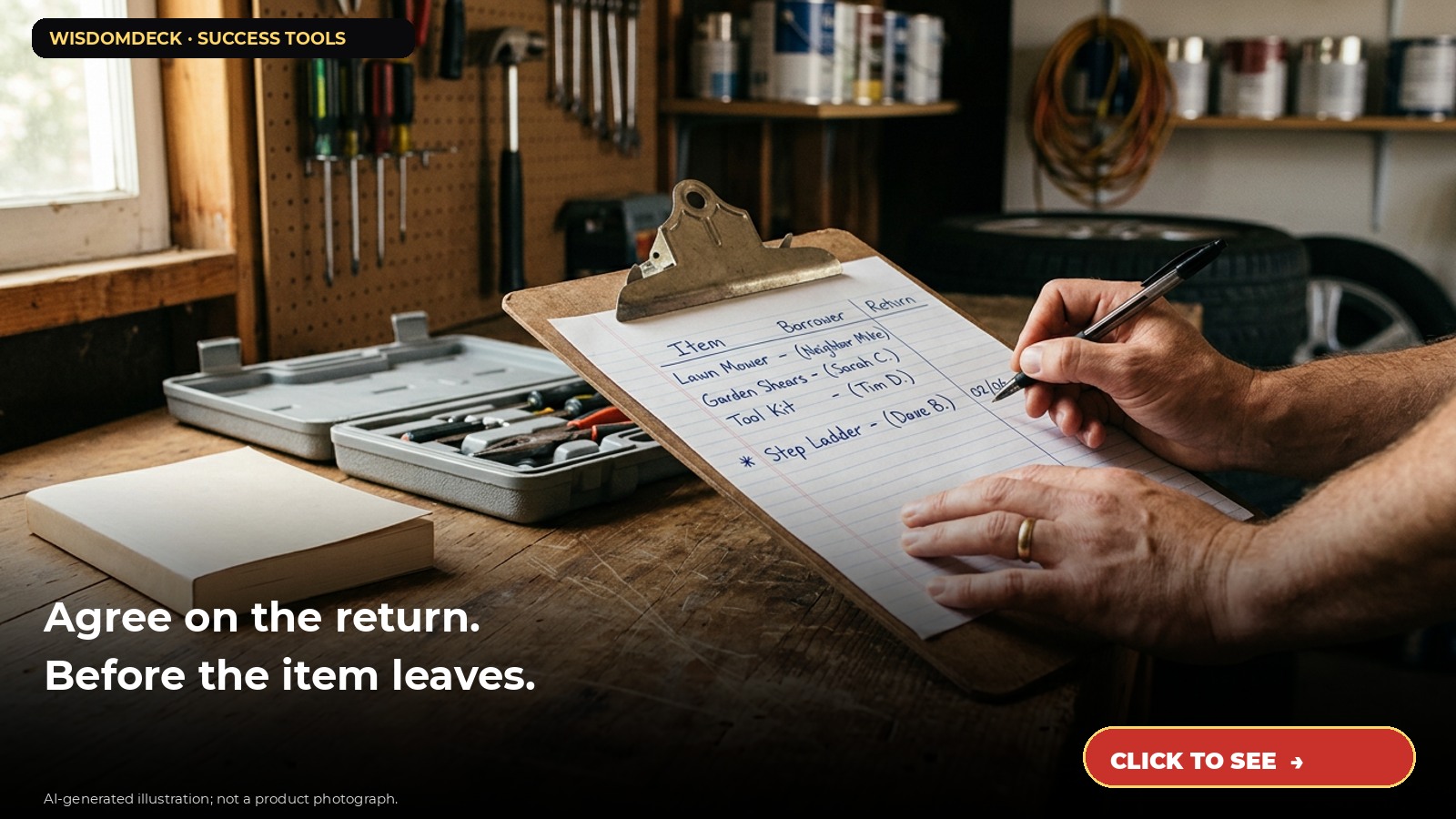
We may earn a commission if you buy through this link.
See Officemate recycled wood clipboard on Amazon. Check the current listing before buying; existing supplies may be all you need.
You lend a book, a tool, or a small piece of household equipment. Both people intend to remember, but a few weeks later neither is certain what was agreed. Was it needed for one afternoon, one project, or until someone asked for it back?
A simple borrowing log makes the arrangement visible while it is still easy to discuss. A clipboard can keep that record near the items, although a shared message or an ordinary notebook may be more appropriate.
Decide whether to lend it at all
Start with permission, not paperwork. You can decline to lend something that is essential, difficult to replace, unsuitable for the intended use, or not yours to lend. A written line does not remove the risks of handing over an item.
Keep this routine for ordinary low-stakes belongings. Do not treat a household clipboard as a substitute for appropriate agreements, insurance, training, or professional advice when valuable or hazardous equipment is involved.
Write the exact item
Record a description that distinguishes the object from similar ones. “Blue folding step stool” is clearer than “stool.” Note any included pieces, such as a case or cable, and discuss existing damage so neither person has to rely on memory later.
Do not lend equipment that is damaged or unsuitable for safe use. Where instructions or required accessories matter, make those part of the discussion before the item leaves. If the borrower needs expertise neither of you has, choose a safer alternative.
Agree on a return point
Use a date or an event that both people understand. “Bring it back Sunday afternoon” is more useful than “whenever.” If the timing is genuinely uncertain, agree when you will check in rather than pretending there is a deadline.
Record the borrower’s name and the agreed return arrangement, with their knowledge. Do not collect unnecessary personal information. A visible sheet in a shared space should not contain private contact details or sensitive notes about the person.
Make changes explicit
If the project takes longer, ask before the return point passes. Update the record when both people agree. A changed plan is easier to handle than a missing item accompanied by different assumptions.
For example, a neighbor borrows a small hand tool for a weekend repair. If the replacement part arrives late, a short conversation can establish whether the tool is still needed by the owner. The log provides context; it does not replace that conversation.
Close the record when it returns
Check the item and included pieces together where practical. Mark the return date and resolve any obvious issue promptly. Avoid leaving completed entries looking like outstanding loans.
If an item is overdue, use a direct, neutral reminder naming the object and the agreed arrangement. Do not turn the sheet into a public scorecard or use it to shame someone. The point is clarity between the people involved.
Who should skip a clipboard
If you rarely lend anything, a dated message may be sufficient. A family already using a shared list need not keep a second record. Borrowing a clipboard to track borrowing would be an unnecessary complication.
Start with one ordinary item and a clear conversation. The best record is short enough to maintain and specific enough that both people know what happens next.

Launch list
Be there on day one.
One email when the book opens on Kickstarter. Nothing else. Already reading the book? Your Cheat Sheet is at wisdomdeck.com/free.
Coming soon on 
The book itself — 40 laws in ten parts, 320 pages, each ending with The Work — is funded first on Kickstarter.

