

Freezer Labels: Write the Contents and Date Before the Container Goes In
2 min read
We may earn a commission if you buy through this link.
See freezer labels and markers on Amazon. Check the current listing before buying; existing supplies may be all you need.
A wrapped portion can be easy to identify when it goes into the freezer and difficult to recognize later. Writing a short label before storage reduces the need to guess. It does not determine whether food is safe to eat; use reliable food-safety guidance for storage times, temperatures, and handling.
Label while the food is still identifiable
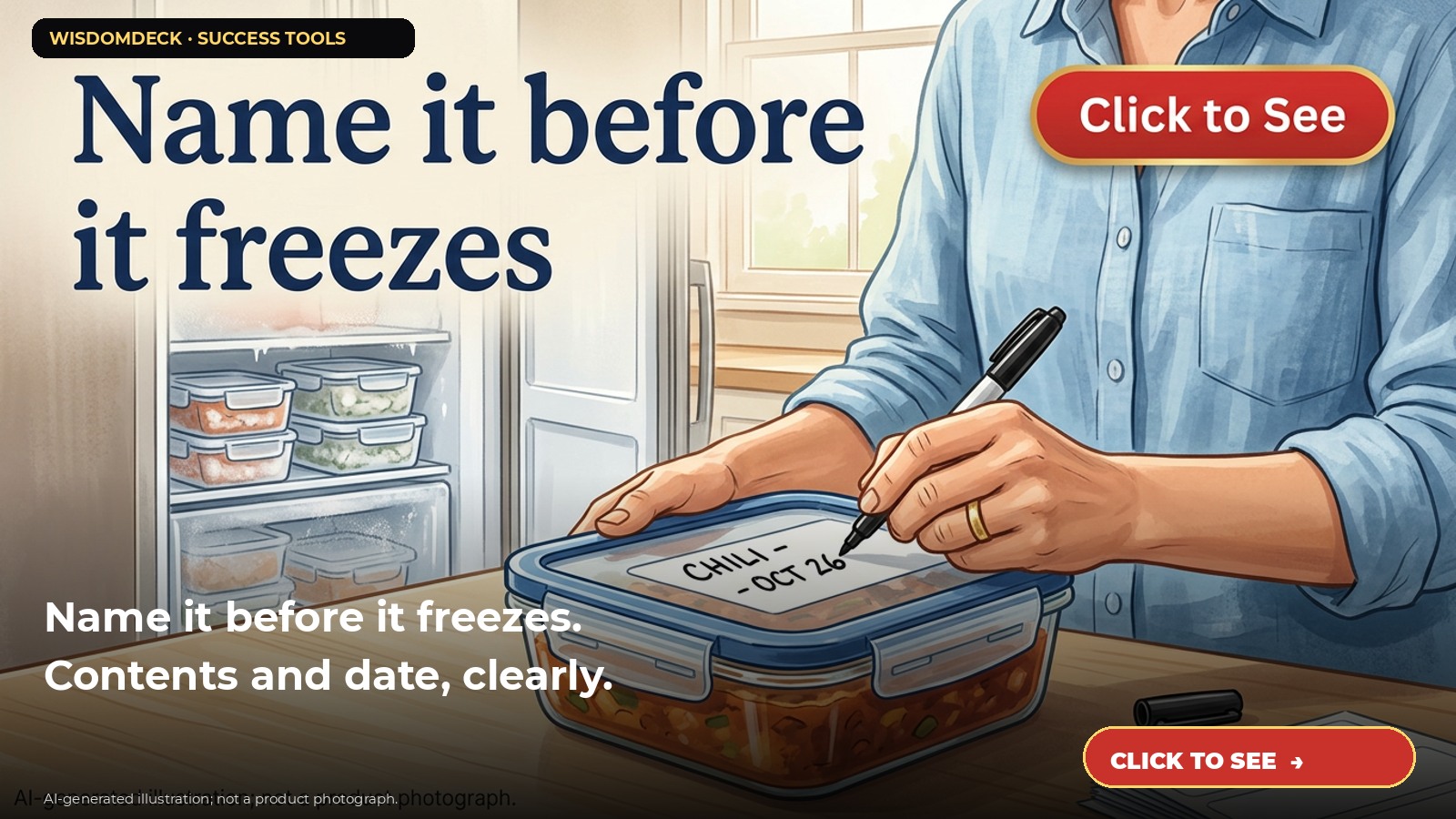
Before a container or package goes into the freezer, write the food name and the date it was prepared or stored, as appropriate for your system. Add a useful detail such as “tomato soup” rather than “soup” when several kinds are kept. If there are ingredients or allergens that matter to household members, communicate them clearly and keep the information accurate.
Use a label and writing tool intended for the surface and conditions. Follow their instructions, including whether the label should be applied to a dry container and whether the marker needs time to set. Test a new label on one container before labeling a large batch.
Make the label easy to find
Place writing where it remains visible when containers are stacked. Do not cover a lid’s safety or use instructions. If the contents are stored in a bag, label a clear flat area and avoid putting a sticker across the closure.
For example, a container can say “lentil soup — Oct 20” rather than relying on color or memory. If a recipe, portion size, or intended meal matters, add one short note, but keep the writing readable and avoid crowding the label.
Match the container and process to the food
Use food-safe packaging suitable for freezing and follow the container maker’s instructions. Leave appropriate space for expansion where needed, cool and handle food according to trusted safety recommendations, and avoid putting hot containers somewhere the manufacturer says not to. Labels cannot compensate for unsuitable packaging or unsafe handling.
Keep raw and ready-to-eat foods separated as recommended by food-safety authorities. Avoid reusing a container for a different food while its old label remains. Remove or fully replace outdated writing so nobody mistakes the contents.
Use a simple inventory, not a mystery list
Group items by a practical category and place newer packages behind older ones when that fits your storage setup. A brief inventory near the freezer can help a household plan meals, but update it when something is used. An inaccurate list is more confusing than no list.
When an item is unmarked or the date is uncertain, do not invent a label from appearance. Follow current food-safety guidance and make a cautious decision. When in doubt about safety, discard it rather than taste-testing.
Check the product before buying
Confirm the label material and marker are suitable for your containers and freezer conditions; product listings and formulations can change. A piece of masking tape and a compatible marker you already own may work for some surfaces. Skip a specialty roll if your existing labeling method stays legible and removable as needed.
The practical payoff is a clearer identification at storage time. It is not a guarantee of freshness or a substitute for safe storage practices.

Launch list
Be there on day one.
One email when the book opens on Kickstarter. Nothing else. Already reading the book? Your Cheat Sheet is at wisdomdeck.com/free.
Coming soon on 
The book itself — 40 laws in ten parts, 320 pages, each ending with The Work — is funded first on Kickstarter.


