

Protect Your Mornings Like They Pay You
2 min read
The first two hours after you wake are not like the other hours. Your mind is clearest, your willpower is fullest, and the world has not yet made its demands. Those hours are worth several afternoon hours in real output, and most people spend them on the lowest-value activity available: reacting. Checking messages, answering requests, reading whatever arrived overnight. By the time they turn to their own work, the best of the day has been spent on other people’s priorities, and the tired version of themselves is left to handle the important things.
Why Mornings Are Different
Decision-making, focus, and self-control all draw on a shared reservoir that is refilled by sleep and drained by use. In the morning it is full. Every choice, interruption, and small irritation draws it down, so that by mid-afternoon you are working from a depleted supply. This is not a character flaw. It is biology, and it means that the same task attempted at 7 a.m. and 4 p.m. is not the same task. The morning version is easier, faster, and better. Spending that window on email is like paying for premium fuel and pouring it on the ground.
Who Is Taking Them
Nobody steals your mornings. You give them away, usually to the phone, which is the first thing you touch and which delivers, within seconds, a queue of other people’s needs. Once that queue is open, your day belongs to it. The founder who checks email first works for her inbox. The writer who checks the news first writes about nothing that day. Whatever gets your first attention gets your best attention, and most people hand it to a screen full of strangers.
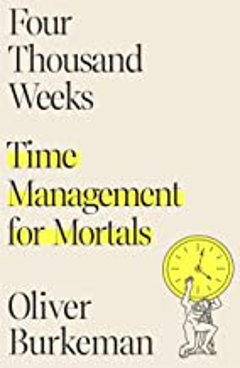 Worth reading on thisFour Thousand Weeks by Oliver Burkeman — A time-management book that starts by admitting you will never get it all done, and is better for it.Click hereto see it→
Building the Wall
Do not touch the phone until the first real thing is done
Not silent. Not face down. Not touched. Whatever your most important work is, it happens before the first notification is read.
Decide the night before what the morning is for
The morning should not begin with a decision. It should begin with execution of a decision already made. One task, written down, waiting.
Treat the block as an appointment with your future
You would not cancel a meeting with the most important client you have. That is what this is. Requests for the slot get the answer that any booked slot gets.
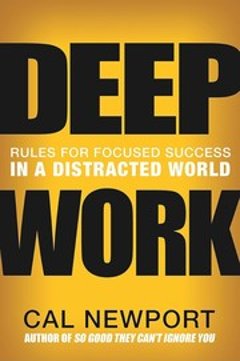 Goes deeperDeep Work by Cal Newport — Why uninterrupted blocks are worth more than busy days, and how to defend them.Click hereto see it→
Start smaller than you think
Forty-five protected minutes, every day, beats an aspirational three hours that collapses in a week. Guard a small block absolutely, then grow it.
What a Year of Mornings Buys
Forty-five minutes a day is roughly two hundred and seventy hours a year of your best-quality attention pointed at your most important work. That is a book. A business plan executed. A skill acquired. A body rebuilt. It is more focused effort than most people apply to their own priorities in a decade of reactive days, and it costs nothing except refusing to hand the first hour to someone else’s list.
Tomorrow, Before the Phone
Write tonight what tomorrow’s first block is for. Charge the phone outside the bedroom. In the morning, do the thing before you read anything. Your mornings are the most valuable asset you own. Start acting like it, and they will start paying you.
Two more books, and one tool

Launch list
Be there on day one.
One email when the book opens on Kickstarter. Nothing else. Already reading the book? Your Cheat Sheet is at wisdomdeck.com/free.
Coming soon on 
The book itself — 40 laws in ten parts, 320 pages, each ending with The Work — is funded first on Kickstarter.


