

A Rain Gauge Routine: Place It Clearly and Log the Reading
2 min read
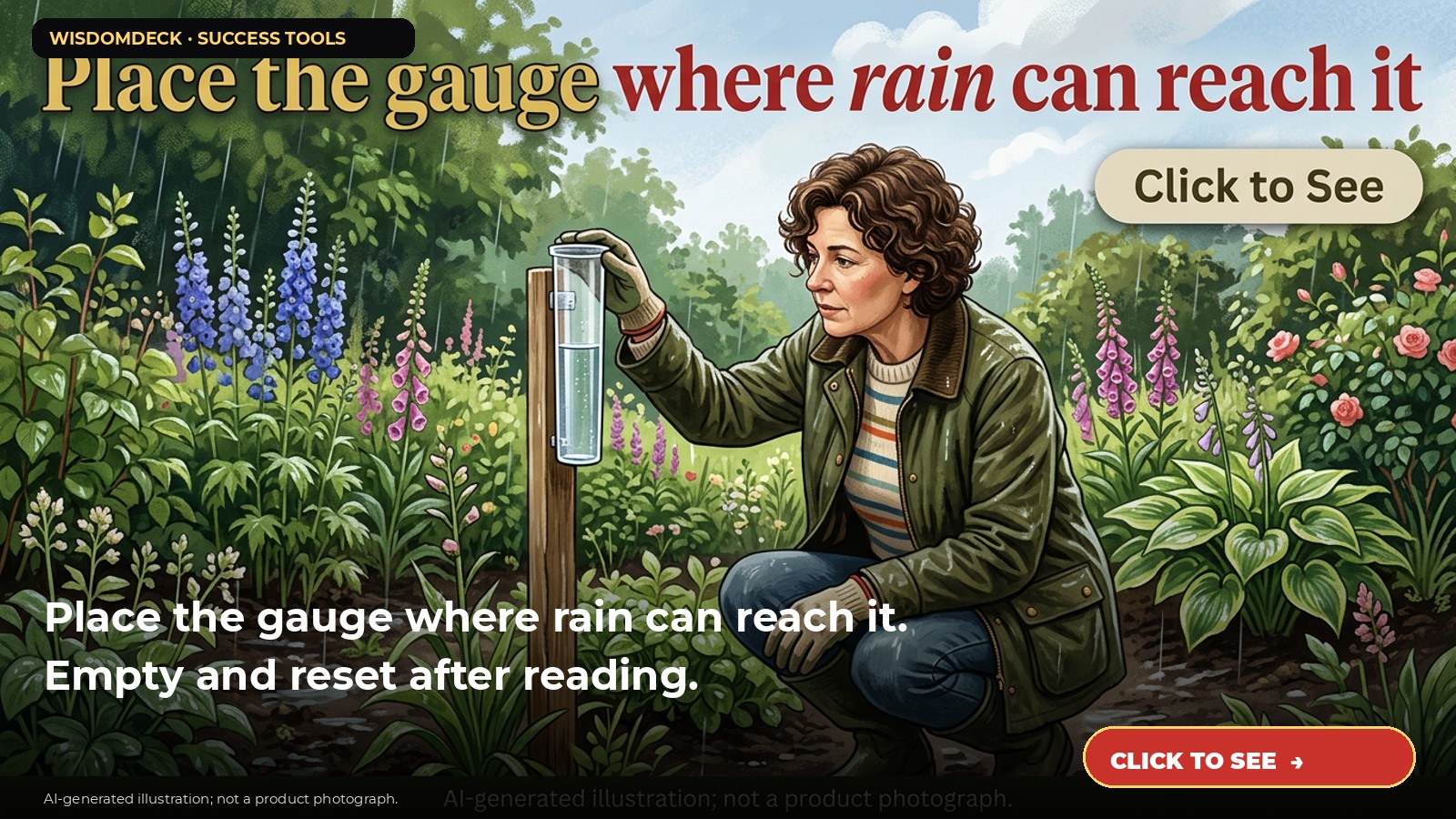
We may earn a commission if you buy through this link.
See Luster Leaf Rapitest metal rain gauge on Amazon. Check the current listing before buying; existing supplies may be all you need.
A rain gauge records rainfall at one location. It can help you notice local patterns, but the reading does not tell you exactly how much water every plant received. Wind, nearby roofs, trees, and placement can affect what the gauge collects.
Choose a representative location
Follow the gauge instructions for mounting height and placement. Put it where rain can reach the opening without runoff from a roof or tree, and where nearby sprinklers are unlikely to distort the reading. Secure the stake in stable ground, away from walkways and lawn equipment.
Check that the tube sits upright and is easy to view. If it leans or is partly sheltered, move it before relying on the measurements. Take care when handling a glass or plastic collection tube and keep it away from children and pets.
Read it consistently
Choose a regular time after a rain event, read the scale at eye level, and record the date and amount in a notebook or garden log. Empty and reset the gauge after recording, following the maker’s directions. Keep the container clean and free of leaves, insects, and debris.
For example, compare readings over several weeks rather than changing your watering routine after one shower. A short log can show whether a particular corner of the yard is exposed or sheltered, but it does not replace checking soil moisture near each plant.
Use measurements as one clue
Rainfall at the gauge may differ from conditions under a tree, beside a wall, or in a container. Consider soil type, drainage, plant needs, recent weather, and local watering restrictions. Follow region-specific gardening advice and water according to the needs of the actual bed or pot.
Do not assume a rainfall number means the root zone is adequately watered. Check the soil and observe the plant. A gauge cannot identify runoff, dry pockets, or waterlogged soil on its own.
Maintain and store the gauge
Inspect the stake and tube for cracks, loose fittings, or sharp edges. Clean the scale and opening as directed. In freezing weather or severe storms, follow the manufacturer’s advice about removing or storing the gauge.
Keep the gauge away from trimmers and mower paths. If the scale becomes faded or the tube is damaged, replace it rather than estimating readings from an unclear mark.
Check capacity and units before buying
Review the current listing for capacity, measurement units, height adjustment, material, and mounting method. The referenced Luster Leaf model is described as a stake-mounted gauge with a removable measuring tube; verify current specifications.
A local weather station or existing gauge may already serve your purpose. Choose a new gauge only if having a consistent reading at your garden is useful. Keep a short dated log beside the gauge instructions.

Launch list
Be there on day one.
One email when the book opens on Kickstarter. Nothing else. Already reading the book? Your Cheat Sheet is at wisdomdeck.com/free.
Coming soon on 
The book itself — 40 laws in ten parts, 320 pages, each ending with The Work — is funded first on Kickstarter.


