

Garden Gloves for Light Yard Tasks: Check the Fit and the Protection You Need
2 min read
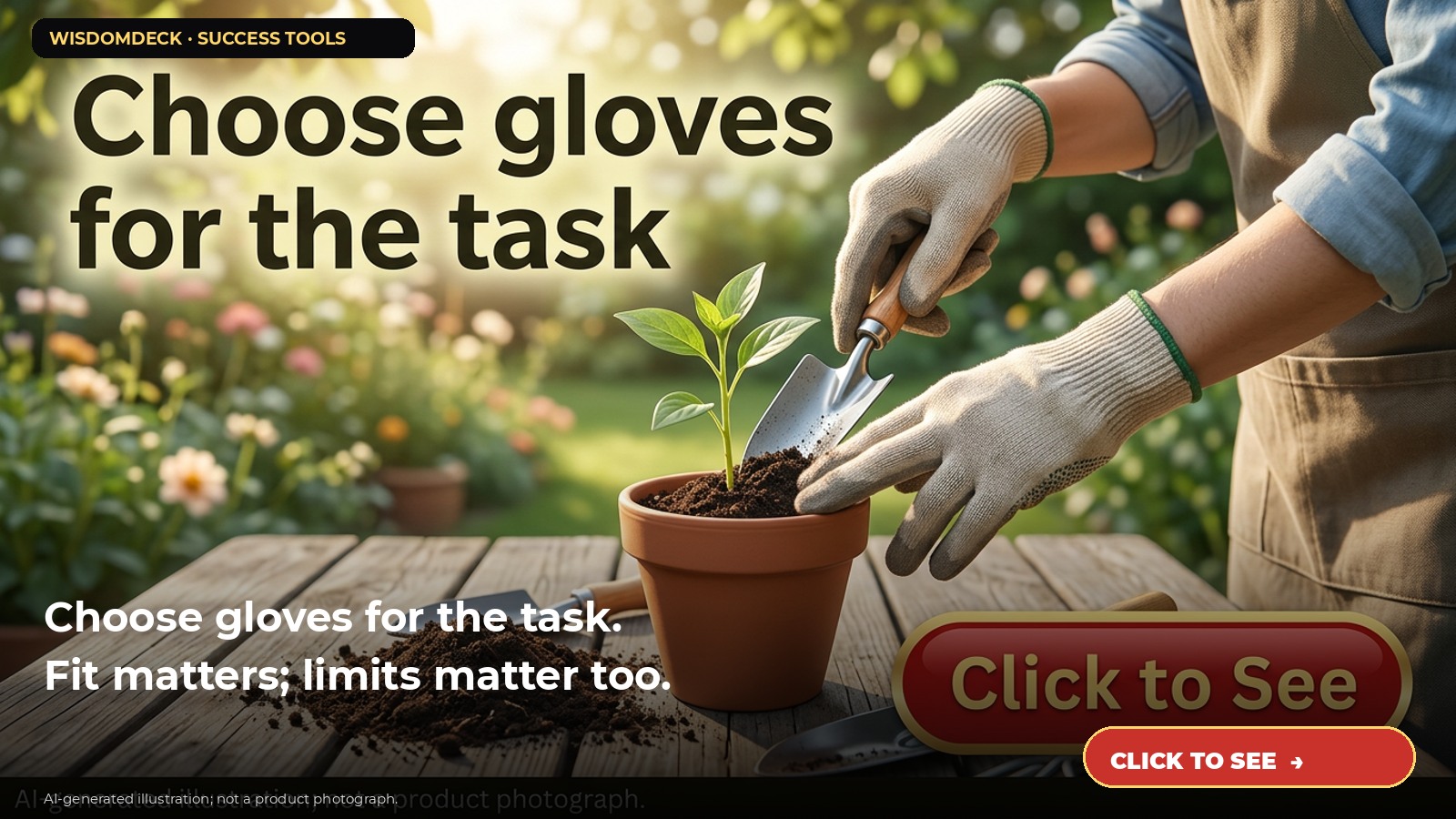
We may earn a commission if you buy through this link.
See JUMPHIGH garden gloves on Amazon. Check the current listing before buying; existing supplies may be all you need.
Garden gloves can make some ordinary yard tasks more comfortable, but a general pair is not protection for every hazard. Choose gloves based on the work, their material and fit, and the product directions. Stop if the task needs a level of protection the gloves do not provide.
Name the job before choosing gloves
Light planting, handling dry pots, and moving clean garden materials differ from pruning thorny plants, using chemicals, or working with sharp tools. Read the glove label and compare its stated uses with the task. Do not rely on a product title such as “work” or “protective” as proof that it suits a particular hazard.
For hazardous chemicals, follow the chemical label and relevant safety directions; ordinary gardening gloves may not be appropriate. Do not use fabric gloves near powered equipment or moving parts if they could snag. Choose a safer method or suitable protective equipment for the actual risk.
Check fit and condition
Try the gloves on and confirm that fingers move comfortably and the wrist opening does not interfere with the task. Gloves that are too loose can catch; overly tight gloves can make handling tools harder. Check seams, fingertips, and palms for holes, dampness, or damage before each use.
For example, light gloves may be sufficient for potting a small houseplant with clean soil, while pruning a thorny shrub calls for a specifically suitable protective method. Do not treat the two tasks as interchangeable.
Work with clean tools and a clear area
Use hand tools according to their instructions and keep blades pointed away from your body. Put tools down before adjusting gloves or handling a phone. Keep children and pets away from sharp tools, fertilizers, and other garden products.
Remove gloves before touching food, your face, or clean household surfaces. Wash hands after gardening and clean the gloves according to their care directions. Do not assume a glove can be sanitized or machine-washed unless the maker says so.
Store them dry and inspect again
Let gloves dry completely as directed before storing them. Keep them in a known location with the appropriate garden supplies, separated from clean kitchen items. Replace gloves that are torn, contaminated, or no longer fit securely.
If a task involves unknown plants, contaminated soil, or a possible irritant, avoid direct contact and consult appropriate local guidance. Gloves do not make an unknown substance safe.
Buy only the type and quantity you need
Check the current listing for sizes, material, number of pairs, and care instructions. The referenced product is listed as four pairs; confirm the size option before ordering. A single suitable pair you already own may be enough for occasional planting.
The goal is task-appropriate use and careful handling—not a blanket promise that ordinary garden gloves prevent cuts, punctures, or chemical exposure.

Launch list
Be there on day one.
One email when the book opens on Kickstarter. Nothing else. Already reading the book? Your Cheat Sheet is at wisdomdeck.com/free.
Coming soon on 
The book itself — 40 laws in ten parts, 320 pages, each ending with The Work — is funded first on Kickstarter.


