

A Page-Flag Study Routine: Mark the Passage and Capture the Reason
2 min read
We may earn a commission if you buy through this link.
See Post-it removable page flags on Amazon. Check the current listing before buying; existing supplies may be all you need.
Page flags can help you return to a passage without writing in a book. They work best when each flag has a purpose and you keep a short note about why the passage matters. A pile of color-coded tabs without a system can become another thing to sort.
Choose a simple marking system
Before reading, decide what a flag will mean. For example, use one color for a question and another for a definition, or use a single color for all passages to review. Keep the system small enough to remember without checking a chart every time.
Use removable flags only on paper and surfaces they suit. Test an inconspicuous area if the material is delicate, coated, old, or valuable. Avoid placing adhesive flags on photographs, artwork, or pages that could be damaged.
Flag only passages you can explain
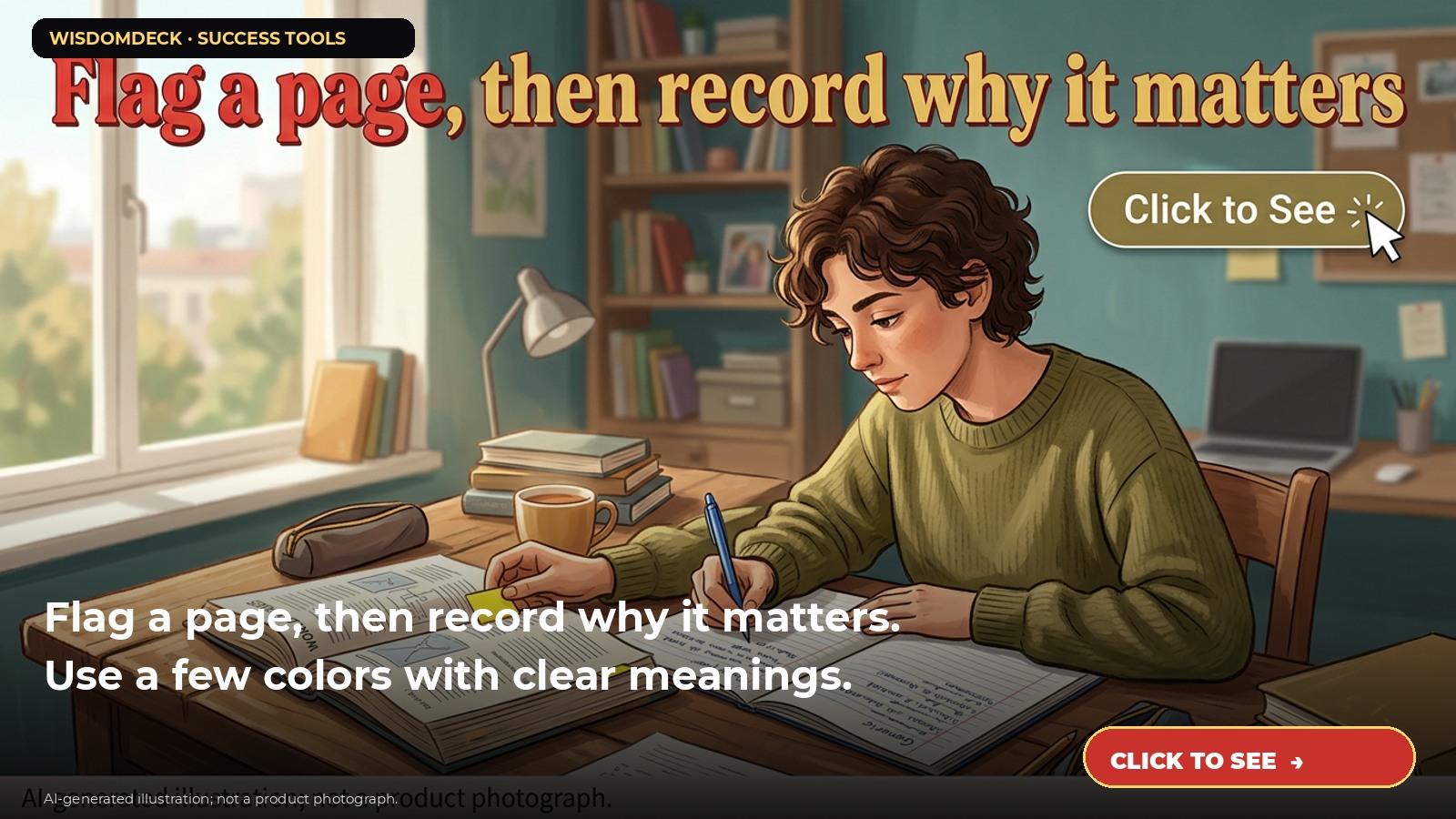
Place a flag beside a section you want to revisit, then write a few words in your notes about why it is useful. This helps you find a specific idea instead of rereading every marked page. Do not cover text, page numbers, or important diagrams.
For example, mark one paragraph that answers a study question and write “compare with chapter two” in your notebook. If you cannot explain why a passage was flagged, remove the marker or add a useful note.
Turn flags into a follow-up task
During a review session, look through the flagged pages and decide what to do next: summarize, ask a question, or add a citation to your notes. Remove flags after the task is complete, or transfer an ongoing question to a study list.
Use a secure citation method when preparing academic work. A page flag does not replace recording the author, title, edition, or page reference needed for a proper citation. Respect library rules and avoid leaving adhesive on borrowed materials.
Keep the system and materials tidy
Store the dispenser in your study space and close it or cover it if the product design requires. Keep flags away from young children and pets, and avoid leaving small adhesive pieces on shared desks. Recycle or dispose of used flags according to local guidance.
If the flags lift, leave residue, or damage a page, stop using them on that material and switch to a non-adhesive bookmark or note. Do not pull a stuck flag forcefully.
Check width and quantity
Check the current listing for flag size, color, adhesive type, and count. The referenced Post-it product is described as removable flags in a dispenser; verify the exact pack before buying.
A pencil note in your own book or a reusable bookmark may already work. Choose flags when quick, temporary page marking fits your reading habits. Review the flagged pages during a planned session, then remove outdated markers.

Launch list
Be there on day one.
One email when the book opens on Kickstarter. Nothing else. Already reading the book? Your Cheat Sheet is at wisdomdeck.com/free.
Coming soon on 
The book itself — 40 laws in ten parts, 320 pages, each ending with The Work — is funded first on Kickstarter.


