

Watering Can Routine: Check the Plant and Catch Water Before You Pour
2 min read
We may earn a commission if you buy through this link.
See Root & Vessel one-gallon indoor watering can on Amazon. Check the current listing before buying; existing supplies may be all you need.
Watering every plant on the same day can feel organized, but plants in different pots and conditions may not need water at the same time. A small watering routine begins with checking the particular plant rather than pouring by the calendar alone.
Look at the plant and its pot
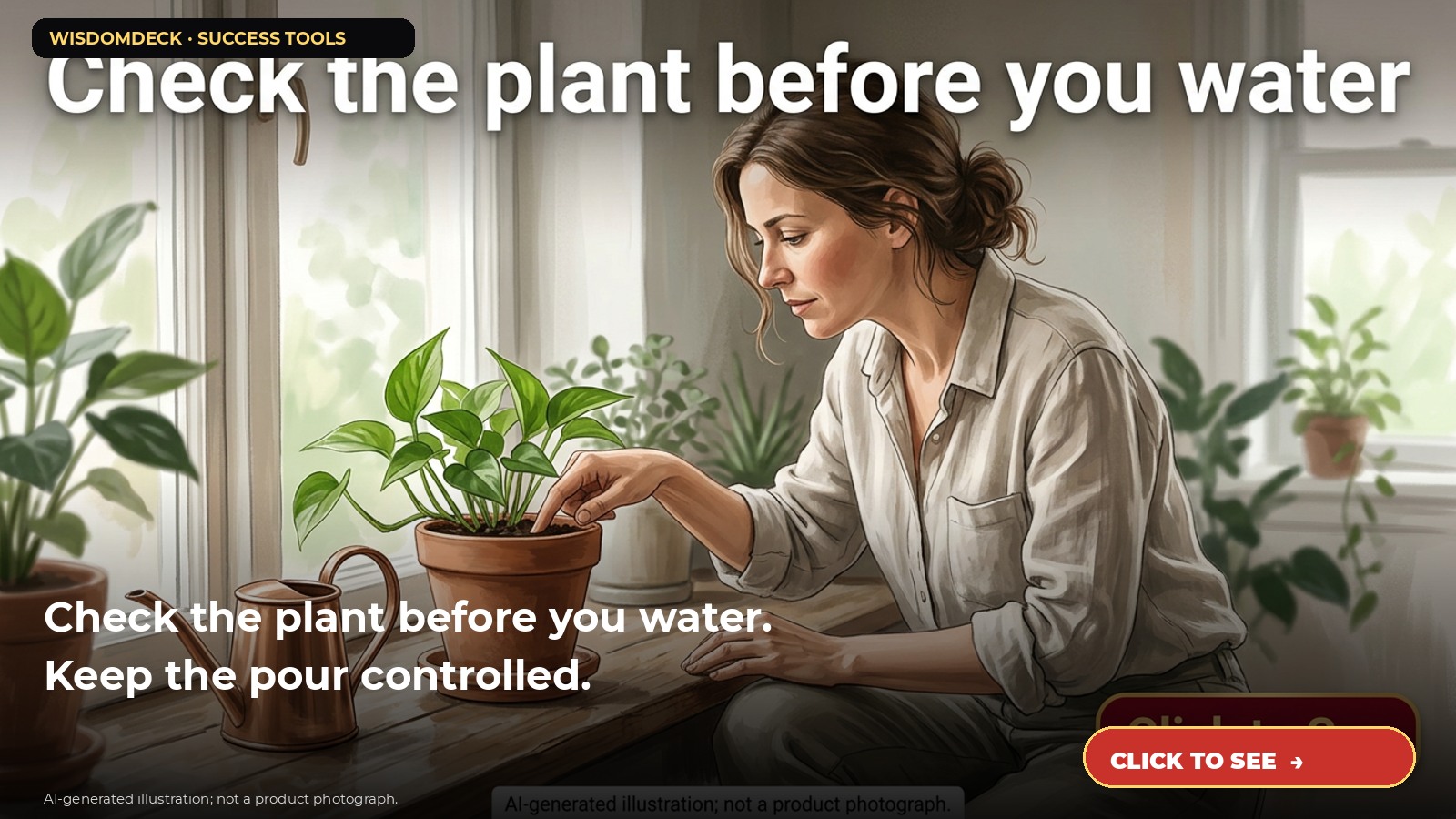
Check the plant’s care information and observe the growing medium, pot size, drainage, and recent conditions. A dry surface does not always tell the whole story. Follow reliable guidance for the species and container, and avoid adding water if the plant’s instructions or current condition suggest it is not needed.
Make sure the pot can drain appropriately and that excess water has a safe place to go. Do not leave a plant in standing water unless its care directions call for that setup. Protect floors, furniture, and electrical items from spills.
Use a manageable amount
Choose a watering can that you can lift and control comfortably when filled. A full one-gallon can may be heavier than expected; fill it only to a level you can carry safely. Keep the path clear and avoid twisting while pouring.
For example, someone might check a small indoor plant, add water according to its care needs, allow excess to drain, and empty the saucer if appropriate. The correct amount depends on the plant and growing conditions, not on the can’s capacity.
Keep the spout and storage area clean
Follow the can maker’s instructions for cleaning and storage. Empty leftover water if the directions recommend it, and store the can where it cannot tip, leak, or become a tripping hazard. Keep it separate from containers used for food or household chemicals.
If using fertilizer or another plant product, follow its label exactly and avoid mixing chemicals in the watering can unless the product instructions allow it. Clean tools as directed before using them for another purpose.
Use a check cue, not a rigid schedule
A weekly plant check can be a reminder to inspect, not an instruction to water every pot. Write down species-specific care notes if several people tend the plants. Keep the notes simple and update them when a plant moves, changes pot, or shows a different need.
Avoid diagnosing plant disease or applying treatments based on a single symptom. Consult an appropriate horticultural source if you are unsure what a plant needs.
Choose a can that fits the home
Check the current listing for capacity, dimensions, material, and whether a rose or other attachment is included. If you already have a clean vessel with a controllable pour, a specialty can may not be necessary.
The useful habit is checking before watering and controlling runoff—not applying one frequency to every plant or assuming a larger can improves plant care.

Launch list
Be there on day one.
One email when the book opens on Kickstarter. Nothing else. Already reading the book? Your Cheat Sheet is at wisdomdeck.com/free.
Coming soon on 
The book itself — 40 laws in ten parts, 320 pages, each ending with The Work — is funded first on Kickstarter.


