

A Household Flashlight Home: Store It Where Everyone Can Find It
2 min read
We may earn a commission if you buy through this link.
See Amazon Basics handheld LED flashlight on Amazon. Check the current listing before buying; existing supplies may be all you need.
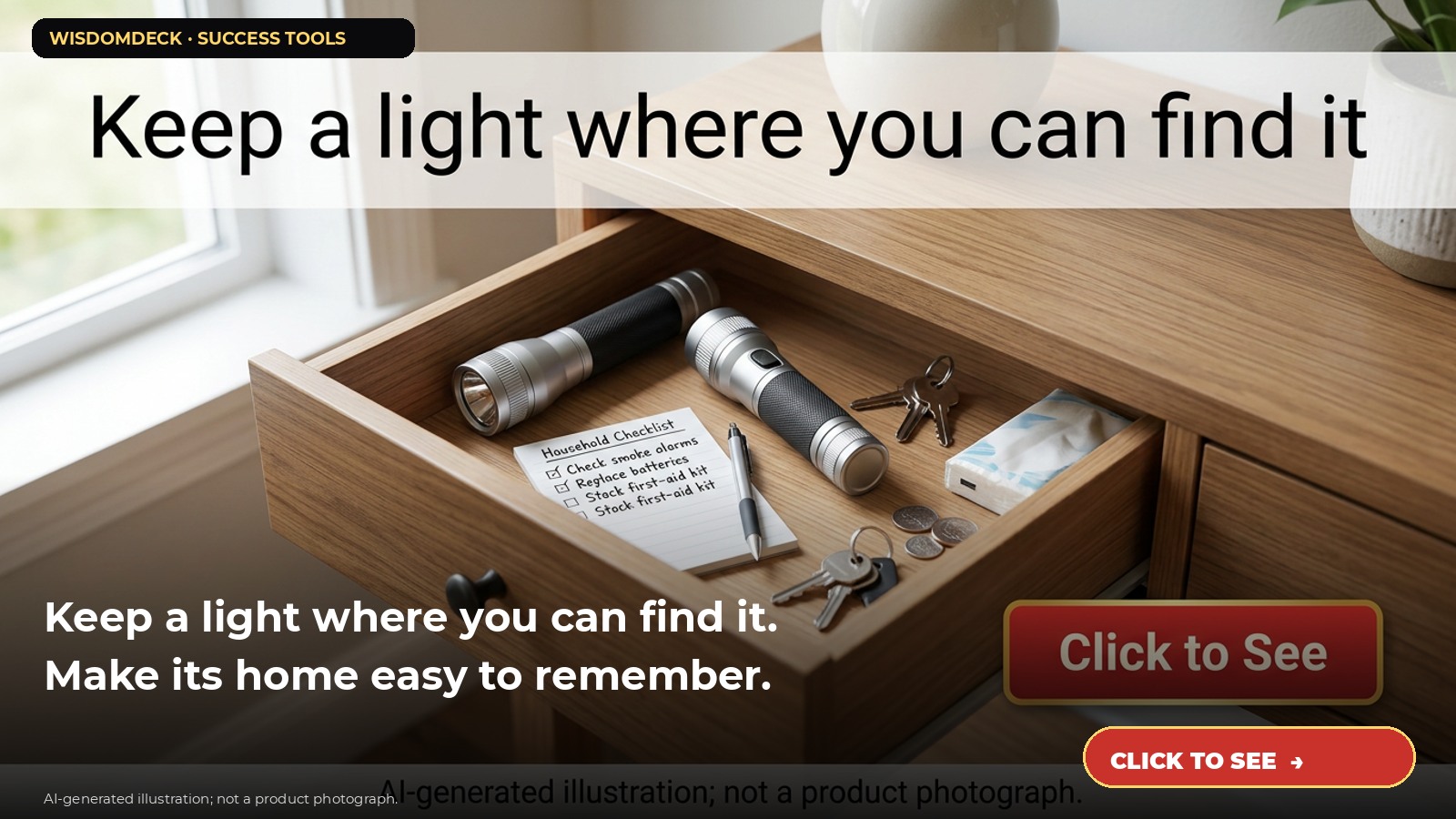
A flashlight is most useful when household members know where it is and can reach it when needed. A drawer near an entryway may suit one home; a central storage spot may work better in another. The point is a consistent, accessible location rather than a dramatic emergency kit display.
Choose a sensible location
Store the light somewhere dry, easy to reach, and familiar to the people who may need it. Avoid placing it where a child could misuse it, where it could fall, or where it is hidden behind heavy objects. If household members have different mobility or vision needs, choose a location and flashlight design they can use comfortably.
Do not store the flashlight beside heat, moisture, or corrosive materials. Follow the product instructions for storage and operation, including any cautions about battery type, charging, or water exposure.
Check the power source
Inspect the light occasionally according to its manual. Confirm that batteries are installed in the correct direction and are not leaking, or that a rechargeable model has been charged using the specified method. Remove batteries for long-term storage only when the manufacturer recommends it.
Do not mix old and new batteries or different battery types unless the instructions explicitly permit it. Dispose of used batteries according to local guidance. If the light flickers, is damaged, or becomes unusually hot, stop using it and follow the maker’s advice.
Know what its controls do
Read the instructions and check how to turn the flashlight on and off. Some lights have multiple modes or adjustable focus; a simple household use may call for a dependable setting rather than experimenting during a power interruption. Keep the manual or a short reference with the household’s other product information.
For example, a brief monthly household check can include locating the flashlight and confirming its power source. That routine is a reminder to inspect, not a promise that the light will work indefinitely.
Think beyond one tool
A flashlight supports visibility but does not replace smoke alarms, carbon-monoxide alarms, safe exits, or local emergency instructions. Follow guidance from relevant authorities and your building or utility providers. Never use an open flame as a substitute for safe lighting, and keep clear of hazards you cannot see or assess.
If you need to evacuate, follow official directions and do not delay to retrieve household supplies. A small light is one useful item, not a complete safety plan.
Buy only if the specifications fit
Check the current listing for brightness, power source, modes, water-resistance rating, and included batteries. This Amazon Basics model is listed as a 200-lumen flashlight powered by three AAA batteries and rated IPX4; confirm the selected version and instructions before relying on those details.
If you already have a working light in a known location, keep it. The useful outcome is a familiar place and a periodic check, not buying a flashlight for every room without a reason.

Launch list
Be there on day one.
One email when the book opens on Kickstarter. Nothing else. Already reading the book? Your Cheat Sheet is at wisdomdeck.com/free.
Coming soon on 
The book itself — 40 laws in ten parts, 320 pages, each ending with The Work — is funded first on Kickstarter.


