

A Project Kickoff Page That Makes Scope and Ownership Visible
2 min read
AI transparency: This article was created with AI assistance. It is general organizational information, not a personal product review or professional advice.
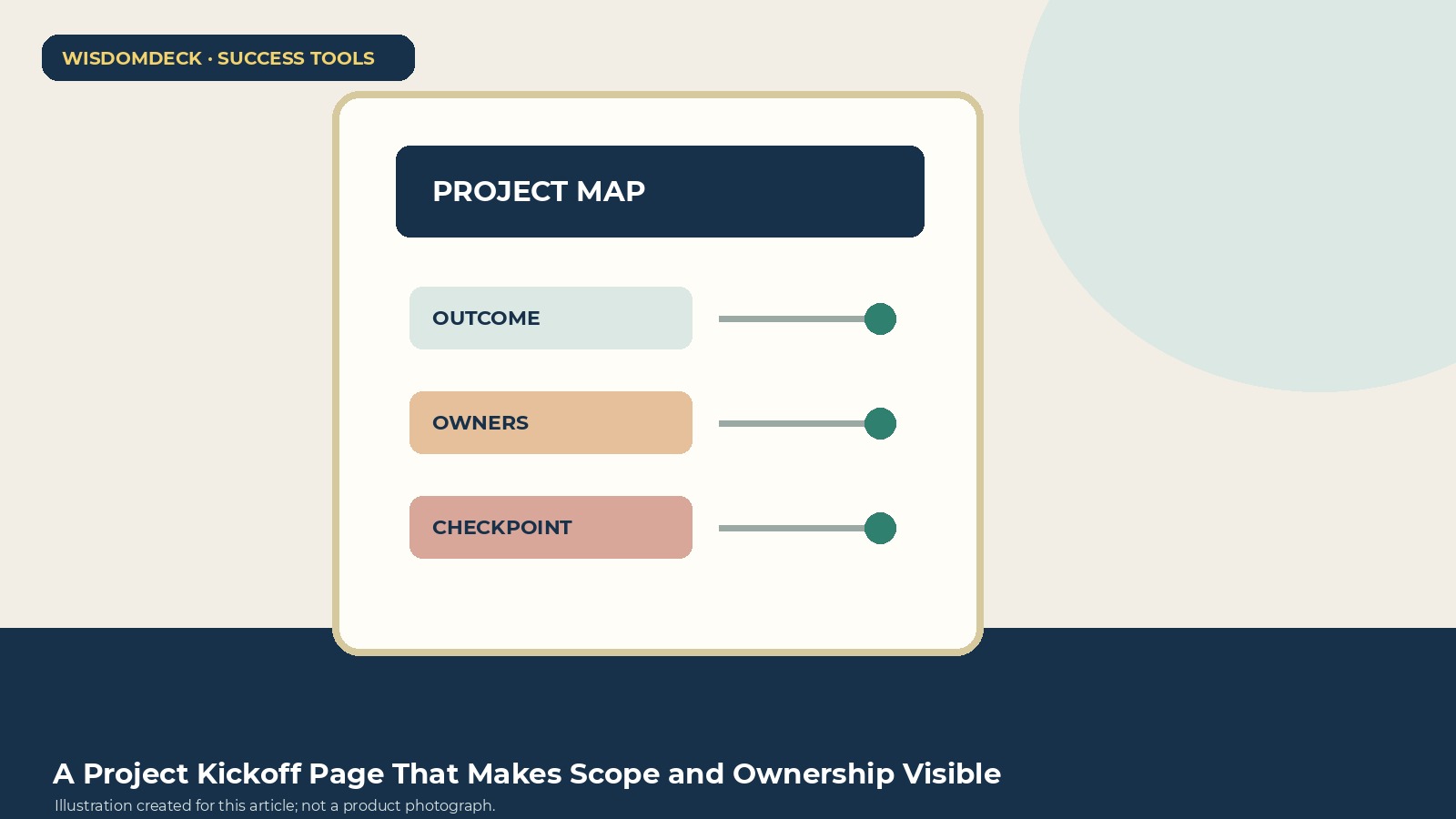
Projects can drift when people use the same goal words but imagine different outcomes. A kickoff page helps a team make the intended result, boundaries, and ownership visible before work spreads across messages and meetings. It is a coordination aid, not a substitute for required project plans or approvals.
Describe the outcome in observable terms
Write what should be true when the work is complete. “Improve onboarding” is broad; “publish the approved first-week checklist and assign an owner for updates” is easier to verify. If the desired outcome is still uncertain, record the open decision and who can resolve it.
 Worth reading on thisAtomic Habits by James Clear — The clearest manual on making a habit small enough to survive a bad week. Pairs with almost everything on this site.Click hereto see it→
Mark what is in and out of scope
List the main deliverables and the most important exclusions. This does not prevent priorities from changing. It makes trade-offs explicit when a new request arrives. If a change affects cost, timing, risk, or authority, use the organization’s normal approval process.
For example, a small internal guide might include drafting and review, while excluding a full redesign of the training system. The example is illustrative; define scope around your project and decision makers.
Name owners and dependencies
For each deliverable, name one accountable owner and the people who need to contribute or approve. Record dependencies such as access, data, legal review, or a decision from another team. Avoid assigning work to someone without confirming capacity and agreement.
When an item is waiting on a decision, write who will follow up and by when. “The team” is often too vague to make the next action clear.
 Goes deeperEssentialism by Greg McKeown — Doing fewer things, on purpose. The best argument for a shorter list you will read.Click hereto see it→
Choose checkpoints, not wishful dates
Break the work into a few review points: first outline, feedback, decision, and release, for example. Use dates that reflect actual constraints and dependencies. If the deadline is fixed but the scope is not, name that trade-off rather than silently assuming everything will fit.
End with the first action
Before the kickoff ends, confirm the first concrete action, its owner, and the next check-in. Share the page in the agreed workspace and keep it current when decisions change. Do not create a second tracker if the project already has a required system.
A useful kickoff page can be short: outcome, scope, owners, dependencies, checkpoints, and first step. Draft it with the people doing the work, then check that everyone understands the same finish line.
Make decisions easy to find
When a decision changes the plan, record what changed, who agreed, and the date. Keep the note factual and brief. A visible decision history helps new contributors understand why the team chose a direction without requiring everyone to search through old message threads. Follow your organization’s documentation and retention practices.
Two more books, and one tool

Launch list
Be there on day one.
One email when the book opens on Kickstarter. Nothing else. Already reading the book? Your Cheat Sheet is at wisdomdeck.com/free.
Coming soon on 
The book itself — 40 laws in ten parts, 320 pages, each ending with The Work — is funded first on Kickstarter.


