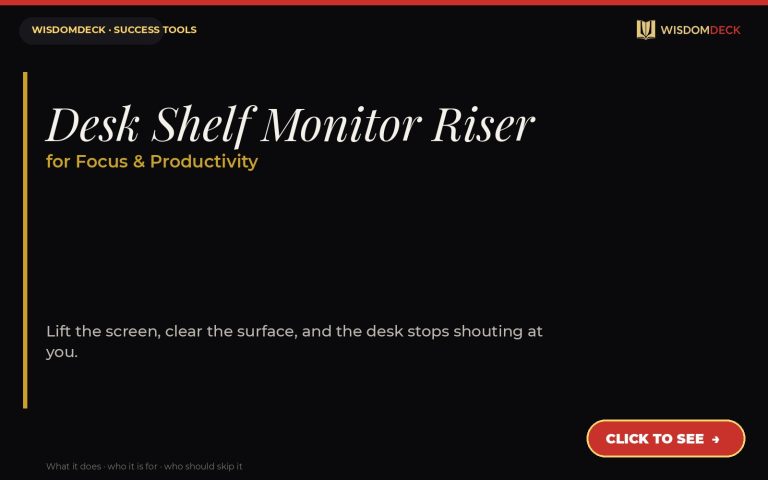
Prepare for a Work Meeting With a One-Page Brief
2 min read
AI transparency: This article was created with AI assistance. It is general organizational information, not a personal product review or professional advice.
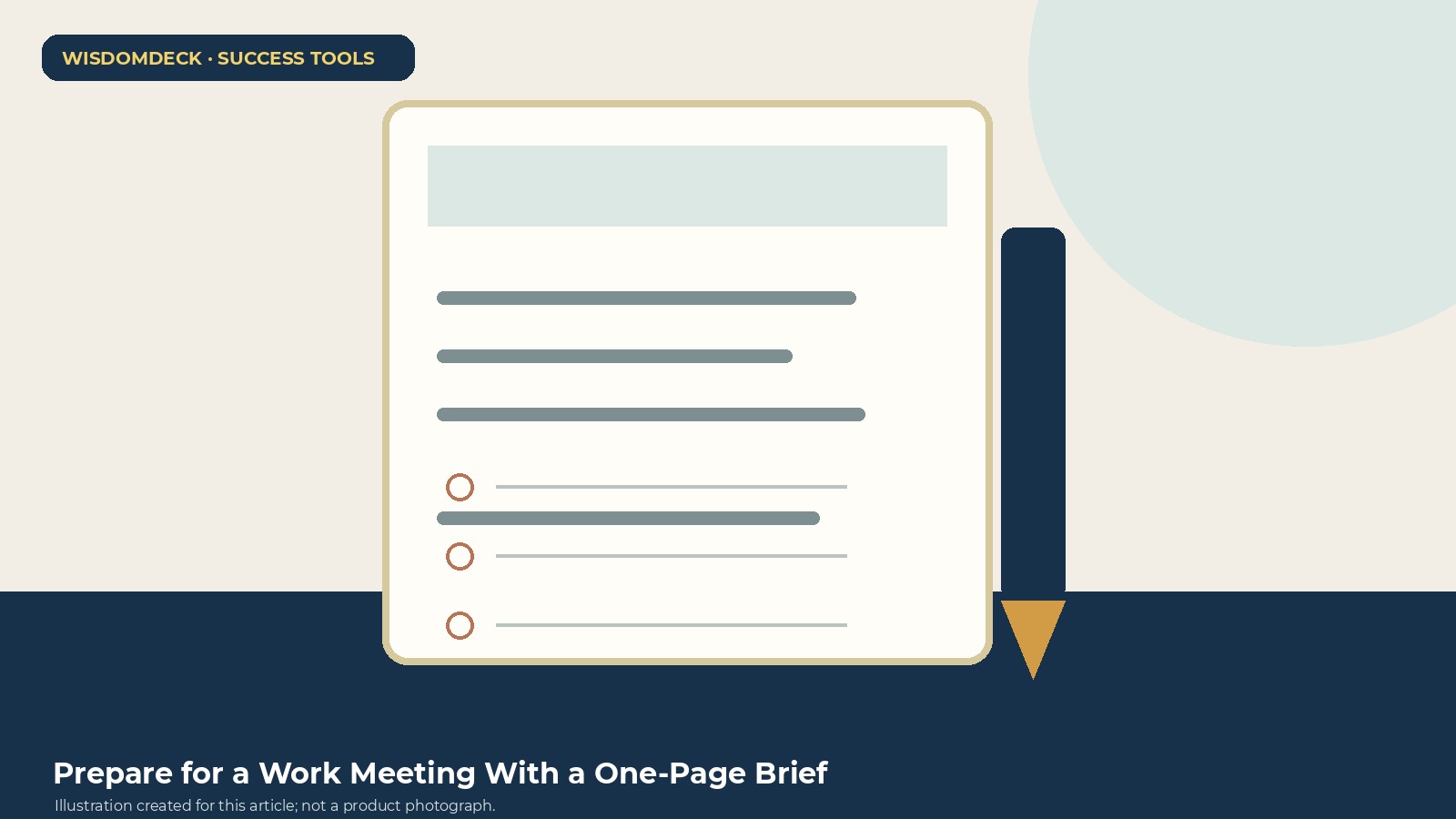
A meeting can feel more manageable when you know what you need from it. A one-page brief is a preparation aid: it helps you gather the context, decide what to ask, and keep the conversation focused. It cannot control the outcome or replace required workplace procedures.
Write the purpose in one sentence
Start with the result you hope to leave with. For example: “Agree on who owns the next milestone and when we will check progress.” If the purpose is unclear, ask the organizer what decision or discussion is expected. Do not assume every meeting needs a slide deck.
Bring only the context people need
List a few relevant facts, dates, or decisions. Separate confirmed information from assumptions and open questions. If a document or metric matters, check that it is current and that you are allowed to share it with the attendees. Link to the source where appropriate rather than copying a long history into the brief.
 Worth reading on thisEssentialism by Greg McKeown — Doing fewer things, on purpose. The best argument for a shorter list you will read.Click hereto see it→
For instance, a project update might include the milestone, current status, one risk, and the decision needed. A performance conversation may require different preparation; follow your employer’s policies and seek appropriate support if you need it.
Prepare questions and a fallback
Write two or three concise questions. Make them specific enough to answer: “Which team owns the review?” is clearer than “What is happening?” If you do not get a decision during the meeting, decide what information you need and who should provide it next.
Note any boundary or constraint you need to communicate, such as a deadline, available capacity, or dependency. Phrase it factually. Avoid scripting every sentence; leave room to listen and respond.
Close by confirming owners and dates
Before the conversation ends, summarize the agreed action, owner, and due date. If something remains unresolved, name the next check-in or source of clarification. Send a brief recap when appropriate and consistent with workplace norms.
 Goes deeperAtomic Habits by James Clear — The clearest manual on making a habit small enough to survive a bad week. Pairs with almost everything on this site.Click hereto see it→
Afterward, capture your own action items in the system you actually use. A polished brief that never becomes a follow-up is just another document to maintain.
Keep the brief lightweight
Use one page or a single screen. Remove details that do not affect the purpose. For a recurring meeting, keep a reusable outline but update facts each time. Store notes according to your organization’s confidentiality and retention requirements.
Try the format for one upcoming conversation: purpose, context, questions, desired outcome, and next step. Keep what helps you think clearly and drop anything that adds busywork. Good preparation is not about sounding perfect; it is about making the conversation easier to navigate.
Use a format you can find again
Name the note with the meeting date and topic, and store it in the approved location for work materials. If you are preparing for a sequence of conversations, keep a concise record of decisions and open questions rather than copying sensitive details into personal accounts. A short, retrievable note makes the follow-through easier and reduces the temptation to reconstruct the discussion from memory.
Two more books, and one tool

Launch list
Be there on day one.
One email when the book opens on Kickstarter. Nothing else. Already reading the book? Your Cheat Sheet is at wisdomdeck.com/free.
Coming soon on 
The book itself — 40 laws in ten parts, 320 pages, each ending with The Work — is funded first on Kickstarter.