Your Attention Is Your Life. Spend It on Purpose.
2 min read
At the end of your life, the sum of what you paid attention to will be, quite literally, the life you lived. Not what you owned, not what you intended, not what you were technically present for. What you attended to. That makes attention the most valuable resource you have, and it is currently being spent, most hours of most days, by systems designed to capture it and people who did not ask your permission. You are not losing your life to any dramatic mistake. You are losing it in small, unchosen increments of where your eyes went.
The Default Allocation
Left unmanaged, attention flows toward whatever is loudest, newest, and easiest. That is not a character flaw; it is how the mechanism works, and the mechanism is now surrounded by things engineered to be loud, new, and easy. The feed, the notification, the autoplay, the headline. Each takes a few minutes, and the minutes add up to hours, and the hours add up to a life spent mostly on things you would not have chosen if anyone had asked. Nobody asked. The default chose for you.
What Is Being Lost
Not just time, though the time is enormous. Depth. The ability to stay with one thing long enough for it to yield something. The conversation you were half in. The book you did not finish. The problem you never solved because you never held it in your mind for more than a few minutes at a stretch. Attention that is constantly fragmented cannot go deep, and everything that makes a life feel rich, from relationships to mastery to meaning, requires depth.
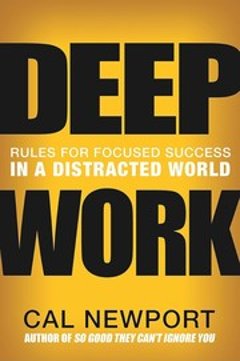 Worth reading on thisDeep Work by Cal Newport — Why uninterrupted blocks are worth more than busy days, and how to defend them.Click hereto see it→
Spending It on Purpose
Decide in advance where it goes
Each morning, name the two or three things that deserve your attention today. Anything else that asks for it is asking to take it from those.
Remove the defaults that spend it for you
Notifications off. Apps that pull without giving deleted or buried. The phone out of the room during anything that matters. You cannot resist the default forever; change the default.
Notice when it drifts, and bring it back
Attention will wander. The skill is not preventing that; it is noticing quickly and returning without drama. Each return strengthens the muscle.
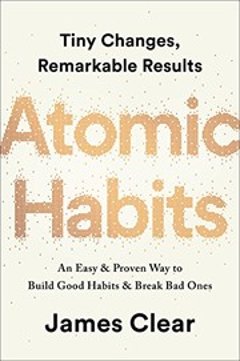 Goes deeperAtomic Habits by James Clear — The clearest manual on making a habit small enough to survive a bad week. Pairs with almost everything on this site.Click hereto see it→
Give full attention to small things
The meal, the walk, the person across the table. Undivided attention on ordinary moments is what makes them count as lived rather than merely passed through.
What Changes
Days start to feel longer, because more of them was actually experienced. Work gets deeper and better. Relationships improve, since the people in your life can tell when they have your attention and when they have only your presence. And you begin to recognize your life as your own, because for the first time in a while, you are the one deciding where it goes.
Take It Back
Today, name the three things that deserve your attention. Remove one default that has been stealing it. When you catch it drifting, bring it back, gently, as many times as needed. Your attention is your life. It is time to be the one spending it.
Two more books, and one tool

Launch list
Be there on day one.
One email when the book opens on Kickstarter. Nothing else. Already reading the book? Your Cheat Sheet is at wisdomdeck.com/free.
Coming soon on 
The book itself — 40 laws in ten parts, 320 pages, each ending with The Work — is funded first on Kickstarter.