

A Kitchen Timer Habit: Set It for the Recipe Step You Need to Check
2 min read
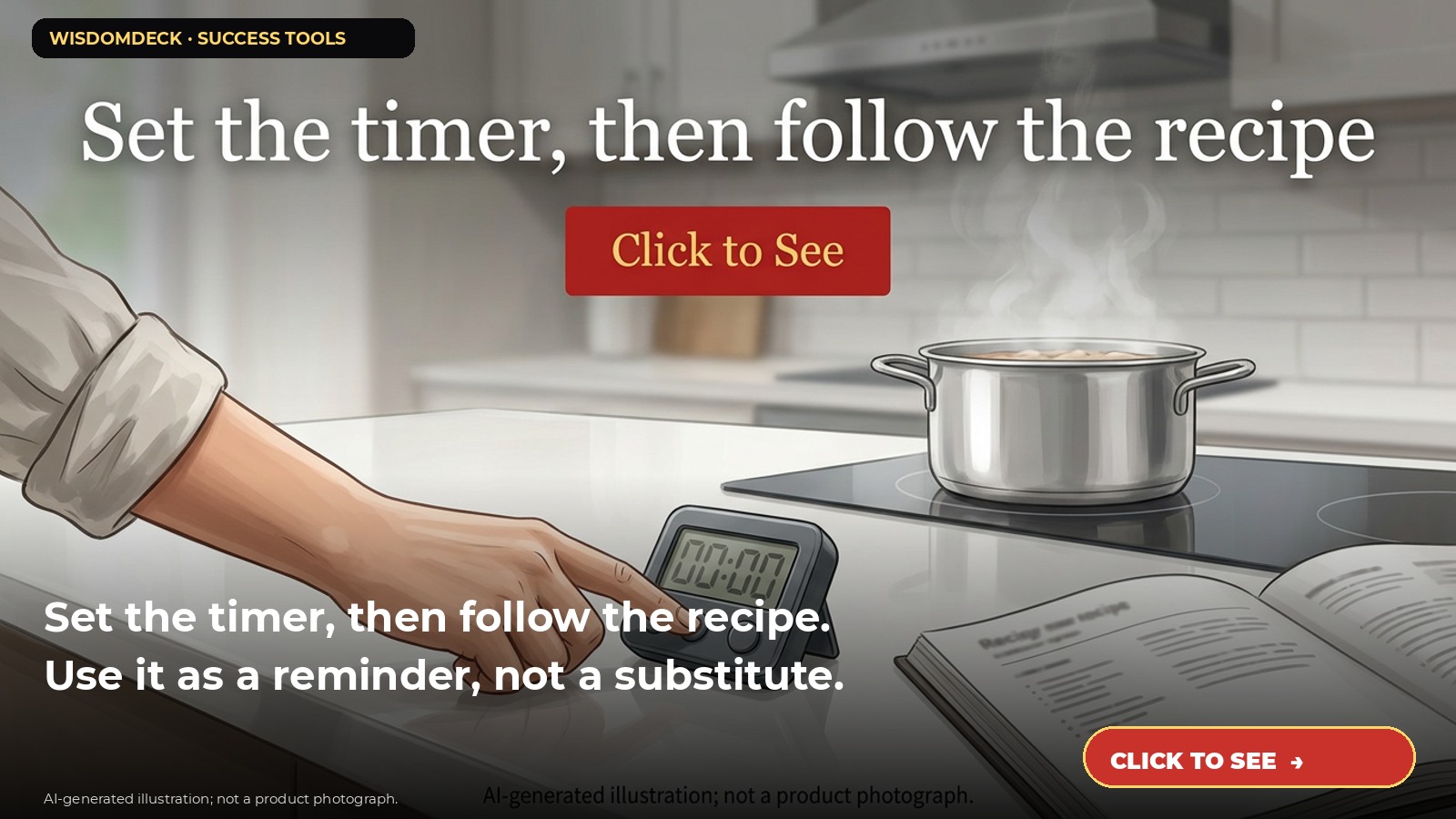
We may earn a commission if you buy through this link.
See OXO Good Grips Digital Triple Kitchen Timer on Amazon. Check the current listing before buying; existing supplies may be all you need.
A kitchen timer can help you remember when to check a recipe step, but it cannot tell whether food is cooked safely or whether a process is complete. Use it as a reminder alongside the recipe, thermometer, appliance directions, and current food-safety guidance.
Choose one clear reminder
Before setting a timer, identify the action it should prompt: check a pan, rotate a tray if the recipe says so, or inspect a simmering pot. Use the recipe’s stated time as a starting point, not a guarantee. Appliance performance, ingredient size, and cookware can affect the result.
If your timer has multiple channels, label or mentally assign each one. Avoid running several alarms without a clear purpose. A note beside the timer can prevent confusion when several kitchen tasks overlap.
Set it before attention moves elsewhere
Enter the intended time and confirm that the display is counting down. Place the timer somewhere visible and audible without putting it near heat, splashes, or an edge where it may fall. Do not rely on an alarm if you may be away from the kitchen or unable to hear it.
For example, set a reminder for the first recipe check, then stay attentive to the stove. When the alarm sounds, look at the food and follow the recipe. If it needs more time, make another deliberate check rather than assuming a single added interval is always right.
Keep safety decisions separate from the alarm
Use a food thermometer and current food-safety recommendations where appropriate. An alarm measures elapsed time only; it does not measure internal temperature, detect burning, or guarantee that a meal is safe. Never leave cooking unattended just because a timer is running.
Keep pot handles turned safely, use appropriate mitts, and avoid reaching across hot surfaces. If you are interrupted, pause and make the cooking area safe before leaving.
Make the timer easy to use and maintain
Read the manual for controls, alarm volume, battery type, cleaning, and placement. Keep the display and buttons clean and dry. Replace batteries as directed, and test the alarm occasionally if you depend on it for a reminder. Do not assume a magnetic backing is safe on every appliance surface.
For a busy meal, a written checklist and timer can complement one another. Note which alarm belongs to which dish and clear each one when its task is done.
Pick the right amount of functionality
Check the current listing for number of timers, display style, controls, alarm, power, and dimensions. The referenced OXO model is described as a triple timer; confirm the current model details before buying.
A phone or existing timer may already do the job. Choose a separate timer only if it makes a particular cooking routine easier to notice and manage.

Launch list
Be there on day one.
One email when the book opens on Kickstarter. Nothing else. Already reading the book? Your Cheat Sheet is at wisdomdeck.com/free.
Coming soon on 
The book itself — 40 laws in ten parts, 320 pages, each ending with The Work — is funded first on Kickstarter.


